
111-29 Queens Blvd, Forest Hills, NY 11375
111-29 Queens Blvd, Forest Hills, NY 11375


Back of knee pain, also called posterior knee pain, is a common complaint that can affect people of all ages. It may be mild and short-lived or more persistent, interfering with daily activities like walking, bending, or exercising. Understanding what might be causing your pain and how to treat it can help you get relief faster and prevent future issues.
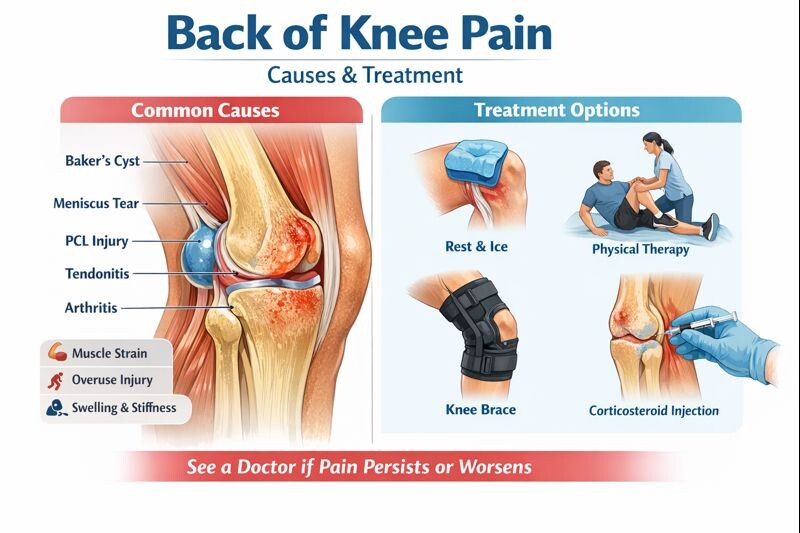
Back of knee pain refers to discomfort located at the back (posterior) part of the knee, between the calf and hamstring muscles. This area contains muscles, tendons, ligaments, joints, and a key fluid-filled space that allows your knee to bend and move.
Pain here can feel:
The best doctor for back of knee pain depends on your symptoms and how long you’ve had pain. Start with a primary care doctor for an initial evaluation, and if needed, they may refer you to a specialist such as an orthopedic surgeon, sports medicine physician, physiatrist, or pain management specialist for more targeted care.
| Situation | Best First Doctor |
|---|---|
| New or mild pain | Primary care physician |
| Pain >2 weeks or progressive | Orthopedic surgeon |
| Pain after sports/strain | Sports medicine physician |
| Chronic pain or rehab focus | Physiatrist or pain management |
| Possible autoimmune or swelling | Rheumatologist |
There are many reasons you might feel pain behind your knee. Some of the most frequent include:
A fluid-filled swelling that forms behind the knee when excess joint fluid collects in a small sac. Often linked to arthritis or knee injuries, a Baker’s cyst can cause tightness, swelling, and discomfort.
Inflammation of tendons (such as the hamstring or gastrocnemius) from overuse, repetitive motion, or sudden stress can result in pain behind the knee.
The meniscus helps cushion your knee. A tear from twisting injuries — common in sports or sudden movements — may cause pain that radiates behind the knee.
The posterior cruciate ligament (PCL) helps stabilize the knee. Injuries or tears can lead to pain at the back of the knee, especially with movement or instability.
Both osteoarthritis (wear-and-tear) and other forms of arthritis can cause chronic posterior knee pain due to joint breakdown and inflammation.
Your pain may be accompanied by:
Swelling behind the knee
A visible bump or tension in the crease of the knee
Pain during bending, walking, or straightening your leg
Limited range of motion
Warmth or redness in the area
If symptoms include fever, numbness, severe swelling, or inability to bear weight, seek medical advice promptly.
A healthcare provider will typically review your medical history, perform a physical exam, and may order imaging tests like:
Treatment depends on the cause. Most cases improve with conservative care, but more serious issues might need specialized treatment.
For mild pain:
A trained therapist can help restore strength, improve flexibility, and correct movement patterns to relieve pain and prevent recurrence.
Braces or wraps can help support the knee during healing.
Prevent issues with these proven tips:
Warm up before exercise
Stretch hamstrings and calf muscles
Strengthen surrounding muscles
Avoid overtraining or abrupt increases in intensity
Wear supportive footwear for sports or hiking
See a healthcare professional if:
Prompt evaluation ensures proper diagnosis and faster recovery.
Back of knee pain is a frequent issue that may result from cysts, tendon injuries, ligament damage, arthritis, or overuse. Most cases improve with simple home treatments and guided exercises, but persistent or severe pain should be evaluated by a medical professional. With the right care, you can reduce pain and get back to your daily activities with confidence.
What causes pain in the back of the knee?
Pain in the back of the knee is most commonly caused by a Baker’s cyst, muscle or tendon strain, meniscus tear, ligament injury (PCL), or arthritis. Overuse, sudden twisting motions, and tight hamstrings can also contribute to posterior knee pain.
Is back of knee pain serious?
Back of knee pain is often not serious and improves with rest and conservative treatment. However, pain accompanied by significant swelling, redness, warmth, fever, numbness, or difficulty walking may indicate a more serious condition and should be evaluated by a healthcare provider.
What does a Baker’s cyst feel like behind the knee?
A Baker’s cyst typically feels like tightness, pressure, or fullness behind the knee, especially when straightening or bending the leg. Some people notice a visible lump or swelling that may worsen after activity.
Can a torn meniscus cause pain behind the knee?
Yes. A meniscus tear can cause pain that radiates to the back of the knee, especially with twisting, squatting, or climbing stairs. You may also feel clicking, locking, or stiffness in the knee.
Why does the back of my knee hurt when I straighten my leg?
Pain when straightening the knee may be caused by a hamstring strain, Baker’s cyst, or posterior ligament injury. Tight muscles or inflammation can increase tension in the back of the knee during extension.
Can tight hamstrings cause back of knee pain?
Yes. Tight or overworked hamstrings place extra stress on the tendons behind the knee, leading to soreness or pain, especially during walking, running, or stretching.
How do you treat back of knee pain at home?
Mild back of knee pain can often be treated with:
If symptoms persist, medical evaluation is recommended.
How long does back of knee pain last?
The duration depends on the cause. Muscle strains may improve in days to weeks, while conditions like arthritis or cysts may cause recurring discomfort. Pain lasting more than 1–2 weeks should be assessed by a healthcare professional.
When should I see a doctor for back of knee pain?
You should see a doctor if:
Can back of knee pain be caused by arthritis?
Yes. Osteoarthritis and inflammatory arthritis can cause pain behind the knee due to joint degeneration, inflammation, and fluid buildup, sometimes leading to a Baker’s cyst.
Is walking good or bad for back of knee pain?
Light walking may help maintain mobility, but walking through pain can worsen symptoms if there is an injury or inflammation. It’s best to limit activities that increase pain and gradually return to movement as symptoms improve.
Can back of knee pain be prevented?
In many cases, yes. Prevention tips include:
Medex Diagnostic and Treatment Center
Coronavirus Disease (Covid19 IgG/IgM) FDA-approved rapid antibody tests, COVID-19, and Flu vaccine are now available at MEDEX medical office.