
111-29 Queens Blvd, Forest Hills, NY 11375
111-29 Queens Blvd, Forest Hills, NY 11375


Early detection is the key to preventing the development of diabetes. Your primary care doctor at the Medex Diagnostic and Treatment Center in Queens, NY often points out the first signs of the condition during your annual exam. It’s at that time that you have the opportunity to take preventative steps.
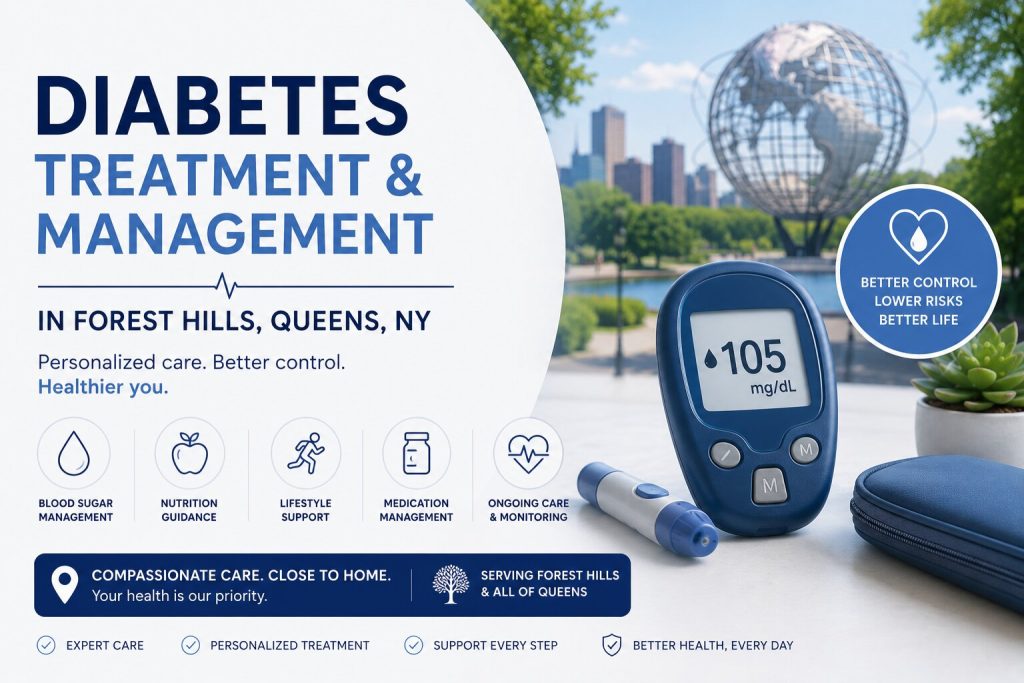
Type 1 diabetes normally first appears in childhood when the body can’t produce insulin. Insulin is the chemical that allows cells to use sugar in your bloodstream for energy. Symptoms of type 1 diabetes typically come on quickly and severely.
Type 2 diabetes is much more common. It tends to be detected when you’re in your 30s or older. In this case, your body may not produce quite enough insulin, or the insulin it produces may not work effectively enough to allow your cells to be fed by blood sugar. This type usually of diabetes develops very slowly, over years.
In both kinds of diabetes, your cells don’t get enough sugar, but at the same time, there’s also too much sugar, or glucose, floating around in your bloodstream. It’s unable to enter your cells. If you live in this state, it eventually results in many problems, such as:
Early detection and treatment are essential for both types of diabetes. Early detection and diabetes management make a big difference in how the condition affects you. The symptoms for both are almost the same, and usually they include:
Diabetes type 2 typically comes on more slowly. It gives you and your Medex doctor a chance to begin a critical prevention plan. With sufficient changes, you’ll stop type 2 diabetes and even reverse the symptoms.
Although diabetes type 1 is difficult to prevent, diabetes type 2, which makes up about 90 percent of cases, can be stopped before it starts. If you develop type 2 diabetes, you pass through a phase called prediabetes, during which you’re at an increased risk. At this point, intervention makes a big difference.
Detection is normally just a matter of a simple blood test and a conversation with your physician at the Medex Diagnostic and Treatment Center. Your primary care doctor, in consultation with Medex specialists who may be treating underlying conditions, recommends simple plans for putting preventive steps in place that may include:
Since the main issue with diabetes or prediabetes tends to be the amount of sugar in your blood, your diet plays a big role in maintaining blood sugar levels. Carbohydrates of all kinds get converted into sugar in the bloodstream, so even foods like bagels or pizza spike your blood sugar. The goal isn’t to eliminate carbs, though; it’s just to reduce and balance them with other elements, such as fiber.
Complex carbohydrates, such as whole grain bread, make for healthier choices. In general, the more refined or processed the carbs are — think white bread or powdered sugar — the worse they are for your body. At Medex, you receive tips from your diabetes prevention team about how to shop, such as:
If you already have type 1 diabetes, you need to be given insulin since your body is unable to produce it. For type 2 diabetes, you may still need insulin, but you may get other medications that help your body to use the insulin it has more effectively. You may also need medication to control the high blood pressure that’s often a side effect by diabetes.
You can still live a high-quality life with diabetes, but you have to be much more aware of your blood sugar levels. You need to be more conscious of your food and exercise choices. You also have to be more attentive to any other health problems. Whether you’re looking to prevent full-blown diabetes, or seeking diabetes management, contact your doctors at the Medex Diagnostic and Treatment Center in Queens.
We can help you find a doctor. Call (718) 275-8900
Licensed by the state of New York, Medex is an Article 28 diagnostic and treatment center. Our physicians provide comprehensive care for patients of all ages in the Forest Hills, Queens area, for over 15 years. Start receiving expert care now by calling or scheduling an appointment online with one of the skilled specialists.
Learn more about:
medex diagnostic and treatment center
Medical Disclaimer: This article is intended for informational and educational purposes only and should not be considered medical advice, diagnosis, or treatment. The information provided is not a substitute for evaluation by a qualified healthcare professional. Every individual and medical condition is unique, and symptoms can vary widely. If you have questions about your health, develop new or worsening symptoms, or believe you may have a medical emergency, seek prompt medical attention from a licensed physician or call 911 immediately. Never disregard professional medical advice or delay seeking care because of something you have read in this article.
Medex is a multi-specialty clinic with 24-hour urgent care, primary care, and more than 30 board-certified specialists, including podiatry, cardiology, dermatology, pain management, gynecology, and physical therapy. Each department works under one roof for seamless referrals.
Yes. Every Medex doctor is board-certified in their specialty, undergoes peer review, and participates in ongoing CME (continuing medical education). Credentials are listed on our Meet the Doctors page.
Absolutely. Our Queens urgent care clinic is open for walk-in patients with minor injuries or sudden illnesses. You can also save time by reserving a same-day slot online.
Medex accepts all major commercial carriers plus Medicare, Medicaid, HIP, EmblemHealth, MetroPlus, Fidelis, and GHI. For specific coverage questions, call (718) 275-8900 or visit our Insurance page.
Use our secure online booking portal, call (718) 275-8900, or log in to the Patient Portal to reschedule.
Yes—most primary care and follow-up visits can be conducted via HIPAA-compliant video. Sign the Telemedicine Consent Form and choose “Virtual” when booking.
Yes. Our No-Fault Doctor Queens team handles car- accident injuries, and our Workers’ Comp Clinic manages job-related injuries and paperwork.
We’re at 111-29 Queens Blvd, Forest Hills, NY 11375—steps from the Forest Hills–71 Av subway station (E, F, M, R lines). A paid garage is next door and metered street parking surrounds the building.
We follow HIPAA privacy rules, store EHR data on encrypted servers, and require two-factor authentication for staff access. You may request records through our ChartRequest portal.
Adults in good health should schedule an annual physical. Patients managing chronic conditions may need follow-ups every 3–6 months; your doctor will advise a personalized schedule.
For safety, we require an active chart and a visit within the past 12 months (3 months for controlled substances). Ask your pharmacy to send an electronic refill request or message us through the Patient Portal.
Last reviewed: March 22, 2026.
Medex Diagnostic and Treatment Center
Coronavirus Disease (Covid19 IgG/IgM) FDA-approved rapid antibody tests, COVID-19, and Flu vaccine are now available at MEDEX medical office.