
111-29 Queens Blvd, Forest Hills, NY 11375
111-29 Queens Blvd, Forest Hills, NY 11375


A vibration plate (whole-body vibration) can slightly increase muscle activation and blood flow, which may support balance, strength, flexibility, and post-workout recovery. Evidence is mixed, and results are usually modest, especially for fat loss. It works best as a supplement to regular strength and cardio training, not a replacement.
If you’re doing “everything right” and the scale still won’t move, it may be time to see an endocrinologist, because hormone and metabolic conditions, like thyroid disorders, insulin resistance/PCOS, Cushing’s syndrome, or medication-related changes, can slow fat loss and require targeted testing and treatment.
A vibration plate is a platform that vibrates at a set frequency (Hz) and amplitude (how far it moves). When you stand, squat, or do exercises on it, the vibration creates small, rapid changes in force that can make your muscles contract reflexively while you stabilize.
You’ll see vibration plates used in gyms, physical therapy settings, and at home, often for short sessions (5–15 minutes) alongside light exercises or stretching.
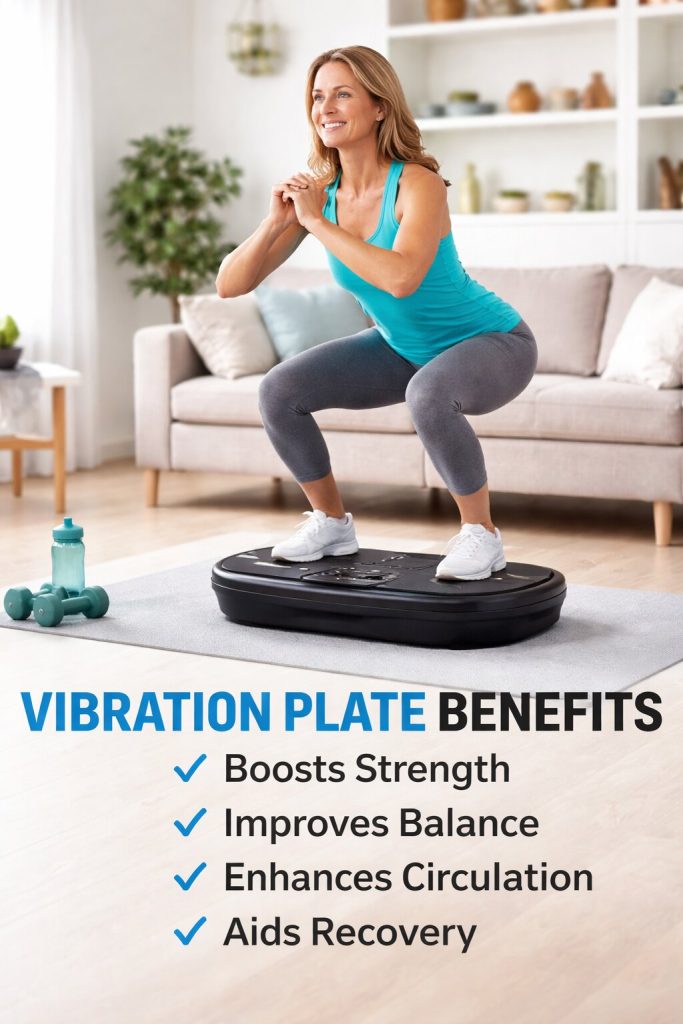
Whole-body vibration (WBV) can increase muscle activation during simple positions (like an athletic stance or squat hold). Over time, studies and reviews show potential improvements in strength and physical function, especially in populations who struggle with traditional training (older adults, some clinical groups).
Best for: beginners, older adults, rehab-style routines, “extra credit” on top of lifting.
Not a miracle for: building large amounts of muscle without progressive resistance training.
Because the platform slightly destabilizes you, it may help train stabilizing muscles and neuromuscular control. Multiple reviews report promising results for mobility and balance outcomes in certain groups.
Best for: adding a gentle balance stimulus (e.g., heel raises, split stance holds).
Tip: this is one of the better reasons to use a plate consistently.
Vibration can temporarily increase blood flow and make you feel looser, especially when used for light movement, stretching, or cool-down work. Many people use it as a recovery tool, and experts commonly describe small improvements in circulation and recovery comfort, though it’s not magic.
Best for: warm-up or cooldown, gentle mobility work, “legs feel heavy” days.
Research has explored WBV for bone density and bone loss, particularly in older adults and postmenopausal women. Results vary, and protocols differ across devices, but there is ongoing evidence that WBV may support bone-related outcomes in some contexts.
Important: devices and settings vary widely; and platforms are not broadly “FDA-approved as medical osteoporosis treatments.”
Vibration plates can make certain exercises slightly harder, but WBV alone is unlikely to drive meaningful fat loss. The most consistent take from expert summaries and prior reviews: weight-loss effects are small, and outcomes are much better when combined with a calorie deficit and a real training plan.
If weight loss is your goal: treat the vibration plate as a tool to increase movement quality and consistency, not the main method.
Whole-body vibration is not appropriate for everyone. Reputable medical guidance recommends checking with a clinician if you’re pregnant or have health issues.
Common “get medical clearance first” situations include:
Also, risk increases with higher intensity settings and longer sessions, so “more” is not better.
Stop immediately if you feel dizziness, numbness/tingling, pain, headache, or unusual symptoms.
Pick 4–6 moves and rotate:
Progression idea: increase time under tension first (seconds), then add a second round, and only then consider higher settings.
Because devices vary widely (power, amplitude, build quality), shop based on:
And remember: platforms aren’t standardized “medical devices” for most claims, and designs vary.
Do vibration plates actually work?
They can work for specific outcomes like modest strength, balance, and mobility improvements, especially as a supplement. They are not a replacement for traditional strength and aerobic exercise.
Can a vibration plate help you lose belly fat?
On its own, it’s unlikely to meaningfully reduce belly fat. Any fat loss typically comes from overall calorie balance and consistent training; vibration may add a small boost to activity, not a primary effect.
How long should you stand on a vibration plate?
Most people do short sessions (5–15 minutes). Start with 5–10 minutes, 2–4 times per week, and increase gradually based on comfort. Excessive intensity/time can increase side effects.
Is it safe to use a vibration plate every day?
Some people tolerate frequent low-intensity use, but daily high-intensity sessions are more likely to cause issues. If you have medical conditions (or you’re pregnant), get clinician guidance first.
Who should avoid vibration plates?
People who are pregnant or have pacemakers/implanted devices should avoid use unless cleared by their clinician. If you have significant health problems, check first.
Medex Diagnostic and Treatment Center
Coronavirus Disease (Covid19 IgG/IgM) FDA-approved rapid antibody tests, COVID-19, and Flu vaccine are now available at MEDEX medical office.