
111-29 Queens Blvd, Forest Hills, NY 11375
111-29 Queens Blvd, Forest Hills, NY 11375


Viral gastroenteritis (stomach flu) is a contagious infection of the stomach and intestines that causes watery diarrhea, nausea, vomiting, cramps, and sometimes fever. It spreads through close contact with infected people or contaminated food, water, and surfaces. Most cases improve in 1–3 days, but dehydration can be dangerous, especially in children and older adults. For stomach flu (viral gastroenteritis), see your primary care doctor (or a pediatrician for kids), and go to urgent care/ER if you can’t keep fluids down or show signs of dehydration.
Most healthy adults recover at home in 1–3 days (sometimes longer), but dehydration can become serious, especially for infants, older adults, and people with weakened immune systems.
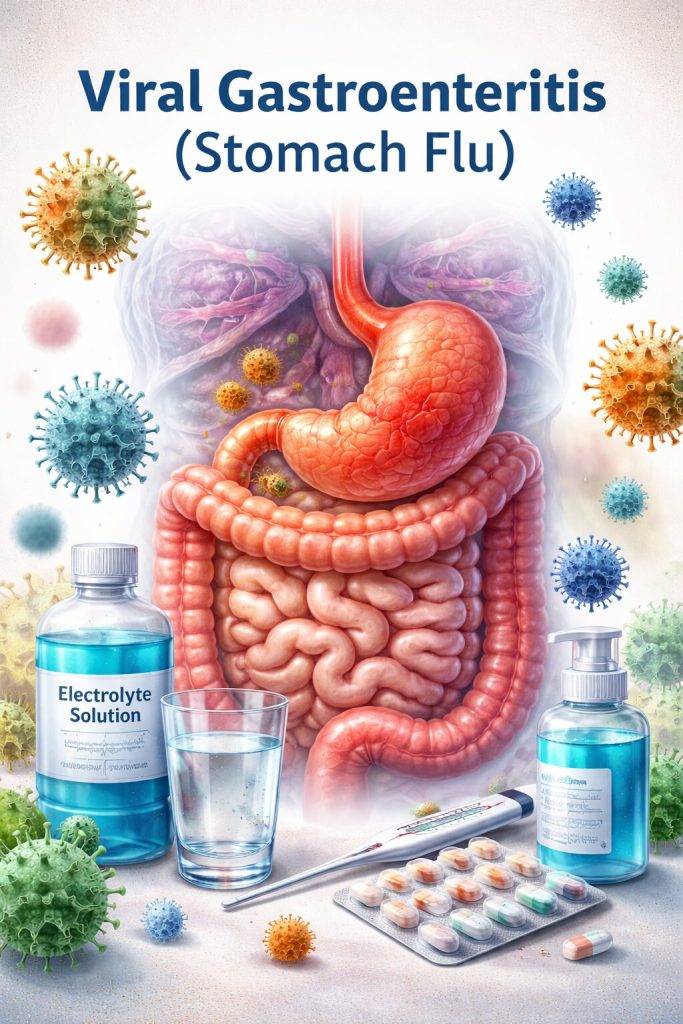
Viral gastroenteritis is inflammation of the stomach and intestines caused by a virus. Despite the nickname “stomach flu,” it is not influenza. Influenza affects the respiratory system (nose, throat, lungs), while gastroenteritis affects the digestive tract.
People can experience different combinations of symptoms. The most common include:
Symptoms often begin within 12–72 hours after exposure (timing depends on the virus).
Most people feel significantly better in 1–3 days, though symptoms can last longer in some cases (especially in kids or if dehydration develops).
Use these as “don’t wait” signs.
Emergency warning signs (any age): confusion, fainting, inability to wake/stay awake, severe dehydration, severe abdominal pain.
For viral gastroenteritis (stomach flu), the right doctor depends on severity and who the patient is:
Go to urgent care/ER now if any of these apply: you can’t keep fluids down, you’re very dizzy/fainting, you have very dark urine or aren’t peeing, severe belly pain, blood in vomit or stool, or signs of dehydration in a child (few wet diapers, no tears, unusual sleepiness).
You can catch stomach flu by:
Yes—very. Many stomach viruses spread easily because:
Tip: If one person in the household is sick, treat it like a “containment situation” for 48–72 hours.
There’s no “cure” antibiotic for viral gastroenteritis. The goal is hydration + symptom control + preventing complications.
Avoid: alcohol, very sugary drinks, and large amounts of juice (can worsen diarrhea).
Start with easy foods and small portions:
Some over-the-counter options may help certain adults, but avoid anti-diarrheal medication if you have fever, blood in stool, severe belly pain, or concern for bacterial infection. When in doubt, check with a clinician.
Dehydration is the most common reason people need urgent care. Watch for:
If dehydration signs appear, it’s safer to get evaluated sooner rather than later.
How can I tell if it’s stomach flu or food poisoning?
They can feel identical early on. Stomach flu often spreads through close contact and may come with a known exposure (family member sick). Food poisoning may be linked to a shared meal. Bloody stool, high fever, severe pain, or symptoms lasting more than a few days should be evaluated.
How long is stomach flu contagious?
Many people are most contagious while actively vomiting/with diarrhea, but some viruses can spread for days after symptoms improve. Be extra strict with handwashing and surface cleaning for at least 48 hours after you feel better.
Can stomach flu cause fever?
Yes, low-grade fever can happen. High or persistent fever is a reason to get medical advice, especially with severe pain or bloody stool.
What should I drink with stomach flu?
Small, frequent sips of water, broth, and oral rehydration solutions are best. If symptoms are heavy, oral rehydration solution is usually more effective than sports drinks.
What should I eat with stomach flu?
Start bland and simple (toast, rice, bananas, broth). Return to normal foods gradually as nausea and diarrhea improve.
Why is my diarrhea watery but not bloody?
Watery non-bloody diarrhea is common with viral gastroenteritis. Blood in stool is more concerning for bacterial infection or other causes and should be evaluated.
When should I go to urgent care for stomach flu?
Go if you can’t keep liquids down, have dehydration symptoms, blood in stool/vomit, severe belly pain, or symptoms that don’t improve after 48–72 hours.
Medex is a multi-specialty clinic with 24-hour urgent care, primary care, and more than 30 board-certified specialists, including podiatry, cardiology, dermatology, pain management, gynecology, and physical therapy. Each department works under one roof for seamless referrals.
Yes. Every Medex doctor is board-certified in their specialty, undergoes peer review, and participates in ongoing CME (continuing medical education). Credentials are listed on our Meet the Doctors page.
Absolutely. Our Queens urgent care clinic is open for walk-in patients with minor injuries or sudden illnesses. You can also save time by reserving a same-day slot online.
Medex accepts all major commercial carriers plus Medicare, Medicaid, HIP, EmblemHealth, MetroPlus, Fidelis, and GHI. For specific coverage questions, call (718) 275-8900 or visit our Insurance page.
Use our secure online booking portal, call (718) 275-8900, or log in to the Patient Portal to reschedule.
Yes—most primary care and follow-up visits can be conducted via HIPAA-compliant video. Sign the Telemedicine Consent Form and choose “Virtual” when booking.
Yes. Our No-Fault Doctor Queens team handles car- accident injuries, and our Workers’ Comp Clinic manages job-related injuries and paperwork.
We’re at 111-29 Queens Blvd, Forest Hills, NY 11375—steps from the Forest Hills–71 Av subway station (E, F, M, R lines). A paid garage is next door and metered street parking surrounds the building.
We follow HIPAA privacy rules, store EHR data on encrypted servers, and require two-factor authentication for staff access. You may request records through our ChartRequest portal.
Adults in good health should schedule an annual physical. Patients managing chronic conditions may need follow-ups every 3–6 months; your doctor will advise a personalized schedule.
For safety, we require an active chart and a visit within the past 12 months (3 months for controlled substances). Ask your pharmacy to send an electronic refill request or message us through the Patient Portal.
Last reviewed: March 22, 2026.
Medex Diagnostic and Treatment Center
Coronavirus Disease (Covid19 IgG/IgM) FDA-approved rapid antibody tests, COVID-19, and Flu vaccine are now available at MEDEX medical office.