
111-29 Queens Blvd, Forest Hills, NY 11375
111-29 Queens Blvd, Forest Hills, NY 11375


Hashimoto’s disease (Hashimoto’s thyroiditis) is an autoimmune condition where your immune system attacks the thyroid gland, often causing hypothyroidism (an underactive thyroid) over time. Common symptoms include fatigue, weight gain, cold intolerance, constipation, dry skin, hair thinning, depression, and brain fog. Diagnosis typically involves TSH and Free T4 blood tests plus thyroid antibodies such as TPO antibodies. Treatment usually includes thyroid hormone replacement (levothyroxine) and regular lab monitoring to keep thyroid levels in a healthy range.
Important: This article is for education and does not replace medical advice. If you have symptoms of thyroid disease or abnormal lab results, book an evaluation with a licensed clinician.
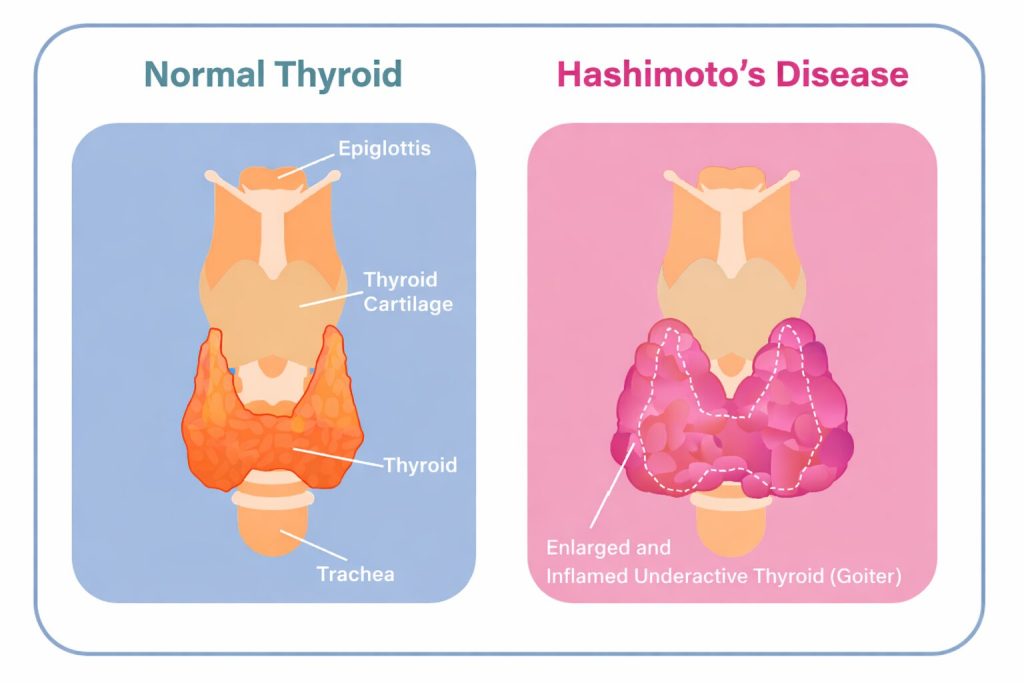
Hashimoto’s disease (also called Hashimoto’s thyroiditis, chronic autoimmune thyroiditis, or chronic lymphocytic thyroiditis) is a common autoimmune condition that affects the thyroid gland, a small, butterfly-shaped gland at the base of your neck. Your thyroid produces hormones that help regulate metabolism, energy, body temperature, heart rate, digestion, mood, and more.
In Hashimoto’s disease, the immune system mistakenly attacks thyroid tissue. Over time, this inflammation can reduce the thyroid’s ability to make hormones, leading to hypothyroidism (an underactive thyroid).
Hashimoto’s can occur at any age, but it’s most common in women and often appears in middle adulthood. With the right testing and treatment plan, most people can manage symptoms and protect long-term health.
Thyroid hormones act like the body’s “metabolic thermostat.” When thyroid hormone levels are too low, many body processes slow down. This can affect:
Hashimoto’s often develops slowly. Some people have no symptoms early on, even when antibodies are present. As thyroid hormone levels decline, symptoms may include:
Note: These symptoms are not specific to Hashimoto’s—many conditions can cause similar issues. Testing is the best way to get clarity.
Consider evaluation if you:
If you have severe confusion, extreme drowsiness, trouble breathing, or loss of consciousness, seek emergency care, these can be signs of a rare, life-threatening complication (myxedema coma).
Hashimoto’s is an autoimmune disorder. The immune system produces antibodies that target thyroid cells, causing inflammation and gradual damage.
The exact trigger isn’t always clear, but likely contributors include:
You may have a higher risk of Hashimoto’s if you:
Diagnosis usually includes a combination of history, exam, and lab testing. At Medex, a thyroid evaluation may include:
If there is neck swelling, nodules, or an enlarged thyroid, your provider may recommend a thyroid ultrasound.
Important: Some people have positive antibodies but normal thyroid hormone levels. In that case, treatment decisions depend on symptoms, labs, pregnancy status, and overall risk.
The main treatment is thyroid hormone replacement when hypothyroidism is present.
Hashimoto’s can change over time. Ongoing monitoring helps keep thyroid levels in a healthy range and reduce symptoms.
Depending on your situation, clinicians may also discuss:
When hypothyroidism is not treated, it can affect multiple systems. Potential complications include:
Thyroid hormone needs can change during pregnancy, and adequate thyroid levels are important for fetal development. If you are pregnant or trying to conceive, tell your provider—your target lab ranges and monitoring schedule may differ.
If you suspect a thyroid issue, a visit typically includes:
To schedule an appointment: Contact Medex Diagnostic and Treatment Center to request a thyroid evaluation.
Hashimoto’s disease (Hashimoto’s thyroiditis) is an autoimmune condition where the immune system attacks the thyroid gland, often leading to an underactive thyroid (hypothyroidism) over time.
Not exactly. Hashimoto’s is the autoimmune cause; hypothyroidism is the result when the thyroid can’t produce enough hormones.
The exact cause isn’t fully known. It likely involves genetics plus triggers like infections, stress, hormonal changes (including postpartum), radiation exposure, or excess iodine in susceptible people.
It’s more common in women, often appears in middle adulthood, and is more likely if you have a family history of thyroid/autoimmune disease or another autoimmune condition.
Early on, you may have no symptoms. As thyroid function declines, fatigue, cold intolerance, constipation, dry skin, and brain fog can appear.
It can contribute to weight gain or make weight loss harder due to a slowed metabolism, though changes are often modest and vary by person.
Yes. Low thyroid hormone levels can affect mood and may contribute to depression, anxiety-like symptoms, or irritability.
Yes. Trouble concentrating, forgetfulness, and mental “slowness” are common when thyroid hormone levels are low.
Common symptoms include fatigue, cold sensitivity, dry skin, constipation, muscle aches, slowed heart rate, depression, and menstrual changes.
Diagnosis often includes thyroid function tests (TSH, Free T4) plus thyroid antibody tests (especially TPO antibodies; sometimes thyroglobulin antibodies).
TPO (thyroid peroxidase) antibodies are immune proteins that attack thyroid tissue. A positive result supports Hashimoto’s as the cause of thyroid inflammation.
Yes. Some people have positive antibodies but normal TSH and Free T4. Your clinician may monitor labs and symptoms over time.
Not always. Ultrasound is more likely if you have neck swelling, a goiter, thyroid nodules, or abnormal findings on exam.
A goiter is an enlarged thyroid gland. Hashimoto’s can cause a goiter due to inflammation and thyroid-stimulating signals from the brain.
If hypothyroidism is present, the main treatment is thyroid hormone replacement—most commonly levothyroxine (T4)—plus regular lab monitoring.
Typically when TSH is elevated with low Free T4 (overt hypothyroidism). Treatment decisions can differ in pregnancy, fertility planning, or certain borderline cases.
Many people notice improvement within a few weeks, but full symptom improvement can take longer as hormone levels stabilize.
After starting or changing a dose, labs are often rechecked in about 6–8 weeks, then periodically once stable (your clinician will personalize this).
Yes. Hypothyroidism can cause irregular/heavy periods, affect ovulation, and increase pregnancy risks if untreated. Thyroid levels should be monitored closely during pregnancy.
Untreated hypothyroidism can lead to high LDL cholesterol, heart problems, worsening depression, fertility issues, goiter, and in rare severe cases, myxedema coma (a medical emergency).
Medex Diagnostic and Treatment Center
Coronavirus Disease (Covid19 IgG/IgM) FDA-approved rapid antibody tests, COVID-19, and Flu vaccine are now available at MEDEX medical office.