
111-29 Queens Blvd, Forest Hills, NY 11375
111-29 Queens Blvd, Forest Hills, NY 11375


FUPA stands for fatty upper pubic area. It refers to extra fat and sometimes loose skin over the mons pubis, the soft tissue above the pubic bone. FUPA can become more noticeable with weight gain, pregnancy, aging, genetics, or major weight loss. In some people it is mainly a cosmetic concern, but in others it can contribute to skin irritation, rashes, moisture buildup, hygiene problems, or functional issues. Treatment may include weight management, strength training, skin care, treatment of rashes or infections, and in selected cases procedures such as liposuction, monsplasty, panniculectomy, or abdominoplasty after medical evaluation.
At Medex Diagnostic and Treatment Center, we help patients understand body changes that affect comfort, confidence, hygiene, and quality of life. One area people often ask about is FUPA, a common nonmedical term for fullness in the area just above the pubic bone. Most people should start with a primary care doctor. A gynecologist, urologist, dermatologist, or plastic surgeon may be involved depending on the symptoms.
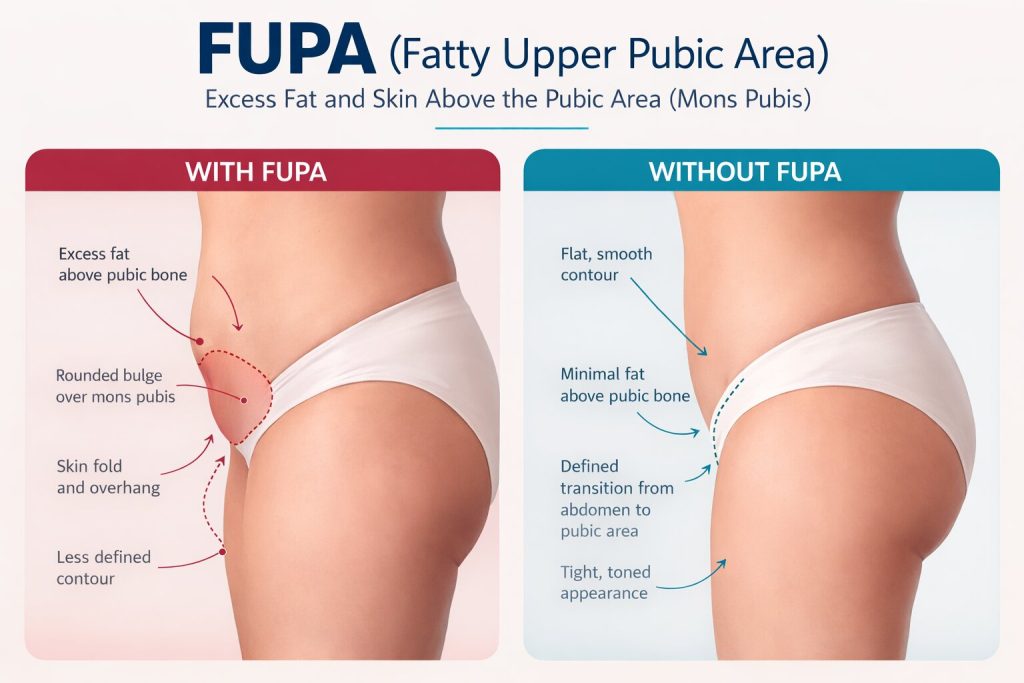
A visible or enlarged pubic mound is often completely normal. The issue becomes more important when the area causes chafing, recurrent rash, odor, trouble keeping the area dry, discomfort in clothing, or urinary/sexual function concerns. The right evaluation depends on whether the problem is mostly fat, loose skin, inflammation, or a related condition such as a buried penis or large abdominal overhang.
FUPA means fatty upper pubic area. Medically, the area involved is usually the mons pubis or mons—the mound of fatty tissue in front of the pubic bones. This tissue normally cushions and protects the pubic bone. In some people, the area becomes more prominent because of increased fat storage, lax skin, or both.
It is important to know that not every fuller mons pubis is abnormal. Body shape varies widely. Some people naturally carry more subcutaneous fat in this area. Others notice a change after pregnancy, menopause, weight gain, or major weight loss.
FUPA usually has more than one cause. Common contributors include:
When body fat increases, fat can accumulate in many places, including the lower abdomen and mons pubis. In some patients, this fullness can extend into the suprapubic fat pad, which may become pronounced enough to affect hygiene or function.
After significant weight loss, skin that was stretched for a long time may not fully tighten again. That can leave loose skin or an overhanging fold, sometimes together with stubborn remaining fat in the pubic area or lower abdomen.
Pregnancy can change the contour of the lower abdomen and pubic area through stretching of skin and soft tissues. Even after delivery and weight loss, some fullness or laxity may remain.
As skin and connective tissue lose elasticity over time, the mons pubis and lower abdomen can look fuller or lower, even without major weight gain.
Where the body stores fat is partly influenced by inherited body shape and hormonal patterns. That is one reason some people have more fullness in the pubic region than others at the same body weight. This is a general physiologic principle; exact distribution varies from person to person.
Sometimes the concern is not just a fuller pubic mound. It may be part of a larger issue such as panniculus—an overhanging apron of skin and tissue in the lower abdomen—or, in some men, an adult acquired buried penis, where surrounding tissue partly or fully conceals the penis.
For some people, FUPA is only a body-image concern. For others, it can lead to real physical symptoms, especially when there is excess skin, friction, moisture, or difficulty cleaning the area. Problems can include:
In men, a large suprapubic fat pad can sometimes contribute to a buried penis, which may cause urine spraying, dribbling, skin irritation, recurrent infections, erectile or penetrative difficulty, and hygiene problems.
Usually, FUPA itself is not dangerous. The main concern is whether it is associated with other health or functional problems. It deserves medical attention if it is causing:
Weight loss can reduce overall body fat, and many people notice that the pubic area becomes smaller as they lose weight. Exercise also improves body composition and overall metabolic health. However, results are variable because the body does not always lose fat evenly from every area, and loose skin may remain after major weight loss.
That means a person may do everything right and still have a persistent lower abdominal or pubic bulge because of:
Not everyone needs a procedure. Depending on symptoms, treatment may start with conservative steps:
If you are overweight, gradual weight loss can help reduce the amount of fat in the lower abdomen and pubic region and may also reduce friction and moisture.
Exercise will not guarantee spot reduction in one exact area, but it can improve overall fat loss, posture, lower abdominal tone, and function.
If folds trap moisture, a clinician may recommend keeping the area dry, using breathable fabrics, reducing friction, and treating any suspected fungal or bacterial rash. Skin-fold irritation is a well-recognized problem when excess skin rubs and stays moist.
If the issue is causing major body-image distress, anxiety, intimacy avoidance, or low self-esteem, counseling can be helpful, whether or not surgery is ever pursued. This is a clinical judgment recommendation rather than a claim that every patient needs therapy.
Procedures are considered when conservative measures are not enough and the concern is significant cosmetically, physically, or functionally. The best option depends on whether the main issue is fat, skin, or both.
Liposuction removes localized fat through small incisions. It may help when the skin still has enough elasticity to retract. Liposuction is not a weight-loss treatment, and risks can include infection, contour irregularity, bruising, swelling, and skin discoloration.
A monsplasty removes extra skin and fatty tissue from the mons pubis to lift and reshape the area. Cleveland Clinic notes that it can improve appearance and comfort, and healing may take up to about eight weeks.
A panniculectomy removes excess overhanging abdominal skin and tissue, especially after significant weight loss. It is aimed more at reducing symptoms from the pannus, such as rubbing, moisture, and hygiene difficulties, than at cosmetic contouring alone. Risks include bleeding, infection, seroma, wound-healing delay, numbness, swelling, and scarring.
An abdominoplasty reshapes the abdominal area and may also be combined with other contouring procedures. It can help with loose lower abdominal skin and contour concerns after weight loss, pregnancy, or aging. Recovery commonly requires limiting strenuous activity for four to six weeks.
For men with functional problems from a buried penis, reconstructive treatment may involve a urologist and sometimes a plastic surgeon. Surgical planning depends on the amount of fat, skin disease, scarring, or lymphedema present. Studies describe meaningful improvement in hygiene, urinary function, sexual function, and quality of life after appropriate repair, though wound complications are not uncommon.
Recovery depends on the exact procedure and your overall health.
Patients should have realistic expectations. These procedures can improve contour and comfort, but they do not create a “perfect” body and do not replace healthy long-term weight management.
The right specialist depends on your symptoms:
At Medex Diagnostic and Treatment Center, a good starting point is a general medical evaluation to determine whether the issue is mainly related to weight, skin, infection, hormonal change, or anatomy, and then refer you to the right specialist when needed.
Seek prompt medical attention if you have:
FUPA is a common term for extra fat and sometimes loose skin over the upper pubic area. For many people, it is simply a normal body-shape variation. For others, it can lead to irritation, hygiene challenges, discomfort, or functional issues, especially after major weight changes. Treatment may range from weight management and skin care to monsplasty, liposuction, panniculectomy, or abdominoplasty, depending on the cause and the severity of symptoms.
FUPA stands for fatty upper pubic area, a nonmedical term for extra fat and sometimes loose skin over the mons pubis.
Yes. The mons pubis normally contains fatty tissue that cushions the pubic bone. It becomes a concern mainly when it causes symptoms or major distress.
Pregnancy can stretch the skin and soft tissues of the lower abdomen and pubic area, which may leave persistent fullness or laxity afterward.
It may become smaller with overall fat loss, but loose skin or a persistent fat pad can remain, especially after major weight loss.
Exercise helps overall body composition and health, but localized fat loss is unpredictable, and loose skin will not fully respond to exercise alone.
Yes. Moisture and friction in skin folds can lead to irritation, rash, odor, and infection risk.
No. FUPA usually refers to the upper pubic mound, while a pannus or panniculus is a larger overhanging apron of abdominal tissue. The two can exist together.
Yes. In some men, excess suprapubic tissue can contribute to a buried penis and cause urinary, hygiene, and sexual-function issues.
Depending on the anatomy, options may include liposuction, monsplasty, panniculectomy, abdominoplasty, or reconstructive urologic surgery in buried penis cases.
Most people should start with a primary care doctor. A gynecologist, urologist, dermatologist, or plastic surgeon may be involved depending on the symptoms.
Medex is a multi-specialty clinic with 24-hour urgent care, primary care, and more than 30 board-certified specialists, including podiatry, cardiology, dermatology, pain management, gynecology, and physical therapy. Each department works under one roof for seamless referrals.
Yes. Every Medex doctor is board-certified in their specialty, undergoes peer review, and participates in ongoing CME (continuing medical education). Credentials are listed on our Meet the Doctors page.
Absolutely. Our Queens urgent care clinic is open for walk-in patients with minor injuries or sudden illnesses. You can also save time by reserving a same-day slot online.
Medex accepts all major commercial carriers plus Medicare, Medicaid, HIP, EmblemHealth, MetroPlus, Fidelis, and GHI. For specific coverage questions, call (718) 275-8900 or visit our Insurance page.
Use our secure online booking portal, call (718) 275-8900, or log in to the Patient Portal to reschedule.
Yes—most primary care and follow-up visits can be conducted via HIPAA-compliant video. Sign the Telemedicine Consent Form and choose “Virtual” when booking.
Yes. Our No-Fault Doctor Queens team handles car- accident injuries, and our Workers’ Comp Clinic manages job-related injuries and paperwork.
We’re at 111-29 Queens Blvd, Forest Hills, NY 11375—steps from the Forest Hills–71 Av subway station (E, F, M, R lines). A paid garage is next door and metered street parking surrounds the building.
We follow HIPAA privacy rules, store EHR data on encrypted servers, and require two-factor authentication for staff access. You may request records through our ChartRequest portal.
Adults in good health should schedule an annual physical. Patients managing chronic conditions may need follow-ups every 3–6 months; your doctor will advise a personalized schedule.
For safety, we require an active chart and a visit within the past 12 months (3 months for controlled substances). Ask your pharmacy to send an electronic refill request or message us through the Patient Portal.
Last reviewed: March 22, 2026.
Medex Diagnostic and Treatment Center
Coronavirus Disease (Covid19 IgG/IgM) FDA-approved rapid antibody tests, COVID-19, and Flu vaccine are now available at MEDEX medical office.