
111-29 Queens Blvd, Forest Hills, NY 11375
111-29 Queens Blvd, Forest Hills, NY 11375


A Toradol shot is an injectable form of ketorolac, a powerful nonsteroidal anti-inflammatory drug (NSAID) used for short-term relief of moderate to severe pain. It works by reducing inflammation and blocking pain signals in the body. Doctors commonly use it for post-surgical pain, migraines, kidney stones, and acute injuries when fast, effective pain control is needed.
A Toradol shot is an intramuscular or intravenous injection of ketorolac, a prescription-strength NSAID designed to treat acute pain. Unlike opioids, it does not act on the brain’s pain receptors but instead targets inflammation at its source. This makes it a popular choice in medical settings for patients who need strong pain relief without the risks of addiction or sedation associated with narcotics.
Toradol injections are commonly administered in urgent care and outpatient settings to rapidly control pain from a wide range of conditions. Because it is fast-acting, many patients begin to feel relief within 15 to 30 minutes after receiving the injection. However, it is important to understand that Toradol is intended for short-term use only, typically no longer than five days, due to its potential side effects.
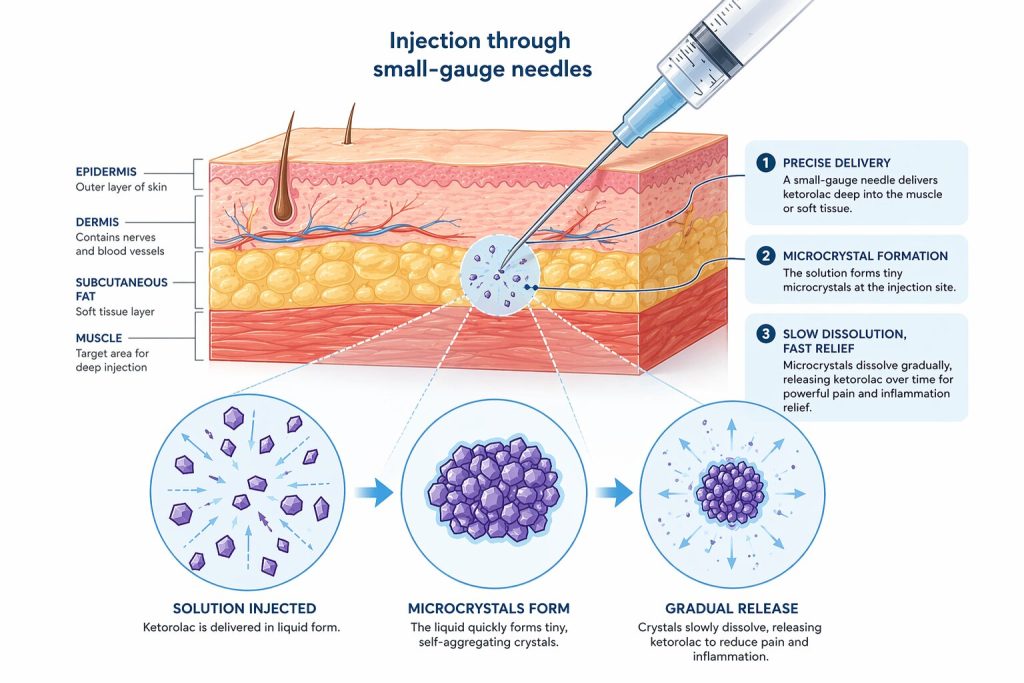
The Toradol shot is widely used to treat moderate to severe acute pain that requires immediate relief. It is especially beneficial when oral medications are not effective or when a patient cannot take pills. Physicians often recommend it as part of a broader pain management plan.
Common uses include:
One of the key advantages of a Toradol injection is its ability to reduce both pain and inflammation simultaneously. This dual action makes it particularly effective for conditions where swelling contributes significantly to discomfort. In clinical practice, it is often used as an alternative to opioids, helping reduce reliance on habit-forming medications.
Toradol works by inhibiting cyclooxygenase (COX-1 and COX-2) enzymes, which are responsible for producing prostaglandins. Prostaglandins are chemicals in the body that promote inflammation, pain, and fever. By blocking these enzymes, Toradol reduces the production of these chemicals, leading to decreased inflammation and pain relief.
Unlike opioids, which alter how the brain perceives pain, Toradol addresses the underlying cause of pain at the tissue level. This makes it particularly effective for inflammatory pain conditions. Because it does not cause sedation or euphoria, patients can often resume normal activities more quickly after treatment, depending on their condition.
One of the main reasons patients and doctors prefer the Toradol shot is its rapid onset of action. Most patients begin to feel pain relief within 15 to 30 minutes after the injection. Peak effects are typically reached within one to two hours, and the pain relief can last anywhere from four to six hours.
The speed and effectiveness of the Toradol injection make it ideal for emergency situations or severe pain episodes. For example, patients suffering from migraines often experience significant relief shortly after receiving the shot. Similarly, individuals with kidney stones or acute injuries can benefit from its fast-acting properties.
The effects of a Toradol shot usually last between four and six hours, although this can vary depending on the individual and the severity of the condition being treated. In some cases, patients may experience residual pain relief for up to eight hours.
Because of its potency, Toradol is not intended for long-term use. Doctors typically limit treatment to a maximum of five days to reduce the risk of side effects, particularly those affecting the gastrointestinal tract and kidneys. If longer pain management is needed, healthcare providers will recommend alternative medications or therapies.
The dosage of a Toradol shot depends on several factors, including the patient’s age, weight, kidney function, and severity of pain. It is administered either intramuscularly (into a muscle) or intravenously (into a vein) by a healthcare professional.
Typical dosing guidelines include:
Physicians carefully evaluate each patient before administering Toradol to ensure it is safe and appropriate. This personalized approach helps minimize risks while maximizing pain relief.
Like all medications, Toradol can cause side effects. While many patients tolerate it well, it is important to be aware of potential risks, especially with repeated use.
Common side effects include:
More serious side effects, although less common, can include gastrointestinal bleeding, kidney problems, and increased risk of cardiovascular events. Because of these risks, Toradol is not recommended for long-term use and should always be administered under medical supervision.
Patients should seek immediate medical attention if they experience symptoms such as severe abdominal pain, black stools, chest pain, or difficulty breathing after receiving a Toradol shot.
Toradol is not suitable for everyone. Certain medical conditions and risk factors may make its use unsafe. Before receiving a Toradol injection, patients should inform their doctor of their full medical history.
You may not be a candidate for a Toradol shot if you:
At Medex Diagnostic and Treatment Center, patient safety is a top priority. Physicians conduct thorough evaluations to determine whether Toradol is the right option or if alternative treatments are more appropriate.
When comparing Toradol to other pain relief medications, it stands out for its effectiveness and non-opioid profile. Unlike opioids, it does not carry a risk of addiction, making it a safer option for many patients.
Compared to over-the-counter NSAIDs like ibuprofen, Toradol is significantly more potent and fast-acting. However, this increased strength also comes with a higher risk of side effects, which is why it is only available by prescription and used under medical supervision.
In some cases, doctors may combine Toradol with other treatments, such as physical therapy or muscle relaxants, to provide comprehensive pain management. This approach helps address both the symptoms and the underlying cause of pain.
Receiving a Toradol shot is a quick and straightforward procedure. The injection is typically given in the arm or buttock, depending on the method of administration. Patients may feel a brief sting at the injection site, but the discomfort is usually minimal and short-lived.
After the injection, patients are often monitored for a short period to ensure there are no immediate adverse reactions. Most individuals can return to their normal activities shortly after treatment, although it is advisable to follow any specific instructions provided by the healthcare provider.
Pain relief typically begins within minutes, allowing patients to experience significant improvement in comfort and mobility. This rapid effect is one of the reasons Toradol is frequently used in urgent care and emergency settings.
While a Toradol shot can provide effective short-term relief, it is important to address the underlying cause of pain. Persistent or severe pain may indicate a more serious condition that requires medical evaluation.
You should see a doctor if you experience:
At Medex Diagnostic and Treatment Center in Queens, NY, our experienced medical team provides comprehensive evaluations and personalized treatment plans. Whether you need immediate pain relief or long-term care, we are here to help you recover safely and effectively.
The Toradol shot is a powerful, fast-acting solution for moderate to severe pain, offering significant relief without the risks associated with opioids. Its ability to reduce inflammation and control pain quickly makes it a valuable tool in modern medicine, particularly in urgent care and post-surgical settings.
However, because of its potential side effects, it should only be used under medical supervision and for short durations. If you are experiencing severe pain and need immediate relief, consulting a healthcare provider can help determine whether a Toradol injection is the right choice for you.
Medex is a multi-specialty clinic with 24-hour urgent care, primary care, and more than 30 board-certified specialists, including podiatry, cardiology, dermatology, pain management, gynecology, and physical therapy. Each department works under one roof for seamless referrals.
Yes. Every Medex doctor is board-certified in their specialty, undergoes peer review, and participates in ongoing CME (continuing medical education). Credentials are listed on our Meet the Doctors page.
Absolutely. Our Queens urgent care clinic is open for walk-in patients with minor injuries or sudden illnesses. You can also save time by reserving a same-day slot online.
Medex accepts all major commercial carriers plus Medicare, Medicaid, HIP, EmblemHealth, MetroPlus, Fidelis, and GHI. For specific coverage questions, call (718) 275-8900 or visit our Insurance page.
Use our secure online booking portal, call (718) 275-8900, or log in to the Patient Portal to reschedule.
Yes—most primary care and follow-up visits can be conducted via HIPAA-compliant video. Sign the Telemedicine Consent Form and choose “Virtual” when booking.
Yes. Our No-Fault Doctor Queens team handles car- accident injuries, and our Workers’ Comp Clinic manages job-related injuries and paperwork.
We’re at 111-29 Queens Blvd, Forest Hills, NY 11375—steps from the Forest Hills–71 Av subway station (E, F, M, R lines). A paid garage is next door and metered street parking surrounds the building.
We follow HIPAA privacy rules, store EHR data on encrypted servers, and require two-factor authentication for staff access. You may request records through our ChartRequest portal.
Adults in good health should schedule an annual physical. Patients managing chronic conditions may need follow-ups every 3–6 months; your doctor will advise a personalized schedule.
For safety, we require an active chart and a visit within the past 12 months (3 months for controlled substances). Ask your pharmacy to send an electronic refill request or message us through the Patient Portal.
Last reviewed: March 22, 2026.
Medex Diagnostic and Treatment Center
Coronavirus Disease (Covid19 IgG/IgM) FDA-approved rapid antibody tests, COVID-19, and Flu vaccine are now available at MEDEX medical office.