
111-29 Queens Blvd, Forest Hills, NY 11375
111-29 Queens Blvd, Forest Hills, NY 11375


Noticing foamy urine or bubbly pee in the toilet can be alarming. In many cases, occasional bubbles are harmless and happen because urine hits the water with force. However, persistent foamy urine may be a sign of protein in the urine, kidney disease, urinary tract problems, diabetes, or other medical conditions that should be evaluated by a healthcare professional. At Medex Diagnostic & Treatment Center in Queens, NY, our urologists evaluate patients with urinary symptoms, including persistent bubbly urine, changes in urine appearance, urinary frequency, burning, blood in urine, and kidney-related concerns. Foamy Urine?
Medically Reviewed By: Dilip Doctor, MD , Board-Certified Urologist
Last reviewed: June 2026
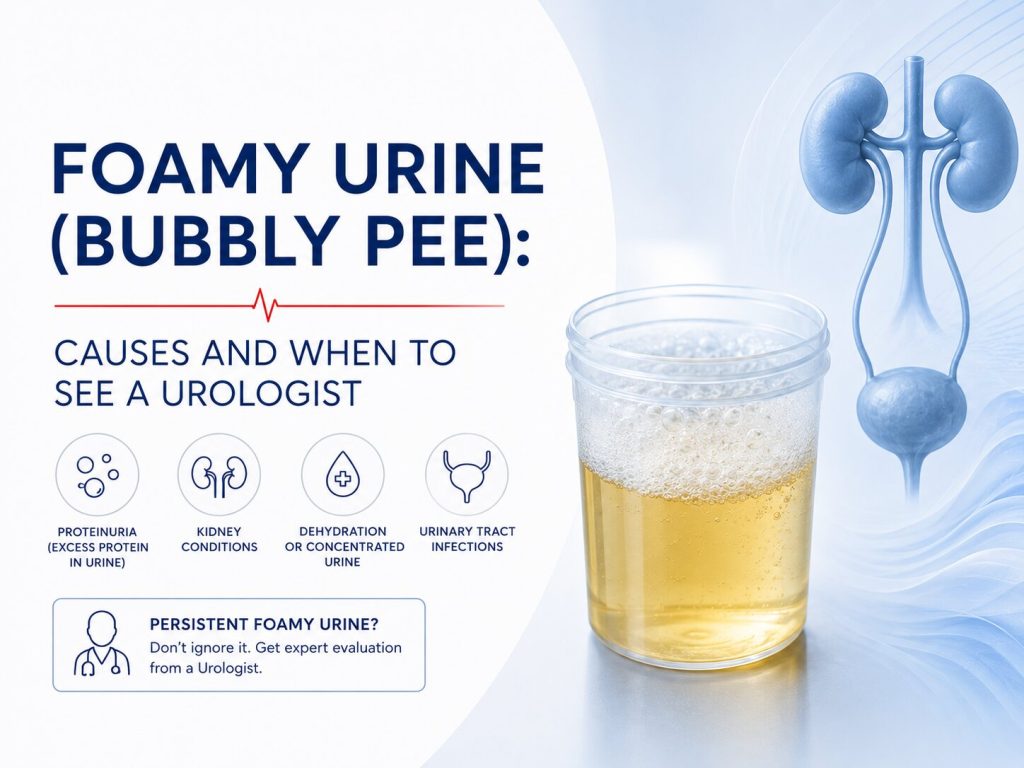
Foamy urine is urine that creates a layer of bubbles or foam after urination.
Occasional foamy urine is common and usually harmless. It may occur because:
However, if foamy urine happens repeatedly, becomes more noticeable, or is accompanied by swelling, fatigue, or other symptoms, it may indicate excess protein in the urine (proteinuria) or an underlying kidney condition.
Many people mistake normal bubbles for abnormal foam.
If your urine consistently looks like the foam on top of a beer or root beer float, medical evaluation is recommended.
When you do not drink enough fluids, urine becomes more concentrated. Concentrated urine can appear darker and foamier than usual.
Common signs include:
One of the most important causes of persistent foamy urine is proteinuria.
Healthy kidneys keep protein in the bloodstream. When the kidneys’ filtering system becomes damaged, protein can leak into urine and create foam.
Chronic kidney disease may cause excess protein to enter the urine, leading to persistent foaminess. Early kidney disease often causes few or no symptoms, making testing especially important.
Uncontrolled diabetes can damage the kidneys over time and cause diabetic kidney disease, one of the leading causes of proteinuria and foamy urine.
Long-term hypertension can injure the kidneys and affect their ability to filter waste and protein properly.
Some urinary infections may change urine appearance and create bubbles or foam, especially when accompanied by:
Conditions such as lupus can affect kidney function and result in protein leakage into the urine.
Strenuous exercise may temporarily cause protein to appear in urine, resulting in temporary foamy urine that often resolves on its own.
Schedule a medical evaluation promptly if foamy urine occurs together with:
You should see a urologist if:
Early evaluation can help identify problems before significant kidney damage develops.
At Medex Diagnostic & Treatment Center, evaluation may include:
Checks for protein, blood, infection, and other abnormalities.
Measures protein levels and helps determine whether kidney damage may be present.
Assess kidney function and screen for underlying conditions.
May be recommended when structural urinary tract problems are suspected.
Treatment depends on the underlying cause.
Possible treatments include:
No. Occasional foamy urine is common and may occur because of a strong urine stream, dehydration, or temporary factors. Persistent foamy urine should be evaluated.
Yes. Concentrated urine caused by dehydration may appear foamier than usual.
Not always. While proteinuria is a common medical cause, many people experience bubbles due to non-medical factors. Testing is required to determine the cause.
Yes. Diabetes can damage kidney filters and lead to protein leakage into the urine.
Yes. Persistent daily frothy urine warrants medical evaluation, particularly if it is getting worse or is associated with swelling, fatigue, or blood in the urine.
Persistent foamy urine should never be ignored. While many cases are harmless, others may signal kidney disease, urinary tract disorders, diabetes-related complications, or other health concerns that require treatment.
The experienced urology team at Medex Diagnostic & Treatment Center provides comprehensive evaluation of foamy urine, bubbly pee, urinary symptoms, kidney-related concerns, and urinary tract conditions.
If you have persistent foamy urine, schedule an appointment with a urologist at Medex Diagnostic & Treatment Center in Queens today for a complete evaluation and personalized treatment plan.
Medex Diagnostic and Treatment Center
Coronavirus Disease (Covid19 IgG/IgM) FDA-approved rapid antibody tests, COVID-19, and Flu vaccine are now available at MEDEX medical office.