
111-29 Queens Blvd, Forest Hills, NY 11375
111-29 Queens Blvd, Forest Hills, NY 11375


If you struggle with insomnia, snoring, excessive fatigue, or poor-quality sleep, schedule an evaluation with a physician at Medex Diagnostic & Treatment Center. Identifying and treating the underlying cause can significantly improve both your sleep and your overall health. Schedule an appointment now >
Sleep hygiene is a set of healthy habits, routines, and environmental practices that help improve sleep quality. Good sleep hygiene includes maintaining a consistent sleep schedule, limiting caffeine, reducing screen time before bed, creating a comfortable sleep environment, and managing stress. These habits help people fall asleep faster, stay asleep longer, and wake up feeling refreshed
Good sleep hygiene is one of the most effective ways to improve sleep quality naturally without medication. Research consistently shows that healthy sleep habits can reduce insomnia symptoms, improve mental health, support heart health, strengthen immunity, and boost daytime energy. Adults generally need at least 7 hours of sleep per night for optimal health.
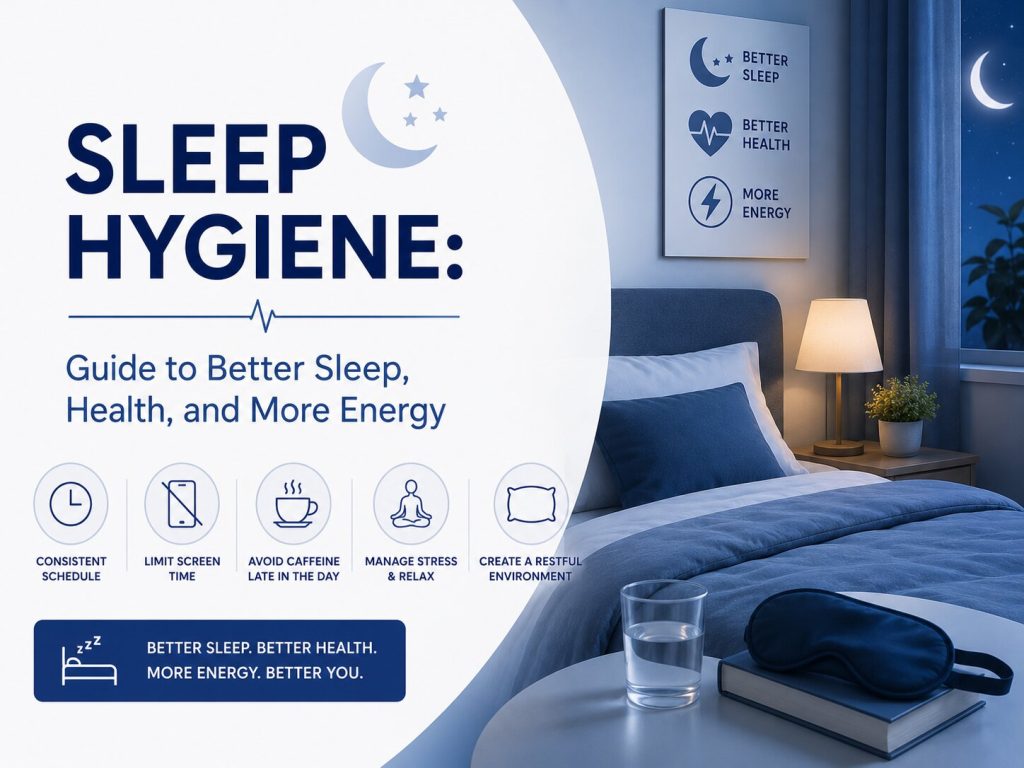
Think of sleep hygiene as “nutrition and exercise for your sleep.” Just as healthy eating supports your body, healthy sleep habits support your brain, hormones, metabolism, mood, and long-term health.
Poor sleep affects far more than your energy levels.
Chronic sleep deprivation has been linked to:
Sleep disorders and ongoing poor sleep may significantly impact quality of life and overall health.
You may have poor sleep hygiene if you:
Go to bed and wake up at the same time every day, including weekends.
Your brain relies on a predictable internal clock (circadian rhythm). Inconsistent sleep schedules are among the most common causes of poor sleep quality.
Within the first hour of waking, spend 10–30 minutes outside.
Morning light helps regulate melatonin production and reinforces healthy sleep-wake cycles. Exposure to daylight is associated with improved sleep quality and easier sleep onset.
Your bedroom should be:
A restful environment is one of the foundations of healthy sleep hygiene.
Smartphones, tablets, and televisions emit blue light that can delay melatonin production.
Try to avoid screens for at least 60 minutes before bedtime.
Caffeine can remain in your system for many hours.
Consider avoiding:
Although alcohol may make you sleepy initially, it often disrupts sleep quality later in the night.
Many people experience:
Regular physical activity improves sleep quality, sleep efficiency, and overall health.
However, intense workouts immediately before bed may make it harder to fall asleep.
Heavy meals close to bedtime can contribute to:
Finish large meals 2–3 hours before bedtime whenever possible.
Good options include:
A consistent routine helps signal to your brain that sleep is approaching.
Long daytime naps can reduce sleep pressure and make nighttime sleep more difficult.
For most adults:
Avoid:
Your brain should associate the bed with sleep, not stimulation.
If you cannot fall asleep after approximately 20 minutes:
This technique is a core component of behavioral sleep therapy.
Stress is one of the leading causes of insomnia.
Helpful techniques include:
Most people set alarms to wake up.
Few set alarms reminding them to begin winding down.
Many sleep specialists recommend scheduling a “sleep alarm” 60 minutes before bedtime.
Perfect sleep is unrealistic.
Focus on consistency rather than occasional bad nights. Small improvements performed regularly produce the greatest long-term results.
✓ Same bedtime every night
✓ Same wake time every morning
✓ Morning sunlight exposure
✓ No caffeine late in the day
✓ No screens before bed
✓ Cool, dark bedroom
✓ Daily exercise
✓ Relaxing bedtime routine
✓ Limit alcohol
✓ 7–9 hours in bed
Sometimes sleep problems are caused by an underlying medical condition.
You should schedule a medical evaluation if you:
Sleep disorders such as insomnia, obstructive sleep apnea, restless legs syndrome, and circadian rhythm disorders often require medical treatment beyond sleep hygiene alone.
Depending on your symptoms, different specialists may help identify and treat the cause of your sleep problems.
Start with a primary care doctor if:
Primary care physicians can identify common medical causes of poor sleep and coordinate specialist care.
See a neurologist if you have:
Poor sleep and sleep apnea are closely linked with:
If you have cardiovascular symptoms alongside poor sleep, a cardiology evaluation may be recommended.
A pulmonologist may evaluate:
If anxiety, depression, PTSD, or chronic stress are affecting your sleep, behavioral therapy can be highly effective.
What is the most important sleep hygiene habit?
Maintaining a consistent wake-up time is often considered the single most effective habit because it helps regulate your body’s internal clock.
How long does it take sleep hygiene to work?
Most people notice improvements within 1–3 weeks of consistently applying healthy sleep habits.
Can sleep hygiene cure insomnia?
Sleep hygiene alone may help mild insomnia. Chronic insomnia often requires additional treatments.
Is 6 hours of sleep enough?
For most adults, no. Regularly getting less than 7 hours of sleep is associated with increased health risks.
What is the ideal bedroom temperature for sleep?
Most sleep experts recommend a cool room, generally around 60–67°.
Medex is a multi-specialty clinic with 24-hour urgent care, primary care, and more than 30 board-certified specialists, including podiatry, cardiology, dermatology, pain management, gynecology, and physical therapy. Each department works under one roof for seamless referrals.
Yes. Every Medex doctor is board-certified in their specialty, undergoes peer review, and participates in ongoing CME (continuing medical education). Credentials are listed on our Meet the Doctors page.
Absolutely. Our Queens urgent care clinic is open for walk-in patients with minor injuries or sudden illnesses. You can also save time by reserving a same-day slot online.
Medex accepts all major commercial carriers plus Medicare, Medicaid, HIP, EmblemHealth, MetroPlus, Fidelis, and GHI. For specific coverage questions, call (718) 275-8900 or visit our Insurance page.
Use our secure online booking portal, call (718) 275-8900, or log in to the Patient Portal to reschedule.
Yes—most primary care and follow-up visits can be conducted via HIPAA-compliant video. Sign the Telemedicine Consent Form and choose “Virtual” when booking.
Yes. Our No-Fault Doctor Queens team handles car- accident injuries, and our Workers’ Comp Clinic manages job-related injuries and paperwork.
We’re at 111-29 Queens Blvd, Forest Hills, NY 11375—steps from the Forest Hills–71 Av subway station (E, F, M, R lines). A paid garage is next door and metered street parking surrounds the building.
We follow HIPAA privacy rules, store EHR data on encrypted servers, and require two-factor authentication for staff access. You may request records through our ChartRequest portal.
Adults in good health should schedule an annual physical. Patients managing chronic conditions may need follow-ups every 3–6 months; your doctor will advise a personalized schedule.
For safety, we require an active chart and a visit within the past 12 months (3 months for controlled substances). Ask your pharmacy to send an electronic refill request or message us through the Patient Portal.
Last reviewed: March 22, 2026.
Medex Diagnostic and Treatment Center
Coronavirus Disease (Covid19 IgG/IgM) FDA-approved rapid antibody tests, COVID-19, and Flu vaccine are now available at MEDEX medical office.