
111-29 Queens Blvd, Forest Hills, NY 11375
111-29 Queens Blvd, Forest Hills, NY 11375


A tubular adenoma of the colon is a precancerous colon polyp made of gland-like tissue that can slowly develop into colorectal cancer if not removed. Most tubular adenomas are found during routine colonoscopy screening and can be safely removed at the same time. Early detection and complete removal significantly reduce the risk of colon cancer. At Medex Diagnostic Center in Queens, our gastroenterology team performs advanced endoscopic procedures for safe and complete removal.
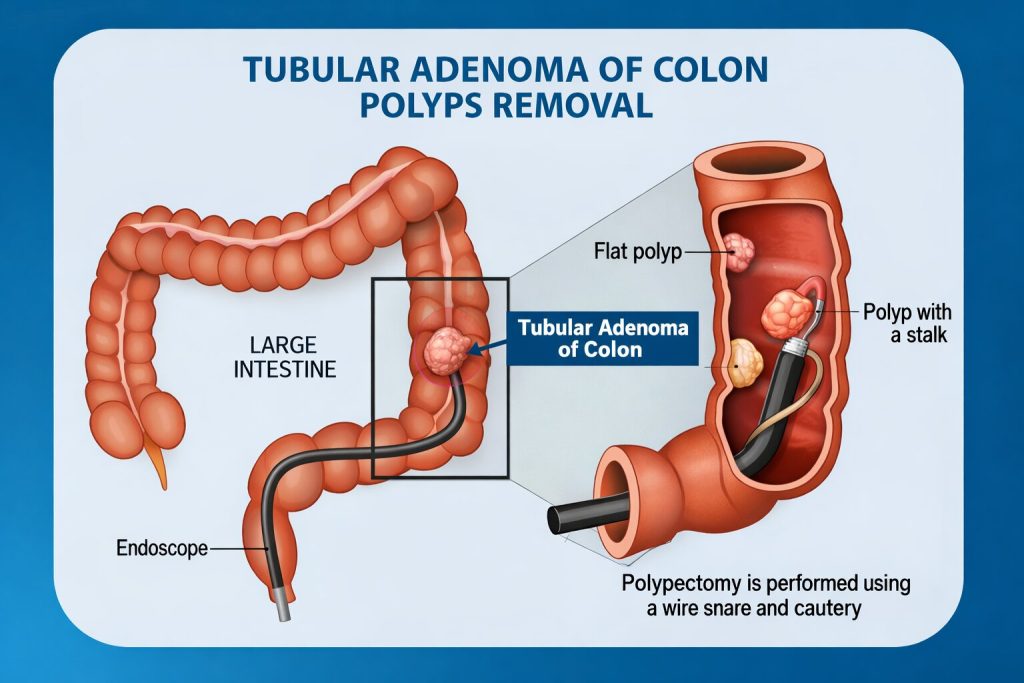
A tubular adenoma is the most common type of adenomatous colon polyp. It forms in the lining of the large intestine (colon) and is considered benign but precancerous.
This means:
Tubular adenomas develop through what doctors call the adenoma–carcinoma sequence, a slow process that may take 7–10 years or longer.
At Medex Diagnostic & Treatment Center in Queens, NY, early detection through screening colonoscopy helps prevent colon cancer before it starts.
Most people have no symptoms.
When symptoms occur, they may include:
Because tubular adenomas are usually silent, routine screening is critical, especially after age 45 or earlier if you have risk factors.
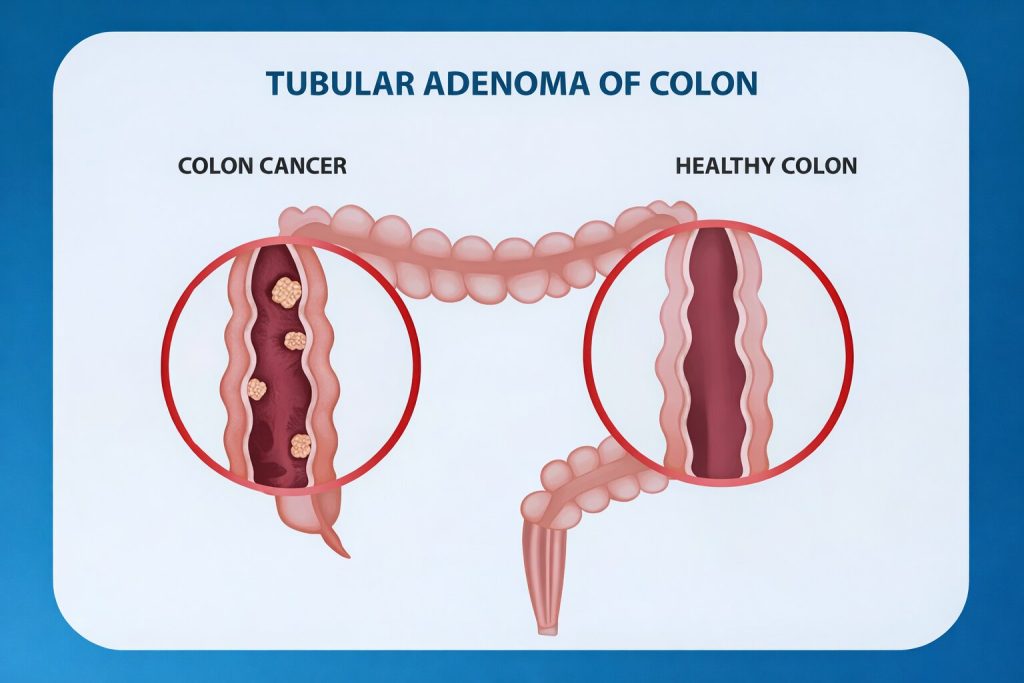
Most tubular adenomas are discovered during a screening colonoscopy.
During this procedure:
Colonoscopy is both diagnostic and therapeutic.
After removal, a pathologist examines the tissue under a microscope.
Your pathology report may include:
“Tubular adenoma” confirms it is precancerous but not cancer.
Larger polyps carry higher cancer risk.
At Medex in Queens, we carefully review pathology reports to create a personalized follow-up plan.
Follow-up timing depends on findings:
| Colonoscopy Findings | Recommended Follow-Up |
|---|---|
| 1–2 small (<10 mm) tubular adenomas | 7–10 years |
| 3–4 small adenomas or any ≥10 mm | 3–5 years |
| 5–10 adenomas or high-grade dysplasia | 3 years |
| More than 10 adenomas | 1 year |
Adhering to follow-up recommendations dramatically lowers your risk of colorectal cancer.
Tubular adenomas are removed during colonoscopy using:
Most removals are:
May require:
At Medex Diagnostic Center in Queens, our gastroenterology team performs advanced endoscopic procedures for safe and complete removal.
This is why surveillance colonoscopy is essential.
A tubular adenoma becomes cancer only if:
The good news:
Removing adenomas prevents colon cancer.
This is why colonoscopy is considered a powerful cancer-prevention tool – not just a screening test.
Lifestyle modifications can reduce risk.
Preventive care is central to our approach at Medex Diagnostic & Treatment Center.
Stool tests like Cologuard can detect:
However:
Colonoscopy remains the most comprehensive screening method.
If you have been diagnosed with a tubular adenoma, you should see:
A specialist in digestive diseases who:
If advanced findings are present, you may also see:
For complex or large lesions requiring surgical management.
At Medex Diagnostic & Treatment Center in Queens, NY, our experienced gastroenterology team provides complete evaluation, polyp removal, and personalized surveillance plans.
You should schedule a colonoscopy if:
Early detection saves lives.
Is a tubular adenoma cancer?
No. It is a benign but precancerous polyp that can turn into cancer if not removed.
How serious is a tubular adenoma?
It is common and usually low-risk if small and completely removed, but requires follow-up.
What is low-grade dysplasia?
It means mild precancerous changes with low risk once removed.
What is high-grade dysplasia?
More advanced abnormal cells that require closer surveillance.
Can tubular adenomas cause symptoms?
Most cause no symptoms and are found during screening.
How long does it take for a tubular adenoma to turn into cancer?
Usually many years, often 7–10 or longer.
At Medex, we provide:
We proudly serve patients throughout Queens, NY.
Medex is a multi-specialty clinic with 24-hour urgent care, primary care, and more than 30 board-certified specialists, including podiatry, cardiology, dermatology, pain management, gynecology, and physical therapy. Each department works under one roof for seamless referrals.
Yes. Every Medex doctor is board-certified in their specialty, undergoes peer review, and participates in ongoing CME (continuing medical education). Credentials are listed on our Meet the Doctors page.
Absolutely. Our Queens urgent care clinic is open for walk-in patients with minor injuries or sudden illnesses. You can also save time by reserving a same-day slot online.
Medex accepts all major commercial carriers plus Medicare, Medicaid, HIP, EmblemHealth, MetroPlus, Fidelis, and GHI. For specific coverage questions, call (718) 275-8900 or visit our Insurance page.
Use our secure online booking portal, call (718) 275-8900, or log in to the Patient Portal to reschedule.
Yes—most primary care and follow-up visits can be conducted via HIPAA-compliant video. Sign the Telemedicine Consent Form and choose “Virtual” when booking.
Yes. Our No-Fault Doctor Queens team handles car- accident injuries, and our Workers’ Comp Clinic manages job-related injuries and paperwork.
We’re at 111-29 Queens Blvd, Forest Hills, NY 11375—steps from the Forest Hills–71 Av subway station (E, F, M, R lines). A paid garage is next door and metered street parking surrounds the building.
We follow HIPAA privacy rules, store EHR data on encrypted servers, and require two-factor authentication for staff access. You may request records through our ChartRequest portal.
Adults in good health should schedule an annual physical. Patients managing chronic conditions may need follow-ups every 3–6 months; your doctor will advise a personalized schedule.
For safety, we require an active chart and a visit within the past 12 months (3 months for controlled substances). Ask your pharmacy to send an electronic refill request or message us through the Patient Portal.
Last reviewed: June 1, 2025.
Medex Diagnostic and Treatment Center
Coronavirus Disease (Covid19 IgG/IgM) FDA-approved rapid antibody tests, COVID-19, and Flu vaccine are now available at MEDEX medical office.