
111-29 Queens Blvd, Forest Hills, NY 11375
111-29 Queens Blvd, Forest Hills, NY 11375


Attention-Deficit/Hyperactivity Disorder (ADHD) is a neurodevelopmental condition that affects attention, impulse control, organization, and activity levels. It can occur in both children and adults and may impact school, work, relationships, and daily life. ADHD is diagnosed through a comprehensive medical and behavioral evaluation and is typically managed with behavioral therapy, lifestyle strategies, and, when appropriate, medication.
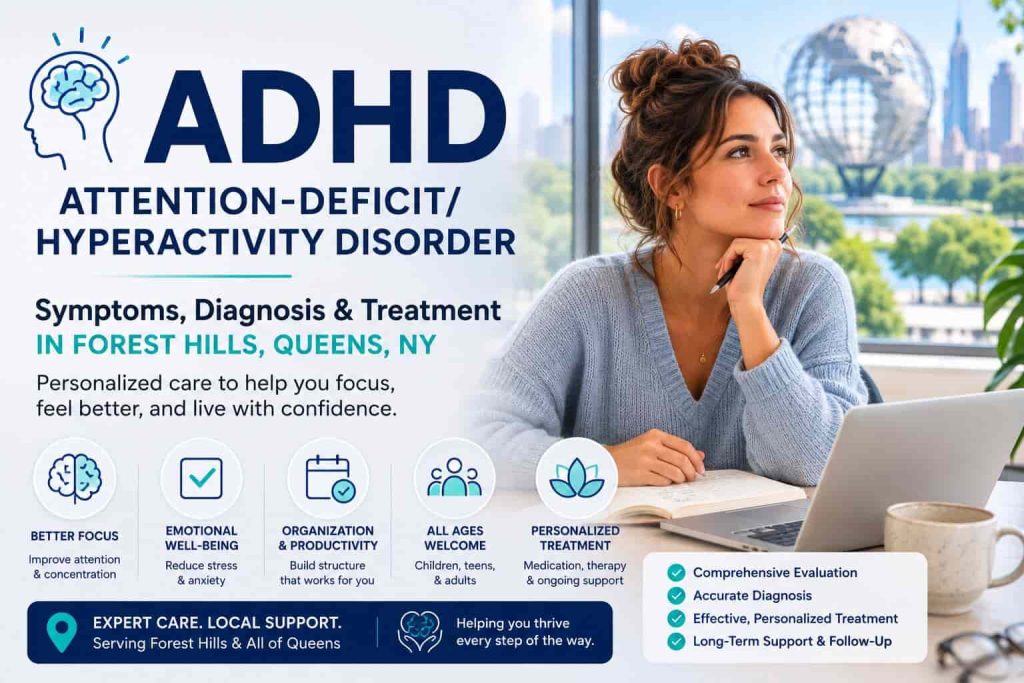
Do you or your child struggle with focus, organization, impulsive behavior, or constant restlessness?
Schedule an appointment here >
While everyone becomes distracted occasionally, persistent symptoms that interfere with school, work, relationships, or daily life may be a sign of Attention-Deficit/Hyperactivity Disorder (ADHD).
At Medex Diagnostic & Treatment Center in Forest Hills, Queens, our experienced primary care physicians evaluate patients with attention concerns, rule out underlying medical conditions, and coordinate care with behavioral health specialists when needed.
Whether you’re concerned about your child’s performance in school or wondering if undiagnosed ADHD is affecting your career and daily life, early diagnosis can make a significant difference.
Attention-Deficit/Hyperactivity Disorder (ADHD) is a neurodevelopmental condition that affects the brain’s executive functions, skills responsible for attention, planning, impulse control, organization, and emotional regulation.
Although symptoms begin during childhood, many people are not diagnosed until adulthood. ADHD is one of the most common neurodevelopmental disorders and is highly treatable with the right combination of medical care, behavioral strategies, and, when appropriate, medication.
ADHD is not caused by poor parenting, laziness, or lack of intelligence. People with ADHD are often highly creative, energetic, and capable but struggle to regulate attention consistently.
Healthcare providers recognize three primary presentations of ADHD.
This type is often overlooked because hyperactivity may not be obvious.
Common symptoms include:
Symptoms commonly include:
The most common form combines symptoms of both inattentiveness and hyperactivity/impulsivity.
Children with ADHD may experience:
Symptoms must be present in more than one setting, such as home and school, and significantly interfere with daily functioning before ADHD can be diagnosed.
Many adults discover they have ADHD only after years of struggling with work, finances, or relationships.
Adult symptoms often include:
Hyperactivity often becomes less visible with age and may instead feel like an internal sense of restlessness.
Researchers believe ADHD develops from a combination of factors, including:
Despite common myths, sugar, screen time, or poor parenting do not cause ADHD.
Someone may have a higher chance of developing ADHD if they have:
Many medical and psychological conditions produce symptoms similar to ADHD.
These include:
Because these conditions can overlap, professional evaluation is essential.
There is no blood test, MRI, or single exam that can diagnose ADHD.
Instead, diagnosis involves a comprehensive evaluation that may include:
Symptoms generally must:
At Medex Diagnostic & Treatment Center, your evaluation begins with a comprehensive medical assessment.
Our providers can:
Taking a whole-person approach helps ensure the correct diagnosis and treatment plan.
Treatment depends on age, symptom severity, and individual goals.
Behavioral therapy teaches practical strategies for:
Behavior therapy is especially important for younger children and remains valuable for adults.
When appropriate, medications may improve:
Medication decisions should always be individualized and monitored by a qualified healthcare professional.
Many people benefit from:
Lifestyle changes alone may not replace treatment but often improve symptom control.
Schedule an evaluation if you or your child experiences:
Earlier diagnosis often leads to better long-term outcomes.
Your primary care physician is often the best place to start.
At Medex Diagnostic & Treatment Center, our internal medicine and family medicine providers can:
This coordinated approach helps patients receive timely and comprehensive care.
No. ADHD begins in childhood, although many adults are not diagnosed until later in life.
Yes. Genetics is considered one of the strongest risk factors.
There is currently no cure, but symptoms can often be managed successfully through therapy, medication when appropriate, lifestyle changes, and supportive strategies.
Research suggests both overdiagnosis and underdiagnosis can occur in different populations. Many adults and girls historically went undiagnosed because their symptoms were less obvious, underscoring the importance of a thorough clinical evaluation rather than self-diagnosis.
Yes. Anxiety, depression, sleep disorders, thyroid disease, and several other conditions can resemble ADHD, making professional evaluation important.
If you or your child are experiencing ongoing problems with attention, impulsivity, organization, or hyperactivity, don’t ignore the symptoms. An accurate evaluation can help identify the underlying cause and connect you with the most appropriate treatment.
At Medex Diagnostic & Treatment Center in Forest Hills, Queens, our primary care team provides comprehensive medical evaluations and coordinates care with trusted behavioral health specialists when ADHD or another condition is suspected. Early assessment can improve academic performance, workplace success, relationships, and overall quality of life.
This article is intended for educational purposes only and should not be considered medical advice or a substitute for professional diagnosis or treatment. If you believe you or your child may have ADHD or another medical or mental health condition, consult a qualified healthcare provider. In an emergency or if you or someone else is at immediate risk of harm, call 911 or seek emergency medical care immediately.
Medex Diagnostic and Treatment Center
Coronavirus Disease (Covid19 IgG/IgM) FDA-approved rapid antibody tests, COVID-19, and Flu vaccine are now available at MEDEX medical office.