
111-29 Queens Blvd, Forest Hills, NY 11375
111-29 Queens Blvd, Forest Hills, NY 11375


Cankles are a common term used to describe swelling or a lack of definition between the calf and ankle, often caused by fluid retention (edema), fat distribution, venous insufficiency, or hormonal imbalance. While many cases are cosmetic and related to genetics or body composition, persistent, painful, or one-sided ankle swelling may signal an underlying medical condition such as vein disease or lymphedema. If swelling does not improve overnight or worsens, a medical evaluation at Medex Diagnostic & Treatment Center in Queens, NY can help determine the cause and appropriate treatment.
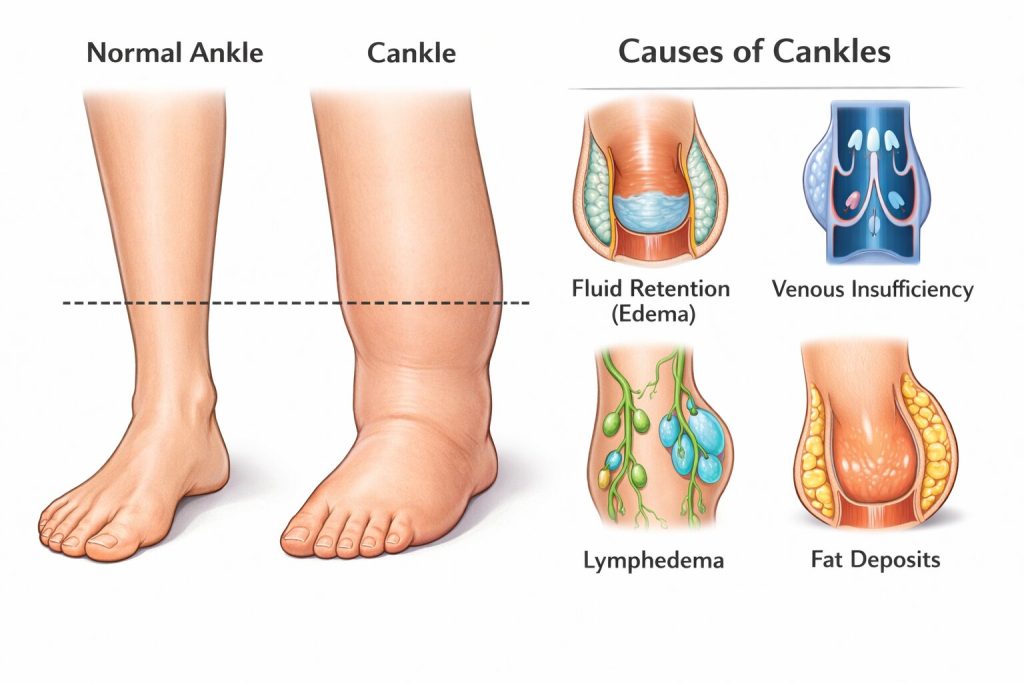
If you’ve ever looked down and noticed that your ankle and calf seem to blend together without a clear definition, you may have what people commonly call “cankles.” While the term is informal, the underlying causes can range from harmless body composition factors to medical conditions that require evaluation.
At Medex Diagnostic & Treatment Center in Queens, NY, we evaluate the root cause of lower leg and ankle swelling to determine whether it’s cosmetic, vascular, hormonal, or related to fluid retention.
Depending on the cause, you may see:
If you’re unsure, start with a primary care consultation at Medex Diagnostic & Treatment Center in Queens, NY, and they will refer you appropriately.
Cankles refer to a lack of definition between the calf and ankle, often caused by fluid retention, fat distribution, venous insufficiency, or hormonal imbalance. While many cases are cosmetic, persistent or one-sided swelling may indicate a vascular or medical condition that requires evaluation by a primary care or vascular specialist.
“Cankles” is a non-medical term describing a lack of visible distinction between the calf and the ankle. This can occur due to:
The key question is: Is it structural fat, or is it swelling?
That distinction determines treatment.
Some people naturally store more fat in the lower legs. This is often symmetrical and painless.
Fluid buildup in tissues can cause puffiness around the ankles. It may worsen:
When leg veins struggle to push blood back to the heart, fluid pools in the lower legs. Symptoms may include:
This is common in adults over 30–40 and in people who stand for work.
A blockage or damage to lymphatic vessels causes persistent swelling. Unlike simple water retention, lymphedema does not fully resolve overnight.
Conditions such as:
can influence fluid retention and fat distribution.
Temporary ankle swelling is extremely common in pregnancy due to increased blood volume and pressure from the uterus.
Some medications may cause swelling:
You should see a doctor if you notice:
These could indicate more serious conditions like deep vein thrombosis (DVT) or vascular disease.
At Medex Diagnostic & Treatment Center in Queens, evaluation may include:
The goal is to determine whether swelling is vascular, hormonal, lymphatic, or cosmetic.
Treatment depends on the cause.
Are cankles permanent?
Not always. If caused by fluid retention, they can improve with treatment. If genetic fat distribution, they may be structural.
Can exercise reduce cankles?
Exercise can improve circulation and reduce fat, but if swelling is due to venous or lymphatic issues, medical treatment is needed.
Are cankles dangerous?
Most are harmless. However, sudden or painful swelling requires urgent medical evaluation.
Do compression socks help?
Yes, especially for venous insufficiency and prolonged standing.
Medex is a multi-specialty clinic with 24-hour urgent care, primary care, and more than 30 board-certified specialists, including podiatry, cardiology, dermatology, pain management, gynecology, and physical therapy. Each department works under one roof for seamless referrals.
Yes. Every Medex doctor is board-certified in their specialty, undergoes peer review, and participates in ongoing CME (continuing medical education). Credentials are listed on our Meet the Doctors page.
Absolutely. Our Queens urgent care clinic is open for walk-in patients with minor injuries or sudden illnesses. You can also save time by reserving a same-day slot online.
Medex accepts all major commercial carriers plus Medicare, Medicaid, HIP, EmblemHealth, MetroPlus, Fidelis, and GHI. For specific coverage questions, call (718) 275-8900 or visit our Insurance page.
Use our secure online booking portal, call (718) 275-8900, or log in to the Patient Portal to reschedule.
Yes—most primary care and follow-up visits can be conducted via HIPAA-compliant video. Sign the Telemedicine Consent Form and choose “Virtual” when booking.
Yes. Our No-Fault Doctor Queens team handles car- accident injuries, and our Workers’ Comp Clinic manages job-related injuries and paperwork.
We’re at 111-29 Queens Blvd, Forest Hills, NY 11375—steps from the Forest Hills–71 Av subway station (E, F, M, R lines). A paid garage is next door and metered street parking surrounds the building.
We follow HIPAA privacy rules, store EHR data on encrypted servers, and require two-factor authentication for staff access. You may request records through our ChartRequest portal.
Adults in good health should schedule an annual physical. Patients managing chronic conditions may need follow-ups every 3–6 months; your doctor will advise a personalized schedule.
For safety, we require an active chart and a visit within the past 12 months (3 months for controlled substances). Ask your pharmacy to send an electronic refill request or message us through the Patient Portal.
Last reviewed: March 22, 2026.
Medex Diagnostic and Treatment Center
Coronavirus Disease (Covid19 IgG/IgM) FDA-approved rapid antibody tests, COVID-19, and Flu vaccine are now available at MEDEX medical office.