
Estradiol Patch

Spanish Russian

An estradiol patch is a skin-applied hormone therapy that delivers estrogen into the bloodstream. It is commonly used to treat menopause symptoms, hormone imbalances, and low estrogen levels. The patch is applied to the skin and replaced regularly, providing consistent hormone levels with fewer side effects than oral estrogen.

Struggling with hot flashes, mood swings, or unexplained fatigue? These may be signs of low estrogen levels, especially common in women across New York City (Queens, Brooklyn, Manhattan).

The estradiol patch is one of the most effective and convenient treatments available today. But is it safe? And is it right for you? Here’s everything you need to know, plus when to see a specialist at Medex Diagnostic and Treatment Center.
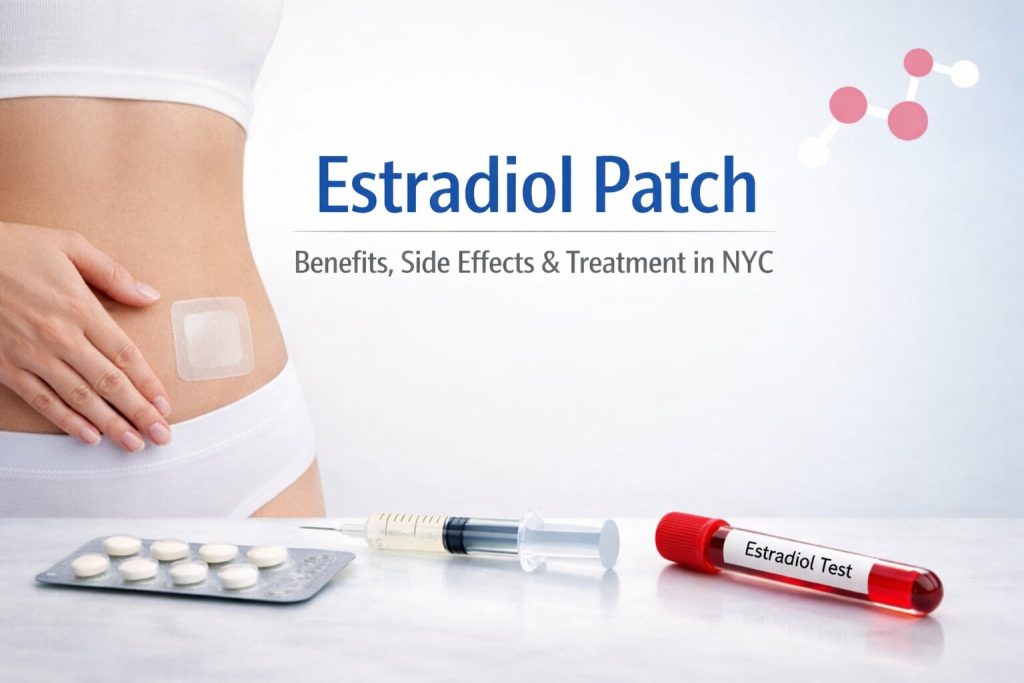
Estradiol treatment options and tools

Estradiol Patch (Estrogen Patch) Quick Facts

  • A transdermal hormone replacement therapy (HRT)
  • Delivers estradiol (a form of estrogen) through the skin
  • Used for:
    • Menopause symptoms (hot flashes, night sweats)
    • Hormone imbalance
    • Estrogen deficiency
    • Osteoporosis prevention
  • Applied once or twice weekly depending on prescription
  • Safer for some patients vs oral estrogen (lower clot risk)
  • Available by prescription only

Synonyms & Variations:
estrogen patch, estradiol transdermal patch, hormone patch for menopause, estrogen replacement patch

What is Estradiol Patch?

The estradiol patch is a small adhesive patch applied to the skin that releases estradiol, a natural form of estrogen, into your bloodstream.

Unlike pills, it:

  • Bypasses the liver
  • Provides steady hormone levels
  • Reduces certain side effects

It is commonly prescribed for:

  • Menopause symptom relief
  • Hormone replacement therapy (HRT)
  • Premature ovarian failure
  • Gender-affirming hormone therapy

Causes / Risk Factors for Low Estrogen

Low estrogen levels, often treated with an estradiol patch—can be caused by:

  • Menopause (most common)
  • Perimenopause (early hormonal changes)
  • Ovarian removal surgery
  • Chemotherapy or radiation
  • Eating disorders or extreme weight loss
  • Chronic stress
  • Pituitary or thyroid disorders

Symptoms of Low Estrogen

Common symptoms include:

  • Hot flashes and night sweats
  • Vaginal dryness
  • Mood swings or depression
  • Fatigue and low energy
  • Decreased libido
  • Irregular or absent periods

When It’s Dangerous

Seek medical attention if you experience:

  • Severe depression or anxiety
  • Sudden bone pain (possible osteoporosis)
  • Irregular bleeding after menopause
  • Chest pain or leg swelling (possible clot risk)

When to See a Doctor

You should consult a doctor in NYC if:

  • Symptoms interfere with daily life
  • You suspect hormone imbalance
  • You’re considering hormone therapy
  • You have risk factors (family history, early menopause)

At Medex Diagnostic and Treatment Center, we offer:

  • Same-week appointments
  • Advanced hormone testing
  • Personalized treatment plans

Diagnosis (test & procedures)

To determine if you need an estradiol patch, doctors may perform:

Blood Tests

  • Estradiol levels
  • FSH (follicle-stimulating hormone)
  • Thyroid function tests

Imaging

  • Pelvic ultrasound (if needed)
  • Bone density scan (DEXA)

Additional Evaluation

  • Medical history review
  • Symptom assessment
  • Risk factor screening

Treatment Options

1. Estradiol Patch (Primary Treatment)

  • Applied to lower abdomen or buttocks
  • Replaced every 3–7 days
  • Provides steady hormone levels

2. Other Medical Treatments

  • Oral estrogen pills
  • Vaginal estrogen creams
  • Combination HRT (estrogen + progesterone)

3. Lifestyle Support

  • Diet rich in calcium and vitamin D
  • Regular exercise
  • Stress management

At Medex, treatment is tailored to your exact hormone profile.

11. PREVENTION / LIFESTYLE

You can support hormonal health by:

  • Maintaining a healthy weight
  • Avoiding smoking
  • Managing stress levels
  • Getting regular checkups
  • Eating hormone-supportive foods (leafy greens, healthy fats)

Why Choose Medex Diagnostic and Treatment Center

If you’re in Queens, Brooklyn, or Manhattan, Medex Diagnostic and Treatment Center offers:

  • ✔ Experienced hormone specialists
  • ✔ Advanced diagnostic testing
  • ✔ Fast, same-week appointments
  • ✔ Insurance-friendly services
  • ✔ Personalized care plans

Don’t ignore hormone symptoms, early treatment improves quality of life.


FAQ

1. What does an estradiol patch do?

It delivers estrogen through the skin to restore hormone balance, helping relieve menopause symptoms like hot flashes and mood changes.

2. Where do you put an estradiol patch?

It is usually applied to the lower abdomen or buttocks, avoiding breasts and irritated skin.

3. What are the side effects of estradiol patches?

Common side effects include skin irritation, headaches, nausea, and breast tenderness. Serious risks include blood clots and stroke.

4. Is estradiol patch safer than pills?

For many patients, yes. It bypasses the liver and may have a lower risk of blood clots compared to oral estrogen.

5. How long can you stay on an estradiol patch?

Treatment duration varies. Many patients use it for several years under medical supervision.

6. Do I need progesterone with estradiol patch?

If you still have a uterus, progesterone is usually prescribed to reduce the risk of uterine cancer.

Stay In Touch Contact Us