
111-29 Queens Blvd, Forest Hills, NY 11375
111-29 Queens Blvd, Forest Hills, NY 11375


Foot fungus is a common fungal infection that affects the skin (athlete’s foot) or nails (onychomycosis). It causes itching, peeling skin, redness, and thickened or discolored nails. Mild cases can be treated with antifungal creams, while severe or persistent infections require prescription medication from a podiatrist or dermatologist.
At clinics like Medex Diagnostic & Treatment Center (NY), podiatrists can provide advanced treatments including prescription therapy and nail care procedures.

Foot fungus is a contagious fungal infection caused by dermatophytes that thrive in warm, moist environments like shoes, locker rooms, and public showers.
There are two main types:
These conditions often occur together and can spread if untreated.
Nail fungus is a common infection of the nail. It begins as a white or yellow-brown spot under the tip of your fingernail or toenail.
As the infection progresses:
Nail fungus can affect multiple nails but is more common in toenails.
If your condition is mild and not bothersome, treatment may not be necessary. However, if the nail becomes painful or significantly thickened, treatment is recommended.
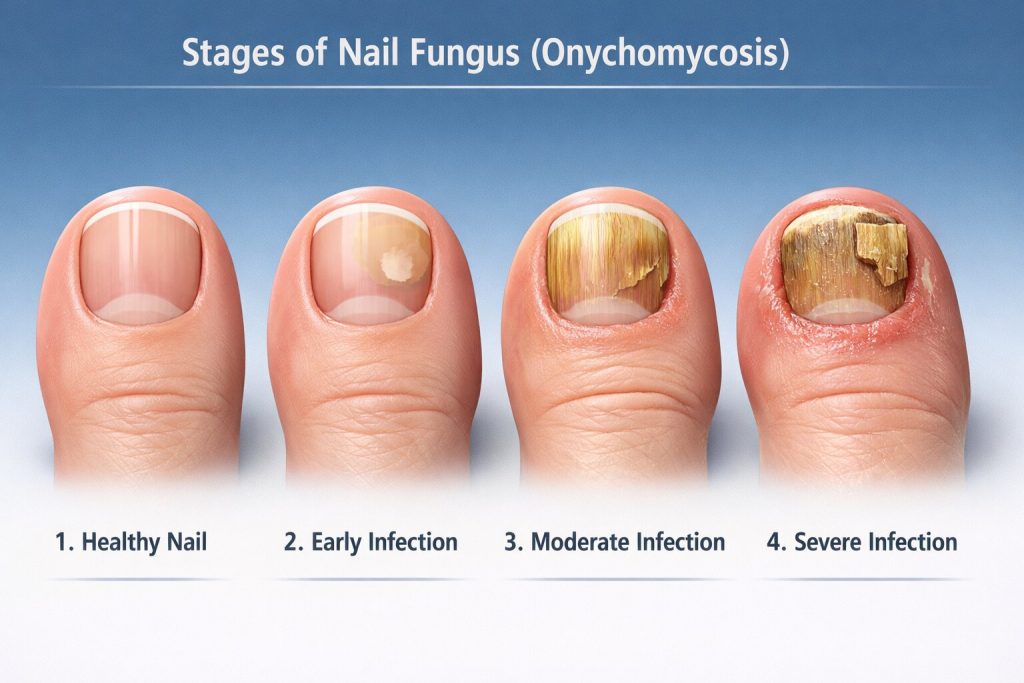
Foot fungus develops in environments where fungi thrive:
Important: Nail fungus is harder to treat than skin infections and may take 3–12 months to fully resolve.
You should see a specialist if:
A patient in NYC noticed a yellow thick toenail but ignored it for months. Eventually, it became painful and difficult to walk. After visiting a podiatrist, they required oral antifungal treatment for 3 months and partial nail removal.
Early treatment could have avoided invasive procedures.
Foot fungus is caused by dermatophyte fungi that grow in warm, moist environments like sweaty shoes or public showers.
Yes, it can spread through direct contact or contaminated surfaces like gym floors and towels.
Topical antifungals work for mild cases, but oral medications are the fastest and most effective for severe or nail infections.
Nail fungus typically causes thick, discolored, brittle nails. A doctor may confirm with lab testing.
Yes, it can spread to hands, nails, and even groin area if untreated.
Medex is a multi-specialty clinic with 24-hour urgent care, primary care, and more than 30 board-certified specialists, including podiatry, cardiology, dermatology, pain management, gynecology, and physical therapy. Each department works under one roof for seamless referrals.
Yes. Every Medex doctor is board-certified in their specialty, undergoes peer review, and participates in ongoing CME (continuing medical education). Credentials are listed on our Meet the Doctors page.
Absolutely. Our Queens urgent care clinic is open for walk-in patients with minor injuries or sudden illnesses. You can also save time by reserving a same-day slot online.
Medex accepts all major commercial carriers plus Medicare, Medicaid, HIP, EmblemHealth, MetroPlus, Fidelis, and GHI. For specific coverage questions, call (718) 275-8900 or visit our Insurance page.
Use our secure online booking portal, call (718) 275-8900, or log in to the Patient Portal to reschedule.
Yes—most primary care and follow-up visits can be conducted via HIPAA-compliant video. Sign the Telemedicine Consent Form and choose “Virtual” when booking.
Yes. Our No-Fault Doctor Queens team handles car- accident injuries, and our Workers’ Comp Clinic manages job-related injuries and paperwork.
We’re at 111-29 Queens Blvd, Forest Hills, NY 11375—steps from the Forest Hills–71 Av subway station (E, F, M, R lines). A paid garage is next door and metered street parking surrounds the building.
We follow HIPAA privacy rules, store EHR data on encrypted servers, and require two-factor authentication for staff access. You may request records through our ChartRequest portal.
Adults in good health should schedule an annual physical. Patients managing chronic conditions may need follow-ups every 3–6 months; your doctor will advise a personalized schedule.
For safety, we require an active chart and a visit within the past 12 months (3 months for controlled substances). Ask your pharmacy to send an electronic refill request or message us through the Patient Portal.
Last reviewed: March 22, 2026.
Medex Diagnostic and Treatment Center
Coronavirus Disease (Covid19 IgG/IgM) FDA-approved rapid antibody tests, COVID-19, and Flu vaccine are now available at MEDEX medical office.