
111-29 Queens Blvd, Forest Hills, NY 11375
111-29 Queens Blvd, Forest Hills, NY 11375


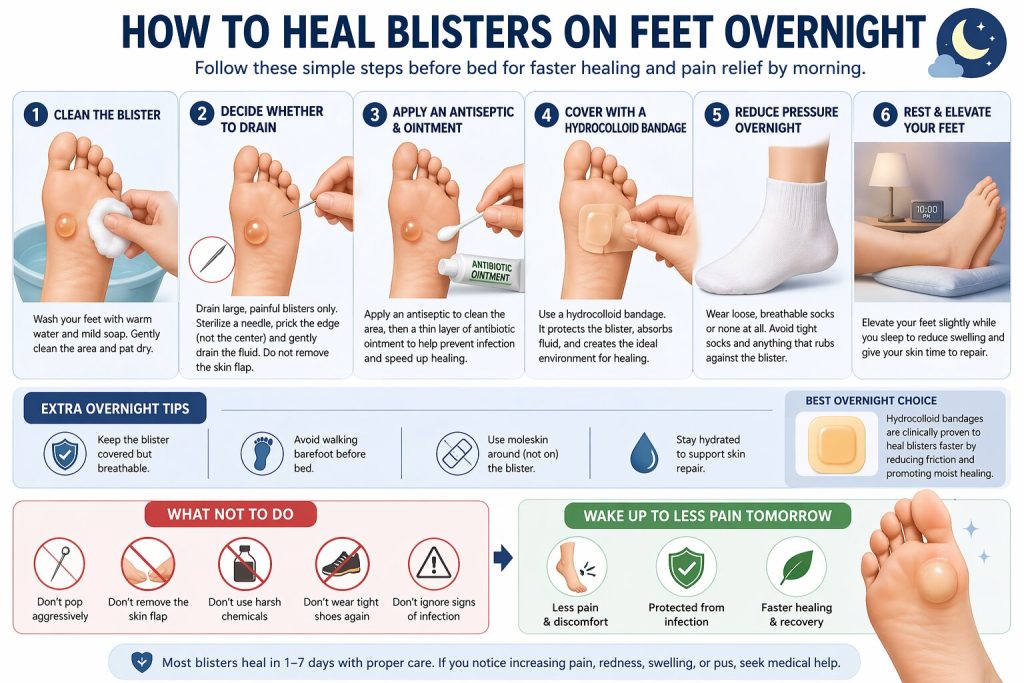
Blisters on feet can heal overnight by protecting the area, reducing friction, and keeping the skin clean and dry. The fastest method includes cleaning the blister, applying an antiseptic, covering it with a hydrocolloid bandage, and avoiding pressure while sleeping. Draining large, painful blisters safely can also speed up healing, but should be done carefully to prevent infection.
Most blisters heal on their own, but you should seek medical care if you notice:
At Medex Diagnostic and Treatment Center, our physicians can evaluate complicated or infected blisters and provide proper wound care to prevent serious complications.
Blisters are small pockets of fluid that form under the skin, usually due to friction, heat, or irritation. They commonly appear on the heels, toes, and soles, especially after wearing tight shoes, walking long distances, or intense workouts.
Although most blisters are harmless, improper care can lead to infection, prolonged pain, or delayed healing.
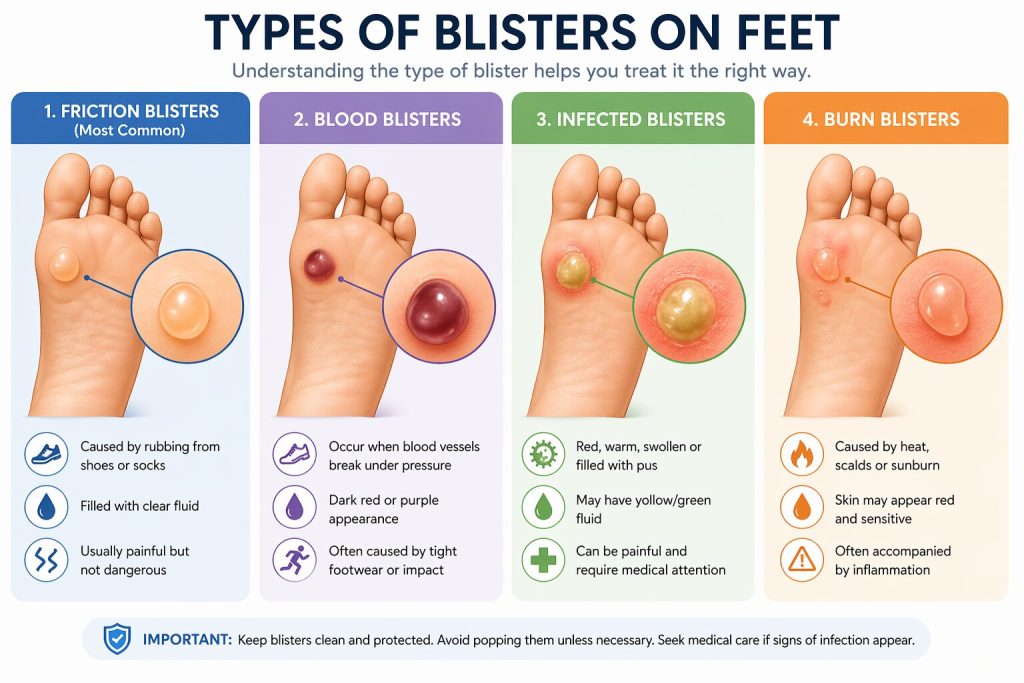
Understanding the type of blister you have helps determine the fastest way to heal it:
If your goal is fast healing overnight, focus on protection, cleanliness, and pressure relief.
Wash your feet with warm water and mild soap. This removes bacteria and reduces infection risk.
Use antibiotic ointment to prevent infection and speed recovery.
These bandages:
To maximize healing while you sleep:
Many people delay healing by making simple mistakes:
❌ Popping blisters aggressively
❌ Removing the skin flap
❌ Using harsh chemicals (like hydrogen peroxide repeatedly)
❌ Ignoring signs of infection
❌ Wearing tight shoes again too soon
With proper overnight care, pain often improves significantly by morning, even if the blister isn’t fully gone.
Prevention is just as important as treatment:
Clean the blister, apply antibiotic ointment, cover it with a hydrocolloid bandage, and avoid pressure. This creates the ideal environment for overnight healing.
Only large, painful blisters should be drained carefully. Small blisters should remain intact to heal faster and avoid infection.
Blisters heal faster when covered with a protective bandage that keeps the area moist and reduces friction.
Hydrocolloid bandages absorb fluid while protecting the skin, making them the fastest and safest option.
If you see redness, swelling, pus, or increasing pain, it may be infected and should be evaluated by a doctor.
Healing a blister overnight is possible in terms of pain relief and protection, but full healing takes a few days. The key is minimizing friction, preventing infection, and creating the right environment for your skin to repair itself quickly.
Medex is a multi-specialty clinic with 24-hour urgent care, primary care, and more than 30 board-certified specialists, including podiatry, cardiology, dermatology, pain management, gynecology, and physical therapy. Each department works under one roof for seamless referrals.
Yes. Every Medex doctor is board-certified in their specialty, undergoes peer review, and participates in ongoing CME (continuing medical education). Credentials are listed on our Meet the Doctors page.
Absolutely. Our Queens urgent care clinic is open for walk-in patients with minor injuries or sudden illnesses. You can also save time by reserving a same-day slot online.
Medex accepts all major commercial carriers plus Medicare, Medicaid, HIP, EmblemHealth, MetroPlus, Fidelis, and GHI. For specific coverage questions, call (718) 275-8900 or visit our Insurance page.
Use our secure online booking portal, call (718) 275-8900, or log in to the Patient Portal to reschedule.
Yes—most primary care and follow-up visits can be conducted via HIPAA-compliant video. Sign the Telemedicine Consent Form and choose “Virtual” when booking.
Yes. Our No-Fault Doctor Queens team handles car- accident injuries, and our Workers’ Comp Clinic manages job-related injuries and paperwork.
We’re at 111-29 Queens Blvd, Forest Hills, NY 11375—steps from the Forest Hills–71 Av subway station (E, F, M, R lines). A paid garage is next door and metered street parking surrounds the building.
We follow HIPAA privacy rules, store EHR data on encrypted servers, and require two-factor authentication for staff access. You may request records through our ChartRequest portal.
Adults in good health should schedule an annual physical. Patients managing chronic conditions may need follow-ups every 3–6 months; your doctor will advise a personalized schedule.
For safety, we require an active chart and a visit within the past 12 months (3 months for controlled substances). Ask your pharmacy to send an electronic refill request or message us through the Patient Portal.
Last reviewed: March 22, 2026.
Medex Diagnostic and Treatment Center
Coronavirus Disease (Covid19 IgG/IgM) FDA-approved rapid antibody tests, COVID-19, and Flu vaccine are now available at MEDEX medical office.