
111-29 Queens Blvd, Forest Hills, NY 11375
111-29 Queens Blvd, Forest Hills, NY 11375


A hypertrophic scar is a raised, thickened scar that forms when the body produces excess collagen during wound healing. Unlike keloids, hypertrophic scars remain within the boundaries of the original injury and may improve over time. They can appear red, firm, and sometimes itchy or painful, often developing after surgery, burns, or skin trauma.
A hypertrophic scar is a type of abnormal wound healing response in which the skin produces too much collagen during the repair process. Instead of forming a flat, pale scar, the tissue becomes raised, thick, and sometimes rigid. These scars usually develop within weeks after an injury and can continue to grow for several months before stabilizing. Unlike keloid scars, hypertrophic scars do not extend beyond the original wound edges, making them easier to manage and treat.
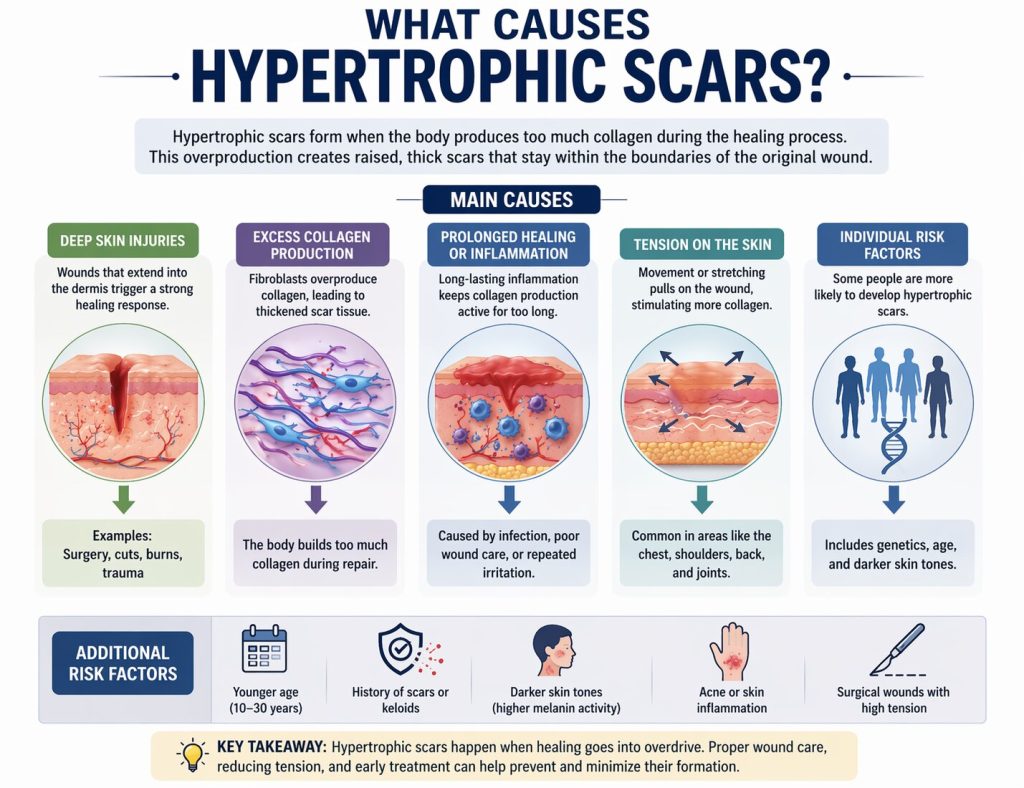
From a medical perspective, hypertrophic scars are considered a localized fibrotic response. The body’s healing mechanism becomes overactive, leading to dense collagen bundles that elevate the skin surface. While they are not dangerous, they can cause discomfort, restricted movement (especially over joints), and cosmetic concerns, which often prompt patients to seek treatment at medical centers like Medex Diagnostic and Treatment Center in Queens, NY.
Hypertrophic scars form when the wound healing process becomes dysregulated. Normally, the body produces collagen to repair damaged tissue and then gradually reduces production as healing completes. In hypertrophic scarring, this balance is disrupted, resulting in excessive collagen deposition that builds up within the wound area.
Several factors increase the risk of developing hypertrophic scars. Deep wounds that penetrate into the dermis, such as burns, surgical incisions, or traumatic injuries, are the most common triggers. Areas of the body that experience tension, like the chest, shoulders, upper back, and joints, are also more prone to abnormal scarring because the skin is constantly being stretched during healing.
Additionally, delayed wound healing significantly raises the likelihood of hypertrophic scar formation. Infections, repeated trauma to the healing area, or poor wound care can prolong inflammation, which in turn stimulates excessive collagen production. Younger individuals and people with darker skin tones may also have a higher predisposition due to more active fibroblast responses.
Understanding the difference between hypertrophic scars and keloids is critical for accurate diagnosis and treatment planning. Although both involve excess collagen production, their behavior and progression are quite different.
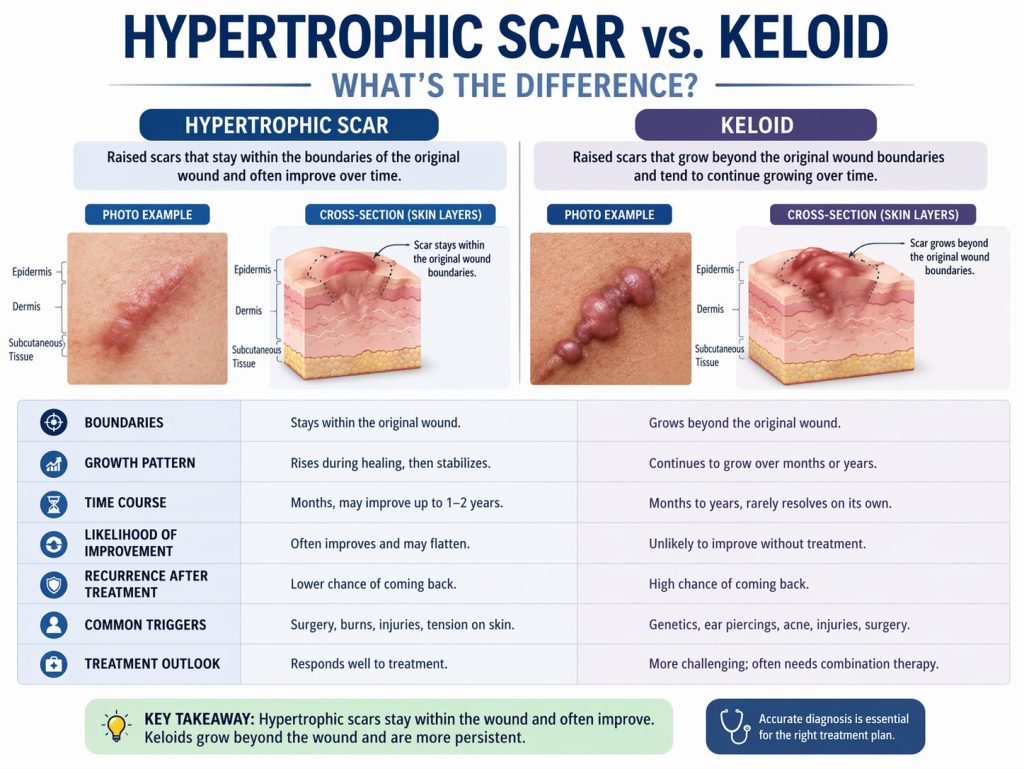
Hypertrophic scars stay within the original boundaries of the wound. They may initially appear red and raised but often improve over time, becoming flatter and less noticeable. Keloids, on the other hand, extend beyond the original injury site and continue to grow, sometimes for years. They rarely regress without intervention and are more difficult to treat.
Another key distinction lies in recurrence rates. Hypertrophic scars have a lower likelihood of returning after treatment, while keloids frequently recur even after surgical removal. Because of these differences, treatment approaches vary, and proper diagnosis by a healthcare provider is essential before starting any therapy.
Hypertrophic scars are usually easy to recognize due to their distinct appearance and texture. They typically develop within weeks after an injury and can continue evolving for months. The most noticeable feature is a raised, thickened area of skin that follows the shape of the original wound.
Patients often report redness or darkening of the scar, especially in the early stages. The scar may feel firm or rubbery to the touch due to dense collagen fibers beneath the surface. In some cases, hypertrophic scars can be itchy or even painful, particularly during the active growth phase. This discomfort is caused by ongoing inflammation and nerve involvement in the healing tissue.
In areas where the skin stretches frequently, such as joints, hypertrophic scars may restrict movement. This can lead to functional limitations, making early treatment especially important. Over time, many scars gradually flatten and fade, but without treatment, some may remain prominent and symptomatic.
Hypertrophic scars develop through the normal stages of wound healing, but with exaggerated collagen production. The process begins with the inflammatory phase, where the body responds to injury by sending immune cells to clean the wound and prevent infection. This stage is essential but can contribute to scarring if prolonged.
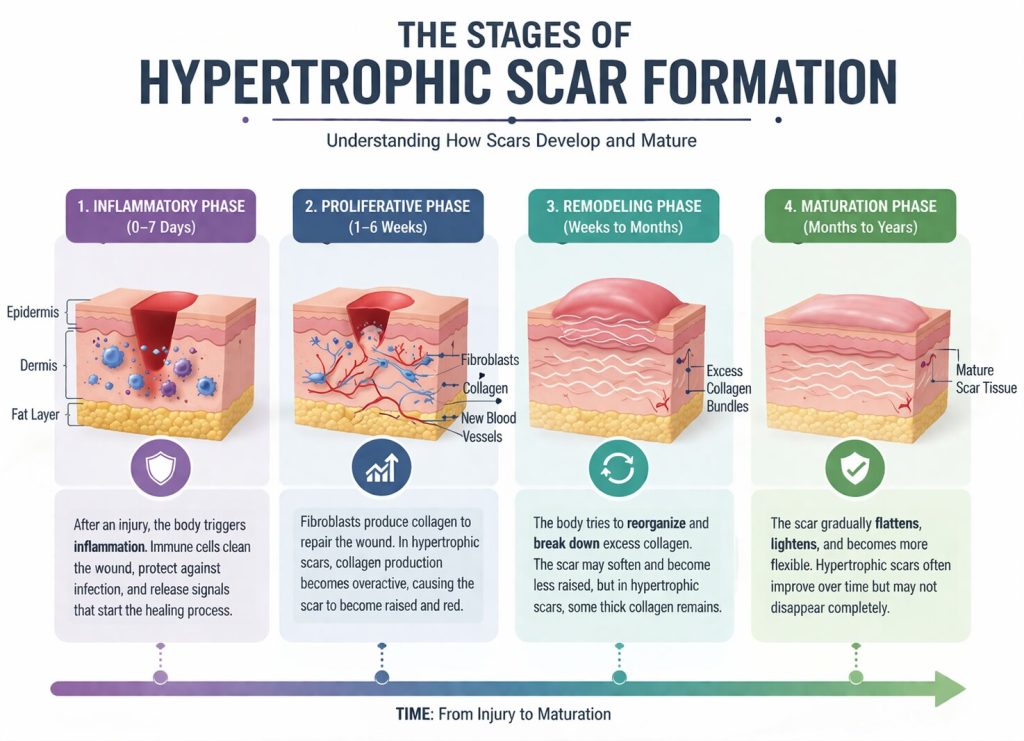
Next comes the proliferative phase, during which fibroblasts produce collagen to rebuild the damaged tissue. In hypertrophic scarring, this phase becomes overactive, leading to excessive collagen accumulation. Blood vessels also increase in number, which is why early scars often appear red or pink.
The final stage is remodeling, where the body attempts to reorganize and break down excess collagen. In hypertrophic scars, this process is incomplete, leaving behind thick, raised tissue. However, unlike keloids, hypertrophic scars often show gradual improvement during this stage, especially with proper treatment.
Treating hypertrophic scars effectively requires a combination of medical therapies tailored to the severity and location of the scar. Early intervention often leads to better outcomes, which is why patients are encouraged to seek care as soon as abnormal scarring becomes noticeable.
One of the most common first-line treatments is silicone gel or silicone sheets. These help hydrate the scar tissue, reduce collagen production, and flatten the scar over time. They are non-invasive and widely recommended by dermatologists and wound care specialists.
Corticosteroid injections are another highly effective option. These injections reduce inflammation and suppress collagen synthesis, leading to gradual softening and flattening of the scar. Multiple sessions are usually required for optimal results, and they are often combined with other therapies.
Laser therapy has become increasingly popular for treating hypertrophic scars. It works by targeting blood vessels and stimulating collagen remodeling, which improves both the color and texture of the scar. In more severe cases, surgical revision may be considered, although it is typically combined with additional treatments to prevent recurrence.
Pressure therapy, commonly used for burn scars, involves wearing specialized garments that apply consistent pressure to the affected area. This helps control collagen production and can significantly improve scar appearance over time.
Preventing hypertrophic scars starts with proper wound care from the very beginning. Keeping the wound clean, moist, and protected is essential for promoting optimal healing. Using appropriate dressings and avoiding unnecessary trauma to the area can significantly reduce the risk of abnormal scarring.
Minimizing tension on the wound is another critical factor. Surgical techniques that reduce skin tension and proper post-operative care can help prevent excessive collagen buildup. Patients are often advised to avoid strenuous activity that may stretch the healing skin, especially in high-risk areas.
Early use of silicone gel or sheets, even before a scar becomes raised, can be an effective preventive measure. Sun protection is also crucial, as UV exposure can worsen scar discoloration and make it more noticeable. Applying sunscreen regularly helps maintain a more even skin tone during healing.
You should seek medical attention if a scar becomes increasingly raised, painful, or limits your movement. Early evaluation allows healthcare providers to determine whether the scar is hypertrophic or another type, such as a keloid, and recommend the most effective treatment plan.
At Medex Diagnostic and Treatment Center in Queens, NY, patients have access to experienced medical professionals who specialize in skin conditions and wound healing. Prompt treatment can significantly improve both the appearance and symptoms of hypertrophic scars, preventing long-term complications.
Hypertrophic scars are typically treated by dermatologists, plastic surgeons, or wound care specialists. The choice of specialist depends on the severity of the scar and the type of treatment required. Dermatologists often manage mild to moderate cases using non-invasive therapies, while plastic surgeons may be involved in more complex cases requiring surgical intervention.
If your scar causes pain, itching, or functional limitations, it is important to consult a healthcare provider. Early diagnosis and treatment can make a significant difference in outcomes, helping you achieve smoother, more comfortable skin.
Hypertrophic scars are a common but manageable result of the body’s healing process. While they can be uncomfortable and affect appearance, a wide range of effective treatments is available to reduce their size, improve texture, and restore confidence. Understanding how these scars form and taking proactive steps during wound healing can significantly lower your risk.
If you notice signs of a hypertrophic scar, seeking professional care early is the best strategy. With the right approach, most hypertrophic scars can be successfully treated, leading to better cosmetic and functional outcomes.
A hypertrophic scar is a raised, thickened scar that forms due to excess collagen production during the healing process. It stays within the boundaries of the original wound and may gradually improve over time. These scars are commonly seen after burns, surgeries, or injuries and can appear red, firm, and sometimes itchy or painful.
Hypertrophic scars develop when the body produces too much collagen while repairing damaged skin. This often happens when healing is prolonged or disrupted by infection, tension on the wound, or repeated trauma. Deeper wounds and areas of high skin movement, like joints or the chest, are especially prone to this type of scarring.
Hypertrophic scars can improve naturally over time, often becoming flatter and less noticeable within months to years. However, they rarely disappear completely without treatment. Early intervention, such as silicone therapy or medical treatments, can significantly speed up improvement and enhance the final appearance.
Yes, hypertrophic scars can be both itchy and painful, especially during the early stages of formation. This is due to ongoing inflammation and nerve involvement in the healing tissue. Symptoms usually decrease over time but may persist in some cases without treatment.
The main difference is that hypertrophic scars stay within the original wound boundaries, while keloids grow beyond them and can continue expanding over time. Hypertrophic scars are more likely to improve on their own, whereas keloids often require more aggressive and long-term treatment.
The best treatment depends on the severity of the scar. Common options include silicone gel or sheets, corticosteroid injections, laser therapy, and pressure therapy. In more severe cases, a doctor may recommend surgical revision combined with other treatments to prevent recurrence.
Yes, proper wound care can significantly reduce the risk of hypertrophic scarring. Keeping the wound clean, moist, and protected, minimizing tension on the skin, and using silicone-based products early can help prevent excessive collagen buildup. Avoiding sun exposure during healing is also important.
Hypertrophic scars typically begin forming within weeks after an injury and may continue developing for several months. The scar often enters a maturation phase after this period, during which it may slowly flatten and fade over time.
You should see a doctor if your scar becomes increasingly raised, painful, itchy, or restricts movement. Early treatment can prevent the scar from worsening and improve both cosmetic and functional outcomes.
Hypertrophic scars are usually treated by dermatologists, plastic surgeons, or wound care specialists. The type of specialist depends on the severity of the scar and the treatment needed. Early consultation ensures the most effective treatment plan is chosen.
Medex is a multi-specialty clinic with 24-hour urgent care, primary care, and more than 30 board-certified specialists, including podiatry, cardiology, dermatology, pain management, gynecology, and physical therapy. Each department works under one roof for seamless referrals.
Yes. Every Medex doctor is board-certified in their specialty, undergoes peer review, and participates in ongoing CME (continuing medical education). Credentials are listed on our Meet the Doctors page.
Absolutely. Our Queens urgent care clinic is open for walk-in patients with minor injuries or sudden illnesses. You can also save time by reserving a same-day slot online.
Medex accepts all major commercial carriers plus Medicare, Medicaid, HIP, EmblemHealth, MetroPlus, Fidelis, and GHI. For specific coverage questions, call (718) 275-8900 or visit our Insurance page.
Use our secure online booking portal, call (718) 275-8900, or log in to the Patient Portal to reschedule.
Yes—most primary care and follow-up visits can be conducted via HIPAA-compliant video. Sign the Telemedicine Consent Form and choose “Virtual” when booking.
Yes. Our No-Fault Doctor Queens team handles car- accident injuries, and our Workers’ Comp Clinic manages job-related injuries and paperwork.
We’re at 111-29 Queens Blvd, Forest Hills, NY 11375—steps from the Forest Hills–71 Av subway station (E, F, M, R lines). A paid garage is next door and metered street parking surrounds the building.
We follow HIPAA privacy rules, store EHR data on encrypted servers, and require two-factor authentication for staff access. You may request records through our ChartRequest portal.
Adults in good health should schedule an annual physical. Patients managing chronic conditions may need follow-ups every 3–6 months; your doctor will advise a personalized schedule.
For safety, we require an active chart and a visit within the past 12 months (3 months for controlled substances). Ask your pharmacy to send an electronic refill request or message us through the Patient Portal.
Last reviewed: March 22, 2026.
Medex Diagnostic and Treatment Center
Coronavirus Disease (Covid19 IgG/IgM) FDA-approved rapid antibody tests, COVID-19, and Flu vaccine are now available at MEDEX medical office.