
111-29 Queens Blvd, Forest Hills, NY 11375
111-29 Queens Blvd, Forest Hills, NY 11375


This summer, health officials are continuing to monitor invasive Group A Streptococcus (iGAS) infections after cases remained near historic highs across the United States. While most people are familiar with strep throat, invasive Group A strep is a much more serious condition that can become life-threatening if not recognized and treated quickly. Recent surveillance has shown that invasive Group A strep infections remain elevated compared with historical averages, prompting healthcare providers to encourage people not to ignore severe sore throats, rapidly worsening skin infections, or signs of serious illness.
Medex Diagnostic & Treatment Center offers same-day evaluations for sore throat, fever, skin infections, and other signs of Group A strep. Our primary care physicians can diagnose strep, begin treatment promptly, and coordinate specialty care when necessary. If you are experiencing emergency symptoms, call 911 or go to the nearest emergency room immediately.
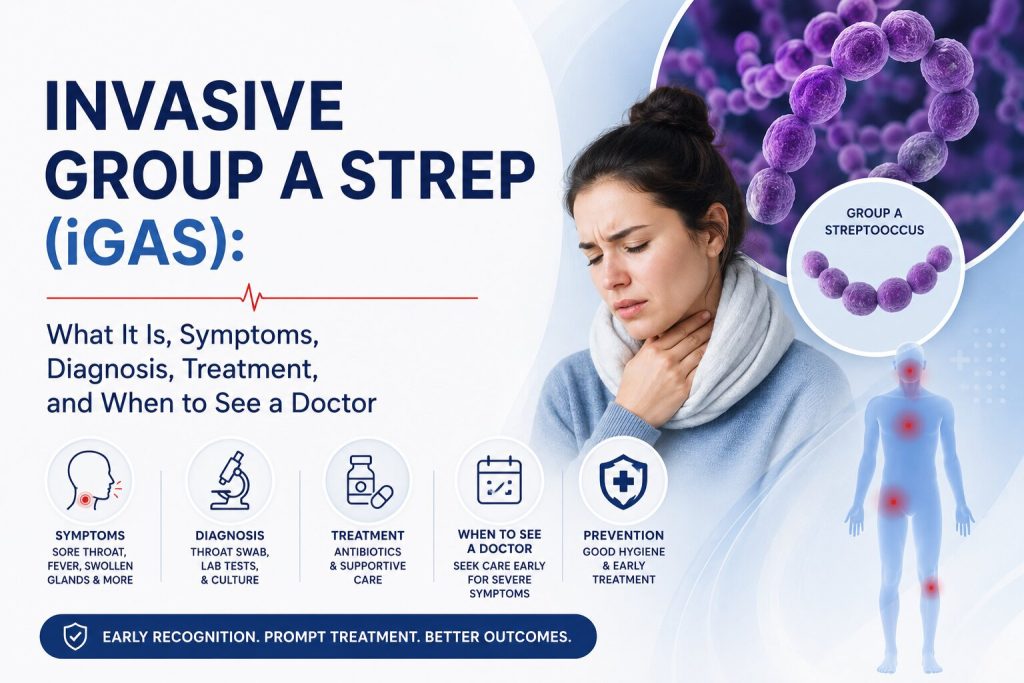
The good news is that most sore throats are not invasive strep, and most people recover completely when treated early.
Group A Streptococcus (GAS), also called Streptococcus pyogenes, is a common bacterium.
It can cause mild illnesses such as:
Most infections are straightforward and respond well to antibiotics.
However, in rare cases, the bacteria invade parts of the body where they normally should not be, including:
When this happens, it is called invasive Group A Streptococcal disease (iGAS).
No. Despite many people referring to it as “the virus going around,” Group A strep is a bacterium, not a virus.
This distinction is important because:
Over the past several years, the United States has experienced a significant increase in invasive Group A strep infections. Researchers believe several factors may contribute, including changes in circulating bacterial strains, increases in chronic health conditions that raise infection risk, and viral infections that may make it easier for bacteria to invade the body.
Although invasive infections remain uncommon, they can progress quickly, making early recognition especially important.
Group A strep spreads through:
Someone with strep throat can spread the bacteria before realizing they are sick.
Most infections begin as classic strep throat symptoms:
Unlike many viral infections, strep throat usually does not cause:
Invasive disease looks much more severe.
Symptoms may include:
Some patients develop:
These conditions require immediate emergency treatment.
Although anyone can develop invasive Group A strep, higher-risk groups include:
A recent viral illness may increase the risk that Group A strep becomes invasive.
Diagnosis depends on where the infection occurs. For suspected strep throat, your healthcare provider may perform:
A throat swab can provide results in minutes.
If the rapid test is negative but suspicion remains high, a throat culture may confirm the diagnosis.
For suspected invasive disease, additional testing may include:
Early diagnosis greatly improves outcomes.
If your symptoms are mild while waiting to see a healthcare provider, supportive care can help:
Do not try to treat confirmed strep throat with home remedies alone. Antibiotics are recommended to shorten illness, reduce complications, and decrease the spread of infection.
Treatment depends on severity.
Most patients receive oral antibiotics such as:
Most people begin feeling better within 24–48 hours after starting antibiotics.
Hospital treatment may include:
Schedule a medical evaluation if you have:
Prompt treatment can help prevent complications.
Seek emergency care immediately if you experience:
These symptoms may indicate invasive Group A strep or another medical emergency.
Although there is currently no vaccine, you can reduce your risk by:
Is invasive Group A strep contagious?
The bacteria can spread from person to person, but invasive disease itself is much less common than ordinary strep throat.
Can adults get invasive Group A strep?
Yes. Adults, especially older adults and those with chronic medical conditions, can develop serious infections.
Does every sore throat need antibiotics?
No. Many sore throats are caused by viruses. A healthcare provider can determine whether testing for strep is appropriate.
Can invasive Group A strep be cured?
Yes. Early treatment with antibiotics is highly effective, but delayed treatment increases the risk of serious complications.
Group A strep is a common bacterial infection that usually causes mild illnesses such as strep throat. However, in rare cases, it can become invasive and lead to severe, rapidly progressing infections that require emergency medical care. With invasive Group A strep cases remaining elevated in recent years, it’s important to recognize the warning signs and seek prompt evaluation for severe sore throat, rapidly worsening skin infections, or symptoms of sepsis. Early diagnosis and timely antibiotic treatment are the best ways to prevent complications and support a full recovery.
The right doctor depends on the symptoms, but for most people a primary care physician, family medicine doctor, or internal medicine physician is the best place to start. At a multi-specialty clinic like Medex Diagnostic & Treatment Center, patients can usually be seen the same day and referred to a specialist if needed. Book an appointment now >
Here’s how to guide patients:
A primary care doctor can:
These symptoms can indicate invasive Group A strep, which is a medical emergency requiring immediate IV antibiotics and often care from a multidisciplinary team.
If you think you have strep throat or another Group A strep infection, schedule an appointment with a primary care physician, family medicine doctor, or internal medicine physician as soon as possible. They can perform a rapid strep test, confirm the diagnosis, and start treatment if needed.
If you develop severe pain, rapidly spreading redness, difficulty breathing, confusion, or other signs of a serious infection, go to the nearest emergency department immediately. Invasive Group A strep can progress quickly and requires emergency medical treatment. At the hospital, you may be treated by an emergency physician, infectious disease specialist, and surgeon, depending on the severity of the infection.
Medical Disclaimer: This article is intended for informational and educational purposes only and should not be considered medical advice, diagnosis, or treatment. The information provided is not a substitute for evaluation by a qualified healthcare professional. Every individual and medical condition is unique, and symptoms can vary widely. If you have questions about your health, develop new or worsening symptoms, or believe you may have a medical emergency, seek prompt medical attention from a licensed physician or call 911 immediately. Never disregard professional medical advice or delay seeking care because of something you have read in this article.
Medex Diagnostic and Treatment Center
Coronavirus Disease (Covid19 IgG/IgM) FDA-approved rapid antibody tests, COVID-19, and Flu vaccine are now available at MEDEX medical office.