
111-29 Queens Blvd, Forest Hills, NY 11375
111-29 Queens Blvd, Forest Hills, NY 11375


Yes, some types of pneumonia are contagious. Pneumonia caused by bacteria or viruses can spread from person to person through respiratory droplets (from coughing, sneezing, or close contact). However, not all pneumonia is contagious, types caused by fungi, aspiration (inhaling food or liquid), or underlying medical conditions do not spread between people. The level of contagiousness depends on the cause, the patient’s immune system, and how quickly treatment begins.
Pneumonia is a serious infection that inflames the air sacs (alveoli) in one or both lungs. These air sacs may fill with fluid or pus, making it difficult for oxygen to pass into the bloodstream efficiently. As a result, patients often experience symptoms such as coughing, fever, and shortness of breath. Pneumonia can range from mild to life-threatening, especially in older adults, young children, and individuals with weakened immune systems.
This condition is not a single disease but rather a category of infections caused by different pathogens, including bacteria, viruses, and fungi. Each type behaves differently in terms of severity, contagiousness, and treatment approach. In a clinical setting like Medex Diagnostic and Treatment Center in Queens, accurate diagnosis is critical to determining the right course of care.
If you suspect pneumonia, it is important to seek medical attention promptly. Start with a primary care physician, who can evaluate your symptoms and order diagnostic tests. If the condition is more severe or recurrent, you may be referred to a pulmonologist, a specialist in lung diseases. In urgent cases, such as difficulty breathing or oxygen deprivation, immediate care at an emergency room is necessary.
Understanding whether pneumonia is contagious depends largely on its cause. Here’s a breakdown of the main types:

This is one of the most common and potentially severe forms. It is often caused by Streptococcus pneumoniae. Bacterial pneumonia can be contagious, especially in close-contact environments. It spreads through droplets when an infected person coughs or sneezes. Early antibiotic treatment reduces both severity and transmission risk.
Common viruses such as influenza, RSV, and even COVID-19 can lead to pneumonia. Viral pneumonia is highly contagious, particularly in the early stages of infection. It spreads easily in crowded environments and among family members. Symptoms may start mild but can worsen over time.
This type is caused by inhaling fungal spores from the environment, often found in soil or bird droppings. Fungal pneumonia is not contagious and typically affects individuals with weakened immune systems. It is more common in specific geographic regions or occupational exposures.
This occurs when food, liquid, or vomit is inhaled into the lungs. It is not contagious because it is not caused by an infectious organism spreading between people. It is more common in individuals with swallowing difficulties or neurological conditions.
When pneumonia is contagious, it spreads in ways similar to the common cold or flu. The primary transmission method is through respiratory droplets. When an infected person coughs, sneezes, or even talks, microscopic droplets containing bacteria or viruses can enter the air. These droplets can then be inhaled by others nearby.
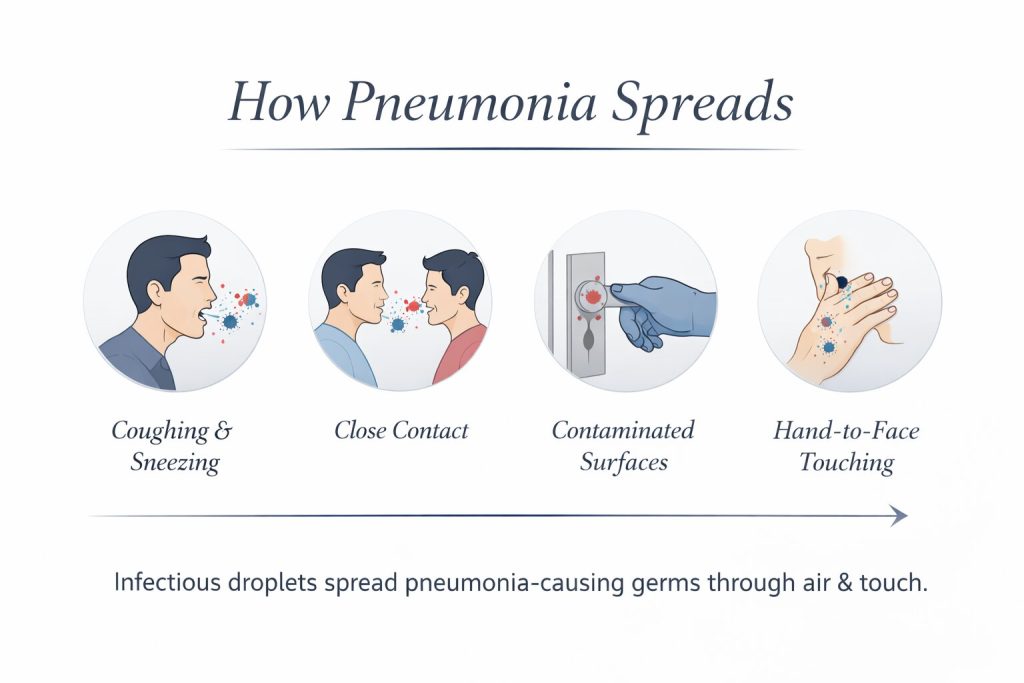
Additionally, pneumonia-causing germs can spread through surface contact. If someone touches a contaminated surface and then touches their face, especially their mouth, nose, or eyes, the infection can enter the body. Close living conditions, such as households, schools, and workplaces, significantly increase the risk of transmission.
The contagious period depends on the cause. Viral pneumonia is usually contagious for several days before symptoms appear and continues during active illness. Bacterial pneumonia becomes less contagious after 24–48 hours of appropriate antibiotic treatment.
Pneumonia typically progresses through four classic stages, particularly in untreated bacterial cases:
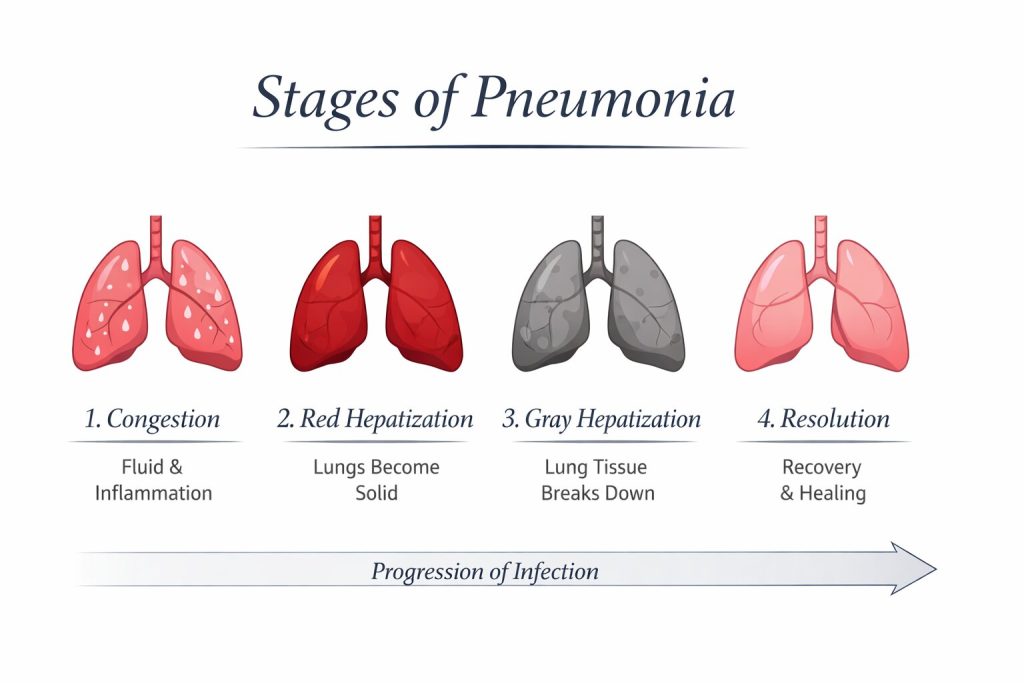
In this early stage, the lungs become inflamed and filled with fluid. Blood vessels become congested, and bacteria begin multiplying rapidly. Symptoms may include mild fever, fatigue, and a dry cough. Many patients mistake this stage for a common cold or flu.
During this phase, the lungs take on a liver-like appearance due to the accumulation of red blood cells, fibrin, and immune cells. Symptoms worsen significantly, with high fever, productive cough, and chest pain. Breathing may become difficult, and oxygen levels can drop.
The lungs remain firm, but red blood cells begin to break down, giving the tissue a grayish color. The immune system continues fighting the infection. Patients may still feel weak, but fever may start to decrease slightly.
In the final stage, the body clears out the infection and fluid from the lungs. Breathing gradually improves, and energy levels return. However, full recovery can take weeks, especially in severe cases.
Pneumonia symptoms can vary depending on age, overall health, and the underlying cause of the infection. Common symptoms include a persistent cough, which may produce green, yellow, or even bloody mucus. Fever, chills, and sweating are also typical, especially in bacterial cases. Shortness of breath and chest pain that worsens with breathing or coughing are key warning signs.
In older adults, symptoms may be more subtle and can include confusion, fatigue, or a sudden decline in mental awareness. Children may experience rapid breathing, wheezing, or feeding difficulties. In severe cases, pneumonia can lead to dangerously low oxygen levels, requiring emergency medical attention.
Pneumonia is caused by microorganisms that enter the lungs and overcome the body’s natural defenses. The most common causes include bacteria, viruses, and fungi. However, certain factors significantly increase the risk of developing pneumonia.
Individuals over 65 years old, young children under 5, and people with chronic conditions such as diabetes, asthma, or heart disease are at higher risk. Smoking damages the lungs and weakens the immune system, making infections more likely. Hospitalization, especially in intensive care units, also increases exposure to more aggressive pathogens.
Lifestyle and environmental factors also play a role. Poor nutrition, weakened immunity, and crowded living conditions can all contribute to higher infection rates. At Medex DTC, identifying these risk factors early helps prevent complications and improves patient outcomes.
If you suspect pneumonia, it is important to seek medical attention promptly. You should see a doctor if you experience a persistent cough lasting more than a few days, high fever, shortness of breath, or chest pain. These symptoms may indicate a more serious infection that requires treatment.
Start with a primary care physician, who can evaluate your symptoms and order diagnostic tests such as a chest X-ray or blood work. If the condition is more severe or recurrent, you may be referred to a pulmonologist, a specialist in lung diseases. In urgent cases—such as difficulty breathing or oxygen deprivation—immediate care at an emergency room is necessary.
At Medex Diagnostic and Treatment Center in Queens, patients have access to both primary care and specialized respiratory evaluations, ensuring fast and accurate diagnosis.
Diagnosis typically involves a combination of physical examination and diagnostic testing. A doctor will listen to your lungs using a stethoscope to detect abnormal sounds such as crackling or wheezing. Imaging tests, particularly chest X-rays, are used to confirm the presence of infection in the lungs.
Additional tests may include blood tests to identify the type of infection, sputum tests to analyze mucus, and pulse oximetry to measure oxygen levels. In more complex cases, CT scans or bronchoscopy may be required. Early and accurate diagnosis is key to preventing complications.
Treatment depends on the cause of pneumonia. Bacterial pneumonia is treated with antibiotics, while viral pneumonia may require antiviral medications or supportive care. Fungal pneumonia requires antifungal treatment. In all cases, rest, hydration, and symptom management are essential.
Most mild cases can be treated at home, but severe cases may require hospitalization, oxygen therapy, or intravenous medications. Recovery time varies but can range from one week to several weeks, depending on severity and patient health.
Preventing pneumonia involves a combination of vaccination, hygiene, and lifestyle habits. Vaccines are available for common causes such as pneumococcal bacteria and influenza. Regular handwashing and avoiding close contact with sick individuals can significantly reduce transmission risk.
Maintaining a strong immune system through proper nutrition, regular exercise, and adequate sleep also plays a crucial role. For high-risk individuals, preventive care and routine check-ups are especially important.
Pneumonia can be contagious, but not in all cases—it depends on the underlying cause. Understanding how it spreads, recognizing early symptoms, and seeking timely medical care are essential for preventing complications. With proper diagnosis and treatment, most people recover fully, but early intervention is key.
If you are experiencing symptoms or want a professional evaluation, Medex Diagnostic and Treatment Center provides comprehensive care tailored to your needs.
Yes, some types of pneumonia are contagious. Viral pneumonia and many cases of bacterial pneumonia can spread through respiratory droplets when an infected person coughs, sneezes, or talks. However, fungal pneumonia and aspiration pneumonia are generally not contagious. The exact risk depends on the cause of the infection and the patient’s overall condition. Good hygiene and early treatment can help reduce the spread.
The contagious period depends on what caused the pneumonia. Bacterial pneumonia often becomes less contagious within 24 to 48 hours after starting the right antibiotics. Viral pneumonia may remain contagious for several days and sometimes longer, depending on the virus. A person is usually most contagious when symptoms are active, especially cough and fever. It is best to avoid close contact until a doctor says it is safe.
Early pneumonia symptoms often include cough, fatigue, fever, chills, and mild shortness of breath. Some people also notice chest discomfort, body aches, or a general feeling of weakness. In the beginning, pneumonia can feel similar to a cold or the flu, which is why many people delay care. As the infection worsens, breathing can become more difficult and the cough may produce mucus. Getting evaluated early can help prevent complications.
Pneumonia often feels like a deep chest infection that makes breathing harder than usual. Many patients feel tired, weak, feverish, and short of breath, especially with movement. The cough may be dry or produce yellow, green, or rust-colored mucus. Some people also feel sharp chest pain when taking a deep breath or coughing. Symptoms can range from mild to severe depending on the cause and overall health.
Pneumonia is usually caused by bacteria, viruses, or fungi that infect the lungs. In some cases, it can also develop after inhaling food, liquid, or vomit into the lungs, which is called aspiration pneumonia. People with weak immune systems, chronic illnesses, or recent respiratory infections may be at greater risk. Smoking and older age also increase the chance of developing pneumonia. Identifying the cause is important because treatment depends on the type.
Most people should start with a primary care doctor or internal medicine provider for pneumonia symptoms. These doctors can examine you, order a chest X-ray, and decide whether antibiotics or other treatment are needed. If symptoms are severe or breathing becomes difficult, urgent care or the emergency room may be the right choice. In more complex cases, a pulmonologist may be involved. Fast diagnosis is important to reduce the risk of complications.
You should see a doctor if you have a persistent cough, fever, chest pain, trouble breathing, or worsening fatigue. Medical care is especially important if symptoms last more than a few days or get worse instead of better. Older adults, young children, and people with asthma, diabetes, or heart disease should not wait too long to be evaluated. Severe shortness of breath, blue lips, confusion, or low oxygen are emergency warning signs. Prompt care can help prevent hospitalization.
Some mild viral cases may improve with rest and supportive care, but pneumonia should never be ignored. Bacterial pneumonia often needs antibiotics, and delaying treatment can make the infection much more serious. Even when symptoms seem manageable, the lungs can still be significantly inflamed. That is why a medical evaluation is important if pneumonia is suspected. Proper treatment helps the lungs heal faster and lowers the risk of complications.
Doctors diagnose pneumonia using a combination of symptoms, a physical exam, and imaging such as a chest X-ray. They may also listen to the lungs with a stethoscope for crackling or reduced breath sounds. In some cases, blood tests, sputum tests, or oxygen level checks are also needed. The goal is to confirm the infection and understand how severe it is. Accurate diagnosis helps guide the right treatment plan.
Older adults, infants, and people with weakened immune systems are at the highest risk for pneumonia. Patients with chronic conditions such as asthma, COPD, diabetes, heart disease, or kidney disease are also more vulnerable. Smokers and people recovering from the flu or another respiratory illness may develop pneumonia more easily. Risk also rises in people who are hospitalized or have difficulty swallowing. Preventive care and early treatment matter most in these groups.
Medex is a multi-specialty clinic with 24-hour urgent care, primary care, and more than 30 board-certified specialists, including podiatry, cardiology, dermatology, pain management, gynecology, and physical therapy. Each department works under one roof for seamless referrals.
Yes. Every Medex doctor is board-certified in their specialty, undergoes peer review, and participates in ongoing CME (continuing medical education). Credentials are listed on our Meet the Doctors page.
Absolutely. Our Queens urgent care clinic is open for walk-in patients with minor injuries or sudden illnesses. You can also save time by reserving a same-day slot online.
Medex accepts all major commercial carriers plus Medicare, Medicaid, HIP, EmblemHealth, MetroPlus, Fidelis, and GHI. For specific coverage questions, call (718) 275-8900 or visit our Insurance page.
Use our secure online booking portal, call (718) 275-8900, or log in to the Patient Portal to reschedule.
Yes—most primary care and follow-up visits can be conducted via HIPAA-compliant video. Sign the Telemedicine Consent Form and choose “Virtual” when booking.
Yes. Our No-Fault Doctor Queens team handles car- accident injuries, and our Workers’ Comp Clinic manages job-related injuries and paperwork.
We’re at 111-29 Queens Blvd, Forest Hills, NY 11375—steps from the Forest Hills–71 Av subway station (E, F, M, R lines). A paid garage is next door and metered street parking surrounds the building.
We follow HIPAA privacy rules, store EHR data on encrypted servers, and require two-factor authentication for staff access. You may request records through our ChartRequest portal.
Adults in good health should schedule an annual physical. Patients managing chronic conditions may need follow-ups every 3–6 months; your doctor will advise a personalized schedule.
For safety, we require an active chart and a visit within the past 12 months (3 months for controlled substances). Ask your pharmacy to send an electronic refill request or message us through the Patient Portal.
Last reviewed: March 22, 2026.
Medex Diagnostic and Treatment Center
Coronavirus Disease (Covid19 IgG/IgM) FDA-approved rapid antibody tests, COVID-19, and Flu vaccine are now available at MEDEX medical office.