
111-29 Queens Blvd, Forest Hills, NY 11375
111-29 Queens Blvd, Forest Hills, NY 11375


Muscle knots are tight, contracted areas of muscle fibers known as myofascial trigger points.
They form when muscle fibers remain in a prolonged contraction, reducing blood flow and causing localized pain, stiffness, and tenderness. Muscle knots most commonly occur in the neck, shoulders, and upper back, often due to poor posture, repetitive movements, stress, or muscle strain.
Muscle knots are a very common cause of neck, shoulder, and back pain. At Medex Diagnostic and Treatment Center, patients frequently visit our physicians complaining about tight, painful spots in their muscles that feel like small lumps or “knots.”
Most people with muscle knots should first see a primary care physician, as these knots commonly develop from poor posture, repetitive movements, stress, or minor muscle strain. At Medex Diagnostic and Treatment Center, doctors can diagnose trigger points during a physical exam and recommend treatments such as physical therapy, stretching, medication, or referral to a sports medicine or rehabilitation specialist if needed.
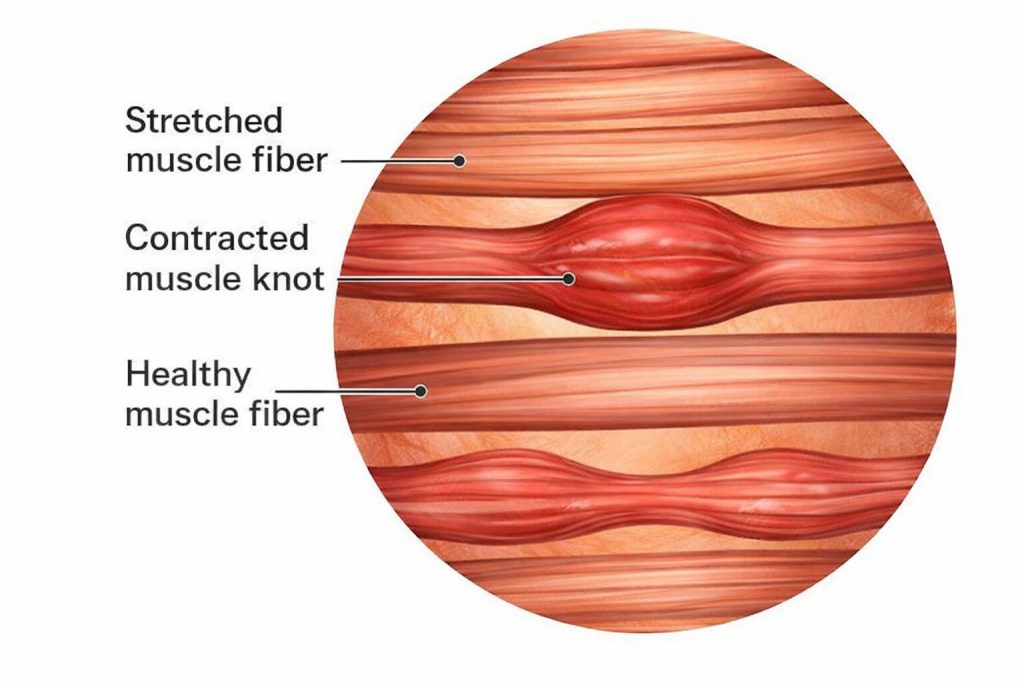
Medically, these areas are called myofascial trigger points. They develop when muscle fibers contract and fail to relax properly, forming a tight band inside the muscle. While muscle knots are usually not dangerous, they can cause persistent discomfort, limited mobility, and sometimes pain that spreads to other parts of the body.
This comprehensive guide explains what muscle knots are, why they develop, how to treat them, and when to see a doctor.
Muscle knots are small, firm, painful spots inside muscle tissue where muscle fibers have tightened into a compact bundle.
Although they may feel like the muscle is twisted, that is not actually what happens. Instead:
This process creates the tender lump you feel under the skin.
Muscle knots may feel like:
They are most commonly found in:
Muscle knots fall into two primary categories.
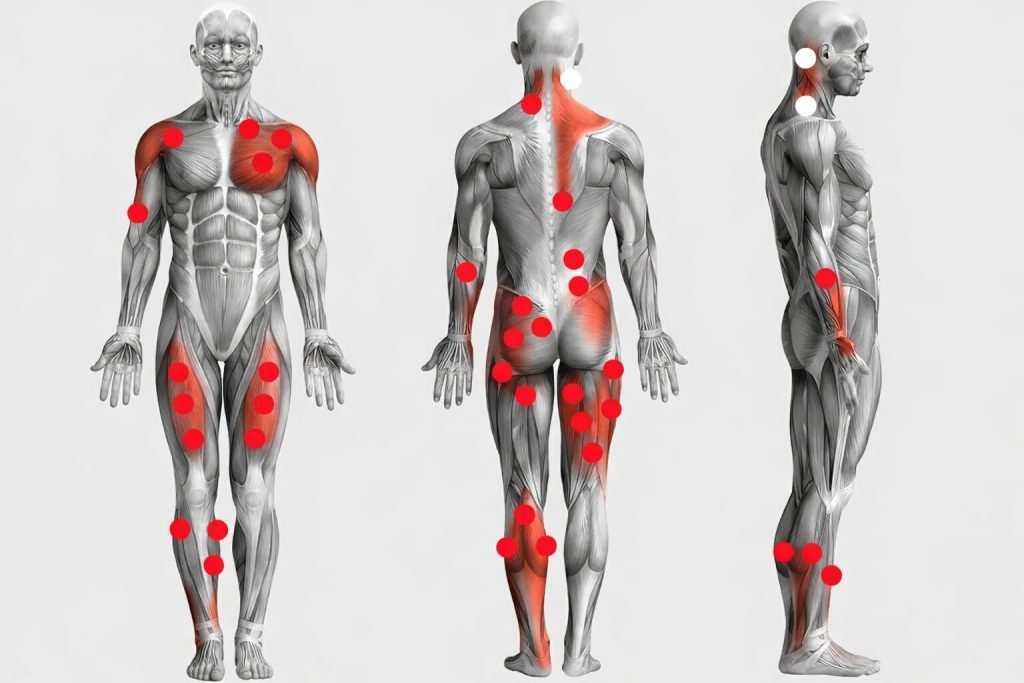
Active trigger points cause constant pain, even when the muscle is not being touched.
Symptoms include:
For example, a knot in the shoulder may cause pain that spreads into the neck or arm.
Latent trigger points are hidden knots that only hurt when pressure is applied.
Many people have latent trigger points without realizing it until a physician or physical therapist presses on the area.
Muscle knots usually develop from muscle overuse, poor posture, or prolonged inactivity.
A commonly cited theory is the “Cinderella fiber hypothesis.” This suggests that smaller muscle fibers work continuously during repetitive activities while larger fibers rest. Over time, the overworked fibers become damaged and develop trigger points.
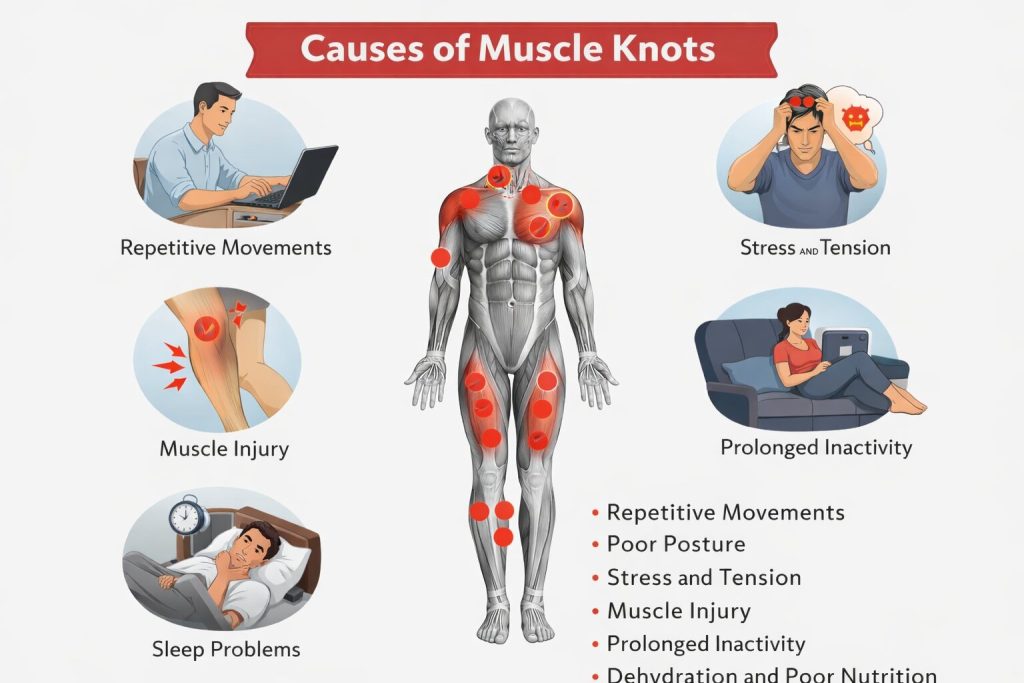
1. Repetitive movements
Activities that repeat the same motion can strain muscles.
Examples:
2. Poor posture
Sitting or standing improperly places strain on muscles.
Common examples include:
3. Stress and tension
Emotional stress often leads to muscle tightening, especially in the neck and shoulders.
4. Muscle injury
Strains, sprains, or small muscle tears can trigger muscle knots during healing.
5. Lack of movement
Muscles that remain in the same position for long periods may stiffen and form trigger points.
Examples:
6. Dehydration and poor nutrition
Muscle function depends on proper hydration and electrolyte balance.
Low hydration levels can increase the risk of muscle cramps and spasms.
7. Sleep problems
Poor sleep can prevent muscles from fully recovering after daily activity.
Muscle knots can cause a range of symptoms beyond simple soreness.
Common symptoms include:
For example:
A trigger point in the neck muscles can cause tension headaches, while a knot in the shoulder may cause pain radiating down the arm.
In most cases, muscle knots are diagnosed through a physical examination.
Your healthcare provider will:
Imaging tests such as ultrasound or MRI are rarely necessary unless the physician suspects another underlying condition.
At Medex Diagnostic and Treatment Center, physicians also evaluate whether muscle pain may be related to:
Most muscle knots improve with conservative treatments.
One of the most important steps is keeping the muscle moving.
Movement improves circulation and helps muscle fibers relax.
Recommended activities include:
Avoid immobilizing the muscle completely, as this can worsen stiffness.
Muscle tissue requires water to function properly.
Proper hydration helps:
Gentle stretching helps lengthen tight muscle fibers.
Examples include:
Stretching before bed may also reduce nighttime muscle tension.
Temperature therapy can reduce pain and improve circulation.
Heat therapy
Cold therapy
Many patients benefit from alternating both.
Massage helps break up tight muscle fibers and improve circulation.
Tools that may help include:
Professional massage therapy can also help locate trigger points that may be difficult to identify yourself.
If muscle knots do not improve with home care, medical treatment may be recommended.
At Medex Diagnostic and Treatment Center, physicians may recommend:
Physical therapists use specialized techniques to:
Dry needling involves inserting a thin needle directly into the trigger point to release the muscle contraction.
A physician may inject medication into the trigger point to reduce pain and muscle tension.
Medications such as NSAIDs can reduce inflammation and pain.
In some cases, treatments may include:
Most muscle knots improve within a few days to a few weeks.
However, you should seek medical care if you experience:
Persistent muscle pain may indicate conditions such as:
Early diagnosis can prevent long-term complications.
Preventing muscle knots often involves improving daily habits.
Helpful prevention strategies include:
Even simple changes, such as standing up every 30 minutes, can significantly reduce the risk of muscle tension.
Yes. Many muscle knots resolve naturally within a few days with stretching, hydration, and gentle movement.
Muscle knots are usually harmless, but they can cause chronic discomfort if left untreated.
Minor knots may last a few days, while more severe trigger points can persist for several weeks.
Yes. Stress causes muscles—especially in the neck and shoulders—to tighten, which can lead to trigger points.
Typically, no. Muscle knots are diagnosed through physical examination rather than imaging tests.
Massage can help loosen tight muscle fibers and improve circulation, which may reduce or eliminate trigger points.
Not exactly. Muscle spasms are sudden involuntary contractions, while muscle knots are persistent tight bands in muscle tissue.
Yes. Dehydration can increase the risk of muscle cramps and trigger points
Muscle knots may be treated by:
Yes. Gentle movement improves circulation and helps muscles relax.
Muscle knots are tight, painful areas in muscle tissue caused by prolonged contraction of muscle fibers. Although they are usually not dangerous, they can cause significant discomfort and limit movement. Most muscle knots improve with stretching, hydration, massage, and heat therapy. Persistent or severe cases may require medical treatment.
If muscle pain is affecting your daily life, the specialists at Medex Diagnostic and Treatment Center in Queens can help diagnose the cause and create a personalized treatment plan.
Medex is a multi-specialty clinic with 24-hour urgent care, primary care, and more than 30 board-certified specialists, including podiatry, cardiology, dermatology, pain management, gynecology, and physical therapy. Each department works under one roof for seamless referrals.
Yes. Every Medex doctor is board-certified in their specialty, undergoes peer review, and participates in ongoing CME (continuing medical education). Credentials are listed on our Meet the Doctors page.
Absolutely. Our Queens urgent care clinic is open for walk-in patients with minor injuries or sudden illnesses. You can also save time by reserving a same-day slot online.
Medex accepts all major commercial carriers plus Medicare, Medicaid, HIP, EmblemHealth, MetroPlus, Fidelis, and GHI. For specific coverage questions, call (718) 275-8900 or visit our Insurance page.
Use our secure online booking portal, call (718) 275-8900, or log in to the Patient Portal to reschedule.
Yes—most primary care and follow-up visits can be conducted via HIPAA-compliant video. Sign the Telemedicine Consent Form and choose “Virtual” when booking.
Yes. Our No-Fault Doctor Queens team handles car- accident injuries, and our Workers’ Comp Clinic manages job-related injuries and paperwork.
We’re at 111-29 Queens Blvd, Forest Hills, NY 11375—steps from the Forest Hills–71 Av subway station (E, F, M, R lines). A paid garage is next door and metered street parking surrounds the building.
We follow HIPAA privacy rules, store EHR data on encrypted servers, and require two-factor authentication for staff access. You may request records through our ChartRequest portal.
Adults in good health should schedule an annual physical. Patients managing chronic conditions may need follow-ups every 3–6 months; your doctor will advise a personalized schedule.
For safety, we require an active chart and a visit within the past 12 months (3 months for controlled substances). Ask your pharmacy to send an electronic refill request or message us through the Patient Portal.
Last reviewed: March 22, 2026.
Medex Diagnostic and Treatment Center
Coronavirus Disease (Covid19 IgG/IgM) FDA-approved rapid antibody tests, COVID-19, and Flu vaccine are now available at MEDEX medical office.