
111-29 Queens Blvd, Forest Hills, NY 11375
111-29 Queens Blvd, Forest Hills, NY 11375


Restless legs describes an uncomfortable urge to move the legs, often accompanied by crawling, tingling, aching, pulling, or throbbing sensations. Symptoms typically occur during rest, become worse in the evening or at night, and temporarily improve with movement.
When these symptoms follow this characteristic pattern, they may be caused by restless legs syndrome (RLS). However, leg discomfort at night can also occur with circulation problems, including chronic venous insufficiency and varicose veins, making an accurate diagnosis important.
Don’t wait for symptoms to worsen, schedule a vascular evaluation with a vein specialist.
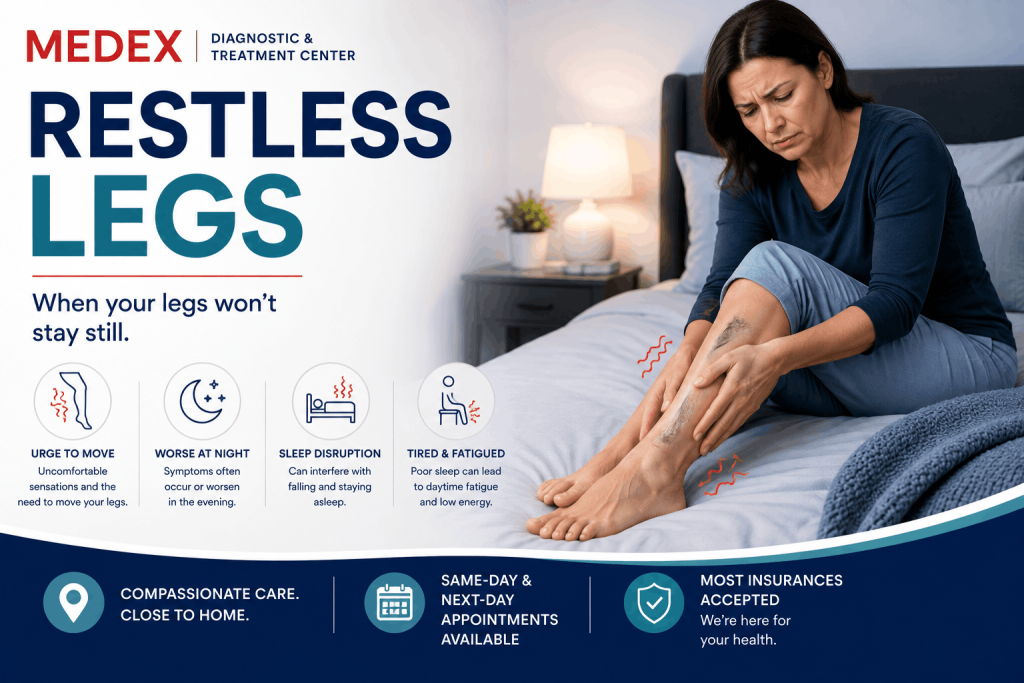
Restless legs syndrome (RLS), also called Willis-Ekbom disease, is a neurological condition characterized by an uncontrollable urge to move the legs.
Common symptoms include:
RLS can range from occasional discomfort to symptoms severe enough to significantly disrupt sleep.
The exact cause isn’t always known. RLS has been associated with several factors, including:
Because several conditions can mimic restless legs syndrome, persistent symptoms should be evaluated rather than self-diagnosed.
Venous insufficiency can cause leg symptoms that resemble or coexist with restless legs syndrome.
Chronic venous insufficiency occurs when valves inside the leg veins don’t efficiently return blood toward the heart. Blood can pool in the lower legs, increasing venous pressure.
Symptoms may include:
These symptoms can overlap with the sensations people describe as “restless legs.”
However, RLS and venous insufficiency are different conditions, and having restless legs does not automatically mean you have a vein problem.
The pattern of your symptoms can provide important clues.
Restless legs syndrome: Symptoms usually begin during rest, are worse at night, create an urge to move, and temporarily improve with movement.
Venous insufficiency: Symptoms often include aching, heaviness, swelling, or throbbing that becomes worse after prolonged standing and may improve with leg elevation.
If you also have ankle swelling, visible varicose veins, leg heaviness, or pain after standing, a vascular evaluation may be appropriate.
Consider a medical evaluation if restless or uncomfortable legs:
Your doctor may evaluate neurological, nutritional, medication-related, and vascular causes depending on your symptoms.
If a vascular cause is suspected, a venous duplex ultrasound may be used to examine blood flow and determine whether the valves in your leg veins are functioning properly.
The test can help identify venous reflux, which is commonly associated with chronic venous insufficiency and varicose veins.
If restless legs occur alongside leg swelling, heaviness, aching, cramping, or varicose veins, don’t assume the symptoms are simply RLS.
At Medex Diagnostic and Treatment Center in Forest Hills, Queens, patients can be evaluated to determine whether an underlying vascular condition may be contributing to their leg discomfort.
When venous insufficiency is identified, treatment depends on the severity and location of the affected veins and may include conservative measures or minimally invasive vein procedures.
Don’t wait for symptoms to worsen, schedule a vascular evaluation with a vein specialist.
Circulation problems such as venous insufficiency can cause aching, heaviness, cramping, throbbing, and other uncomfortable leg sensations that may resemble restless legs. Classic RLS, however, is considered a neurological disorder.
Swelling, varicose veins, heaviness, aching after prolonged standing, and improvement with leg elevation can suggest a venous component. A vascular examination and venous ultrasound can help identify venous insufficiency.
Varicose veins can cause aching, throbbing, cramping, and discomfort that may be particularly noticeable later in the day or at night. These symptoms can overlap with RLS, but the conditions are not the same.
Evaluation depends on your symptoms. A primary care physician or neurologist may evaluate suspected RLS. If symptoms occur with swelling, varicose veins, heaviness, or other signs of venous disease, a vascular specialist may also be appropriate.
Medical Disclaimer: This information is for educational purposes only and is not a substitute for professional medical advice, diagnosis, or treatment. Consult a qualified healthcare professional about persistent or concerning symptoms.
Medex Diagnostic and Treatment Center
Coronavirus Disease (Covid19 IgG/IgM) FDA-approved rapid antibody tests, COVID-19, and Flu vaccine are now available at MEDEX medical office.