
111-29 Queens Blvd, Forest Hills, NY 11375
111-29 Queens Blvd, Forest Hills, NY 11375


Sun poisoning is a severe reaction to ultraviolet (UV) radiation that usually results from excessive sun exposure. It can cause severe sunburn, blistering, rash, swelling, fever, nausea, dizziness, dehydration, and flu-like symptoms. While mild cases can often be treated at home, severe symptoms require medical evaluation.
Medically Reviewed by the Physicians at Medex Diagnostic & Treatment Center
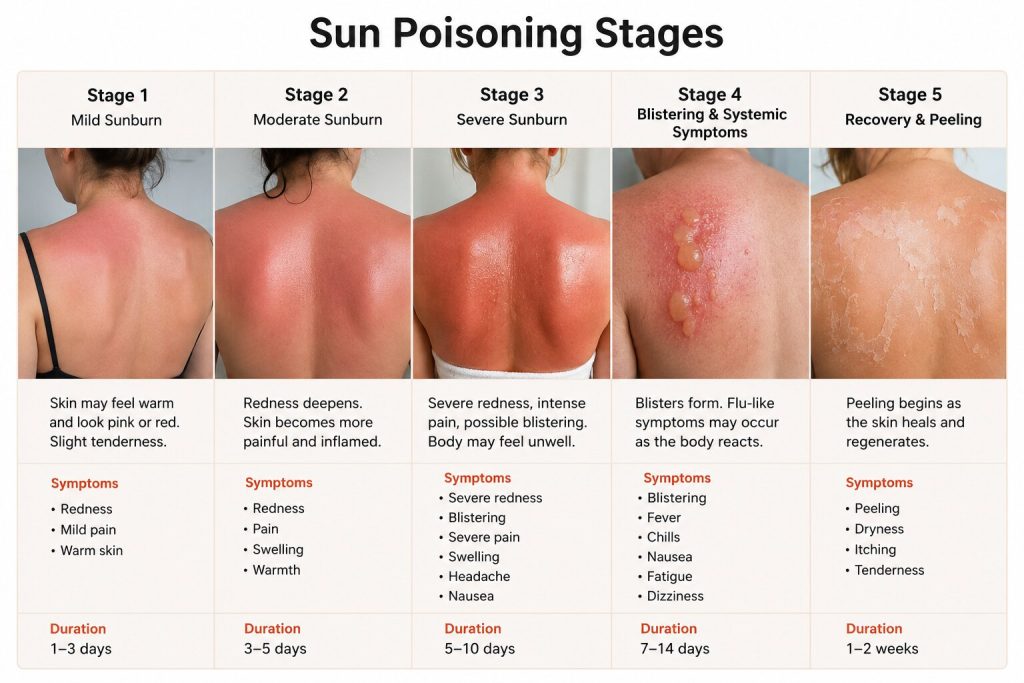
Sun poisoning is not a formal medical diagnosis. It is a commonly used term that describes a severe reaction to ultraviolet (UV) radiation from the sun. In many cases, it refers to a severe sunburn, but some people use “sun poisoning” to describe other sun-related conditions, including sun allergy (polymorphous light eruption), heat illness, or medication-induced photosensitivity.
Unlike a mild sunburn, sun poisoning may involve more than just red skin. It can cause blistering, intense pain, swelling, dehydration, fever, nausea, chills, dizziness, headaches, or widespread rash. In severe cases, medical evaluation is necessary to prevent complications such as dehydration, skin infection, or heat-related illness.
Sun poisoning is a severe reaction to excessive sun exposure that can cause painful sunburn, blistering, swelling, rash, fever, nausea, dizziness, dehydration, and flu-like symptoms. Mild cases improve with cooling, hydration, and sun protection, while severe symptoms require prompt medical evaluation.
Many people use these terms interchangeably, but they are not always the same.
| Mild Sunburn | Sun Poisoning |
|---|---|
| Red skin | Severe redness or widespread rash |
| Mild pain | Intense burning pain |
| Slight swelling | Significant swelling |
| Skin warmth | Blisters |
| Peeling | Fever or chills |
| Usually resolves in several days | May require medical treatment |
| No systemic symptoms | Nausea, headache, dizziness, dehydration |
Symptoms can include:
Some people develop widespread hives or an allergic-looking rash rather than a typical sunburn.
Symptoms often appear within several hours after intense UV exposure.
Common symptoms include:
If symptoms extend beyond the skin, medical evaluation is recommended.
Sun poisoning occurs after excessive exposure to ultraviolet radiation.
Risk factors include:
Some medications may make your skin much more sensitive to sunlight.
Examples include:
Never stop prescription medication without speaking with your healthcare provider.
Most cases improve within:
Peeling often begins several days after the initial burn.
Treatment focuses on reducing inflammation, preventing dehydration, and protecting damaged skin.
Your physician may recommend:
Always follow your healthcare provider’s recommendations.
Avoid:
Yes.
Up to 80% of ultraviolet rays can penetrate clouds. You can also develop severe sunburn while skiing, boating, or sitting near reflective surfaces such as water, sand, or snow.
Most cases recover completely.
However, untreated severe cases can lead to:
Repeated severe sunburns also increase the risk of premature skin aging and skin cancer.
Schedule a medical evaluation if you have:
Seek emergency care immediately if you experience:
The right specialist depends on your symptoms.
Start with a primary care doctor if you have:
Primary care physicians can evaluate your condition, recommend treatment, and determine whether specialist care is needed.
A dermatologist is recommended for:
If sun exposure has worsened an underlying medical condition or contributed to dehydration or medication-related side effects, an internal medicine physician can provide comprehensive evaluation and treatment.
If your rash occurs every time you are in the sun, an allergist may help determine whether you have a sun allergy or another allergic skin condition.
The best treatment is prevention.
Protect yourself by:
No. Sun poisoning is not contagious.
Most glass blocks UVB rays but allows much of UVA radiation to pass. Prolonged exposure near windows may still contribute to skin damage.
Not always. Some cases are severe sunburns, while others are caused by sun allergy, medication reactions, or photosensitivity disorders.
Sun poisoning primarily affects the skin, although it can cause systemic symptoms. Heat exhaustion is caused by overheating and usually presents with heavy sweating, weakness, dizziness, nausea, and rapid pulse, even without a sunburn. Some people experience both conditions simultaneously.
Yes. Children have more sensitive skin and can develop severe sunburn or dehydration much more quickly than adults.
Sun poisoning is a severe reaction to ultraviolet exposure that can affect both your skin and your overall health. While many mild cases improve with hydration, cooling measures, and sun protection, symptoms such as blistering, fever, dizziness, dehydration, or widespread rash should never be ignored.
If you experience severe sunburn, recurrent reactions after sun exposure, or signs of dehydration, the physicians at Medex Diagnostic & Treatment Center can evaluate your condition, identify the underlying cause, provide appropriate treatment, and help you prevent future episodes.
Medex is a multi-specialty clinic with 24-hour urgent care, primary care, and more than 30 board-certified specialists, including podiatry, cardiology, dermatology, pain management, gynecology, and physical therapy. Each department works under one roof for seamless referrals.
Yes. Every Medex doctor is board-certified in their specialty, undergoes peer review, and participates in ongoing CME (continuing medical education). Credentials are listed on our Meet the Doctors page.
Absolutely. Our Queens urgent care clinic is open for walk-in patients with minor injuries or sudden illnesses. You can also save time by reserving a same-day slot online.
Medex accepts all major commercial carriers plus Medicare, Medicaid, HIP, EmblemHealth, MetroPlus, Fidelis, and GHI. For specific coverage questions, call (718) 275-8900 or visit our Insurance page.
Use our secure online booking portal, call (718) 275-8900, or log in to the Patient Portal to reschedule.
Yes—most primary care and follow-up visits can be conducted via HIPAA-compliant video. Sign the Telemedicine Consent Form and choose “Virtual” when booking.
Yes. Our No-Fault Doctor Queens team handles car- accident injuries, and our Workers’ Comp Clinic manages job-related injuries and paperwork.
We’re at 111-29 Queens Blvd, Forest Hills, NY 11375—steps from the Forest Hills–71 Av subway station (E, F, M, R lines). A paid garage is next door and metered street parking surrounds the building.
We follow HIPAA privacy rules, store EHR data on encrypted servers, and require two-factor authentication for staff access. You may request records through our ChartRequest portal.
Adults in good health should schedule an annual physical. Patients managing chronic conditions may need follow-ups every 3–6 months; your doctor will advise a personalized schedule.
For safety, we require an active chart and a visit within the past 12 months (3 months for controlled substances). Ask your pharmacy to send an electronic refill request or message us through the Patient Portal.
Last reviewed: March 22, 2026.
Medex Diagnostic and Treatment Center
Coronavirus Disease (Covid19 IgG/IgM) FDA-approved rapid antibody tests, COVID-19, and Flu vaccine are now available at MEDEX medical office.