
111-29 Queens Blvd, Forest Hills, NY 11375
111-29 Queens Blvd, Forest Hills, NY 11375


A swollen eyelid is a common condition where one or both eyelids become puffy, inflamed, or enlarged due to infection, allergies, blocked glands, or irritation. It can be mild and temporary or a sign of a more serious eye condition requiring medical care.
At Medex Diagnostic and Treatment Center in Queens, NY, several specialists can diagnose and treat swollen eyelids based on the underlying cause.
Primary Care Physician (PCP): First step for evaluation and initial treatment
Ophthalmologist (Eye Doctor): For infections, vision issues, or persistent swelling
Allergist: If symptoms are related to allergic reactions
Dermatologist: For skin-related eyelid conditions
The team at Medex DTC offers comprehensive diagnostics and personalized care, ensuring you receive the right treatment quickly and effectively.
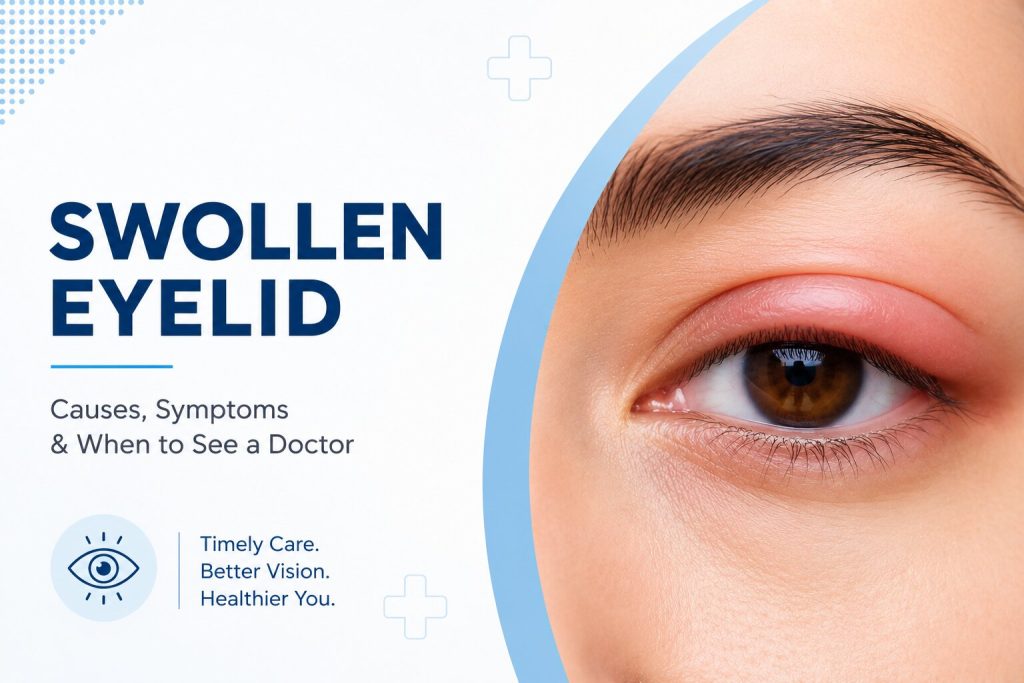
A swollen eyelid occurs when fluid builds up in the delicate tissues around the eye, causing visible puffiness, redness, or discomfort. Because eyelid skin is thin and sensitive, even minor irritation can lead to noticeable swelling and inflammation.
Swelling may affect the upper eyelid, lower eyelid, or both, and can appear suddenly or gradually over time. In many cases, it resolves on its own, but persistent swelling may indicate an underlying medical issue.
A swollen eyelid is often accompanied by additional symptoms that help identify the cause. These symptoms can vary depending on whether the issue is infectious, allergic, or inflammatory in nature.
These symptoms may appear in one eye or both and can range from mild irritation to severe discomfort depending on the underlying cause.
There are several possible causes of eyelid swelling, ranging from harmless to more serious conditions. Identifying the cause is key to choosing the right treatment.
A stye is a painful, red bump caused by a bacterial infection in an oil gland or hair follicle on the eyelid. It often resembles a small pimple and may produce localized swelling and tenderness.
A chalazion develops when an oil gland becomes blocked, leading to a firm, painless lump. Unlike a stye, it is usually not infected but can still cause swelling and discomfort if it grows large.
Blepharitis is chronic inflammation of the eyelid margins, often linked to bacteria or skin conditions. It causes redness, swelling, crusting, and irritation around the eyelashes and eyelid edges.
Allergies to pollen, makeup, skincare products, or medications can trigger eyelid swelling. This type of swelling is often accompanied by itching, tearing, and redness in both eyes.
Conjunctivitis is an infection or inflammation of the eye lining that can cause eyelid swelling along with redness, discharge, and irritation. It may be viral, bacterial, or allergic in origin.
Minor injuries, rubbing the eyes, or foreign objects can irritate the eyelid and lead to swelling. In some cases, bruising may also be present.
Preseptal or orbital cellulitis is a serious bacterial infection that causes significant swelling, redness, and pain. This condition requires immediate medical attention.
A swollen eyelid is not a diagnosis itself but a symptom of another condition. It can indicate anything from a minor irritation to a more serious infection requiring urgent care.
In mild cases, it may simply be due to fatigue, fluid retention, or allergies. However, persistent or severe swelling may suggest infections like styes, chalazia, or cellulitis, as well as inflammatory conditions affecting the eye.
Rarely, eyelid swelling may be linked to systemic conditions such as thyroid disease or kidney problems, especially if swelling is recurrent or occurs with other symptoms.
While many cases of swollen eyelids resolve on their own, certain symptoms indicate the need for medical evaluation. Early diagnosis can prevent complications and speed up recovery.
You should seek medical care if:
Prompt evaluation is especially important for children and individuals with weakened immune systems.
At Medex Diagnostic and Treatment Center in Queens, NY, several specialists can diagnose and treat swollen eyelids based on the underlying cause.
The team at Medex offers comprehensive diagnostics and personalized care, ensuring you receive the right treatment quickly and effectively.
Treatment depends on the underlying cause, but common approaches include both at-home care and medical treatment when needed.
A proper diagnosis ensures the most effective treatment and prevents recurrence.
Preventive care focuses on hygiene and avoiding triggers that can irritate the eyes. Small daily habits can significantly reduce your risk.
Sudden eyelid swelling is often caused by allergies, insect bites, or irritation. Infections like styes can also develop quickly and cause localized swelling.
Applying a warm compress, avoiding irritants, and using antihistamines for allergies can help reduce swelling quickly. Persistent symptoms should be evaluated by a doctor.
Most cases are mild, but severe swelling with pain, fever, or vision changes can indicate a serious infection and requires immediate medical attention.
Stress itself does not directly cause swelling but can worsen conditions like eye rubbing, fatigue, or inflammation, which may contribute to eyelid puffiness.
Medex is a multi-specialty clinic with 24-hour urgent care, primary care, and more than 30 board-certified specialists, including podiatry, cardiology, dermatology, pain management, gynecology, and physical therapy. Each department works under one roof for seamless referrals.
Yes. Every Medex doctor is board-certified in their specialty, undergoes peer review, and participates in ongoing CME (continuing medical education). Credentials are listed on our Meet the Doctors page.
Absolutely. Our Queens urgent care clinic is open for walk-in patients with minor injuries or sudden illnesses. You can also save time by reserving a same-day slot online.
Medex accepts all major commercial carriers plus Medicare, Medicaid, HIP, EmblemHealth, MetroPlus, Fidelis, and GHI. For specific coverage questions, call (718) 275-8900 or visit our Insurance page.
Use our secure online booking portal, call (718) 275-8900, or log in to the Patient Portal to reschedule.
Yes—most primary care and follow-up visits can be conducted via HIPAA-compliant video. Sign the Telemedicine Consent Form and choose “Virtual” when booking.
Yes. Our No-Fault Doctor Queens team handles car- accident injuries, and our Workers’ Comp Clinic manages job-related injuries and paperwork.
We’re at 111-29 Queens Blvd, Forest Hills, NY 11375—steps from the Forest Hills–71 Av subway station (E, F, M, R lines). A paid garage is next door and metered street parking surrounds the building.
We follow HIPAA privacy rules, store EHR data on encrypted servers, and require two-factor authentication for staff access. You may request records through our ChartRequest portal.
Adults in good health should schedule an annual physical. Patients managing chronic conditions may need follow-ups every 3–6 months; your doctor will advise a personalized schedule.
For safety, we require an active chart and a visit within the past 12 months (3 months for controlled substances). Ask your pharmacy to send an electronic refill request or message us through the Patient Portal.
Last reviewed: March 22, 2026.
Medex Diagnostic and Treatment Center
Coronavirus Disease (Covid19 IgG/IgM) FDA-approved rapid antibody tests, COVID-19, and Flu vaccine are now available at MEDEX medical office.