
111-29 Queens Blvd, Forest Hills, NY 11375
111-29 Queens Blvd, Forest Hills, NY 11375


RDW (Red Cell Distribution Width) is a common value reported on a complete blood count (CBC). Many patients see a high RDW on their lab results and wonder: What level of RDW is dangerous?
RDW measures how much variation exists in the size of your red blood cells. When red blood cells vary widely in size, it may signal underlying health problems such as anemia, nutritional deficiencies, inflammation, or chronic disease.
At Medex Diagnostic and Treatment Center, physicians frequently evaluate abnormal RDW results to identify the underlying cause and prevent complications.
Below is a complete guide to dangerous RDW levels, symptoms, causes, and when to see a doctor.
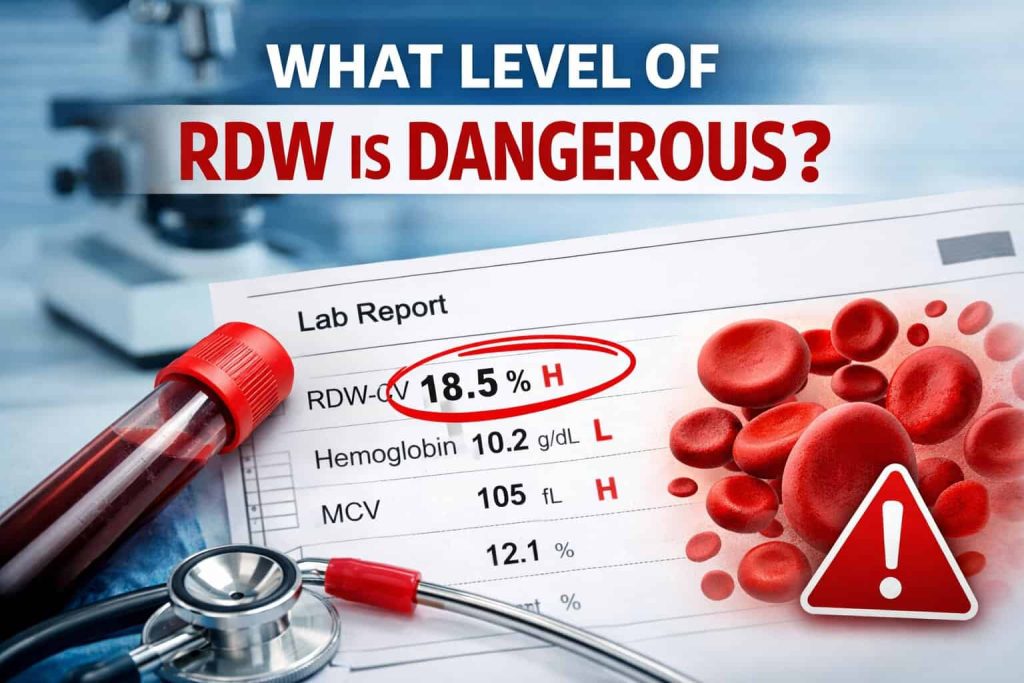
A normal RDW range is typically 11.5%–14.5%.
Very high RDW levels may signal serious conditions such as severe anemia, vitamin deficiencies, bone marrow disorders, or chronic disease.
However, RDW alone does not diagnose a disease. Doctors evaluate it together with other CBC markers like hemoglobin, MCV, and RBC count.
RDW stands for Red Cell Distribution Width, which measures the variation in the size of red blood cells (anisocytosis).
Healthy red blood cells are typically uniform in size. When the body has trouble producing healthy blood cells, a wider range of cell sizes appears, increasing the RDW value.
Doctors use RDW to help diagnose:
A CBC test, which includes RDW, is one of the most commonly ordered blood tests during routine checkups.
Most laboratories consider the following RDW ranges normal:
| RDW Value | Meaning |
|---|---|
| 11.5% – 14.5% | Normal |
| 14.6% – 16% | Mildly elevated |
| 16% – 18% | Moderately high |
| Above 18% | Potentially dangerous |
A dangerous RDW level usually occurs when RDW rises significantly along with abnormal hemoglobin levels or abnormal MCV.
For example:
Several health conditions can lead to a dangerously high RDW level.
Iron deficiency is the most common cause of elevated RDW.
Without enough iron, the body produces smaller red blood cells, creating size variation.
Common causes include:
Vitamin deficiencies cause larger-than-normal red blood cells, increasing RDW.
Symptoms may include:
High RDW is often seen in patients with chronic illnesses such as:
Research also shows elevated RDW may correlate with increased cardiovascular risk.
In rare cases, dangerously high RDW may indicate bone marrow conditions such as:
These conditions affect how blood cells are produced.
Chronic inflammation can interfere with red blood cell production, leading to elevated RDW.
This is sometimes seen in:
RDW itself does not cause symptoms. Instead, symptoms come from the underlying condition causing abnormal red blood cells.
Common symptoms include:
Severe anemia may cause:
If these symptoms occur along with abnormal blood tests, medical evaluation is necessary.
You should consult a doctor if:
Early evaluation can prevent complications and help diagnose underlying conditions.
At Medex Diagnostic and Treatment Center in Queens, NY, physicians perform advanced blood testing and diagnostic evaluations to determine the cause of abnormal RDW results.
Several specialists may evaluate abnormal RDW levels depending on the cause.
A primary care doctor or internist usually reviews the CBC test first and may order additional tests.
A hematologist specializes in blood disorders and may evaluate:
If internal bleeding or digestive problems cause anemia, a gastroenterologist may investigate.
Doctors typically order additional tests alongside RDW, including:
These tests help determine whether the cause is nutritional deficiency, chronic disease, or a blood disorder.
Treatment depends on the underlying cause.
Many RDW abnormalities improve with proper nutrition.
Key nutrients include:
Doctors may recommend supplements when deficiencies are present.
Managing chronic diseases such as diabetes, kidney disease, or inflammation can normalize RDW levels.
Doctors may recommend:
Healthy habits support normal blood production:
Not all causes of high RDW are preventable, but certain steps help reduce risk.
Prevention strategies include:
Routine blood tests can help detect abnormalities early.
Seek urgent medical attention if abnormal RDW occurs with:
These symptoms may indicate severe anemia or other serious medical conditions.
At Medex Diagnostic and Treatment Center, physicians provide comprehensive evaluation for abnormal blood tests, including RDW abnormalities.
Our medical team can:
If your lab results show high RDW, scheduling a consultation can help determine the cause and prevent potential complications.
Medex Diagnostic and Treatment Center
Coronavirus Disease (Covid19 IgG/IgM) FDA-approved rapid antibody tests, COVID-19, and Flu vaccine are now available at MEDEX medical office.