
111-29 Queens Blvd, Forest Hills, NY 11375
111-29 Queens Blvd, Forest Hills, NY 11375


Plantar wart removal involves treating a thick, rough growth on the bottom of the foot caused by the human papillomavirus (HPV). Effective treatments include salicylic acid, cryotherapy (freezing), laser therapy, or minor surgical removal. While some warts go away on their own, persistent or painful plantar warts should be treated by a medical professional to prevent spread and discomfort.
If the wart is painful, spreading, or not responding to home treatment, professional care is recommended. At Medex Diagnostic and Treatment Center, physicians offer advanced treatment options for fast and safe removal.
A plantar wart is a small, hardened growth that appears on the bottom (plantar surface) of the foot, typically on weight-bearing areas like the heel or ball of the foot. Unlike regular warts, plantar warts often grow inward due to pressure from walking or standing.
They are caused by certain strains of the human papillomavirus (HPV), which enters the skin through tiny cuts or weak spots.
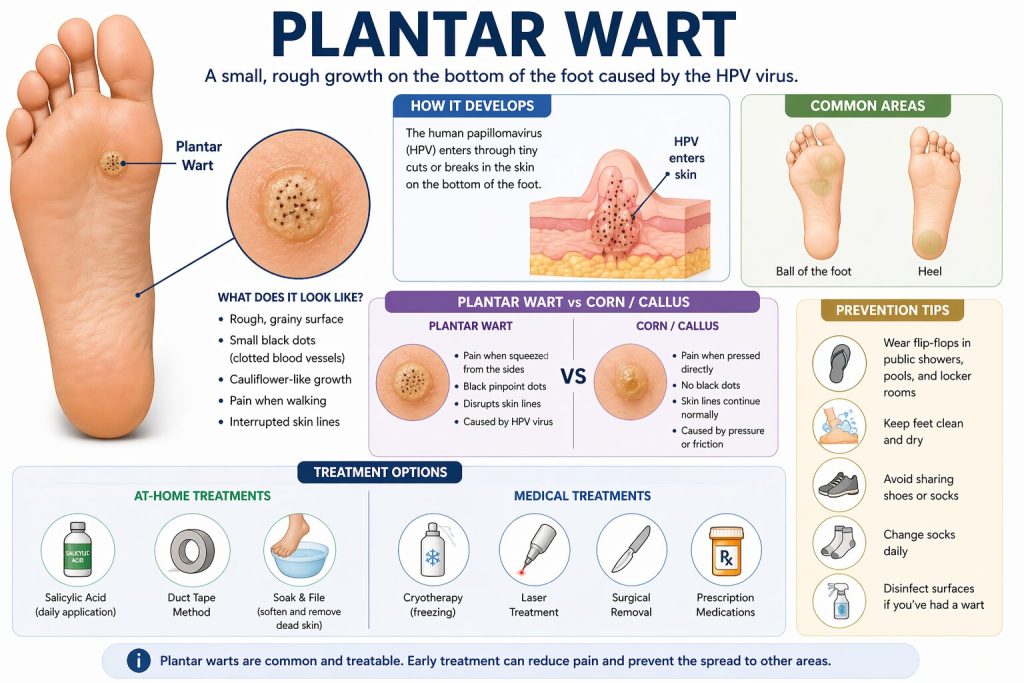
Plantar warts develop when HPV infects the outer layer of the skin. The virus thrives in warm, moist environments, making places like locker rooms, pools, and shared showers common sources.
Many people confuse plantar warts with corns or calluses. Here’s how to tell the difference:
Correct diagnosis is important because treatment methods are different.
Treatment depends on the size, depth, and persistence of the wart. Some cases respond to at-home care, while others require medical treatment.
These are often effective for mild cases but require consistency:
Salicylic Acid (Most Common)
Softens and gradually removes wart tissue
Available as pads, gels, or liquids
Requires daily application for several weeks
Duct Tape Method (Limited Evidence)
Covers wart to irritate and stimulate immune response
Works for some people but not consistently
Foot Soaking & Filing
Soak foot in warm water
Gently file dead skin with a pumice stone
Helps treatments penetrate deeper
If the wart is painful, spreading, or not responding to home treatment, professional care is recommended.
At Medex Diagnostic and Treatment Center, physicians offer advanced treatment options for fast and safe removal.
Not all plantar warts need immediate removal, but treatment is recommended if:
Ignoring a plantar wart can lead to increased discomfort and further spread.
For proper diagnosis and safe removal, you should see:
Medical professionals can confirm that the growth is a wart and not another condition, such as a callus, cyst, or skin lesion.
Persistence is key, warts can be stubborn and may return if not fully treated.
Preventing reinfection is just as important as treatment:
Cryotherapy or laser treatment performed by a doctor are the fastest and most effective methods for plantar wart removal.
Yes, some plantar warts disappear without treatment, but it can take months or even years depending on your immune system.
Some treatments like freezing or surgical removal may cause temporary discomfort, but they are generally well-tolerated and quick.
No, cutting a wart at home can cause infection and worsen the condition. It’s safer to use approved treatments or see a doctor.
Yes, they can spread through direct contact or contaminated surfaces, especially in warm, moist environments.
Plantar wart removal can be simple or complex depending on the severity, but the key is early treatment and proper care. While home remedies may work for minor cases, persistent or painful warts should be treated professionally to avoid complications and recurrence.
Medex is a multi-specialty clinic with 24-hour urgent care, primary care, and more than 30 board-certified specialists, including podiatry, cardiology, dermatology, pain management, gynecology, and physical therapy. Each department works under one roof for seamless referrals.
Yes. Every Medex doctor is board-certified in their specialty, undergoes peer review, and participates in ongoing CME (continuing medical education). Credentials are listed on our Meet the Doctors page.
Absolutely. Our Queens urgent care clinic is open for walk-in patients with minor injuries or sudden illnesses. You can also save time by reserving a same-day slot online.
Medex accepts all major commercial carriers plus Medicare, Medicaid, HIP, EmblemHealth, MetroPlus, Fidelis, and GHI. For specific coverage questions, call (718) 275-8900 or visit our Insurance page.
Use our secure online booking portal, call (718) 275-8900, or log in to the Patient Portal to reschedule.
Yes—most primary care and follow-up visits can be conducted via HIPAA-compliant video. Sign the Telemedicine Consent Form and choose “Virtual” when booking.
Yes. Our No-Fault Doctor Queens team handles car- accident injuries, and our Workers’ Comp Clinic manages job-related injuries and paperwork.
We’re at 111-29 Queens Blvd, Forest Hills, NY 11375—steps from the Forest Hills–71 Av subway station (E, F, M, R lines). A paid garage is next door and metered street parking surrounds the building.
We follow HIPAA privacy rules, store EHR data on encrypted servers, and require two-factor authentication for staff access. You may request records through our ChartRequest portal.
Adults in good health should schedule an annual physical. Patients managing chronic conditions may need follow-ups every 3–6 months; your doctor will advise a personalized schedule.
For safety, we require an active chart and a visit within the past 12 months (3 months for controlled substances). Ask your pharmacy to send an electronic refill request or message us through the Patient Portal.
Last reviewed: March 22, 2026.
Medex Diagnostic and Treatment Center
Coronavirus Disease (Covid19 IgG/IgM) FDA-approved rapid antibody tests, COVID-19, and Flu vaccine are now available at MEDEX medical office.